Audit flags Rs5.17tr potential risk of penalty over delayed Iran-Pakistan pipeline
Pakistan’s Auditor General says delays by Inter State Gas Systems on the Iran-Pakistan gas pipeline exposed the country to a potential Rs5.17tr penalty. The audit also finds mismanagement on other strategic energy projects.
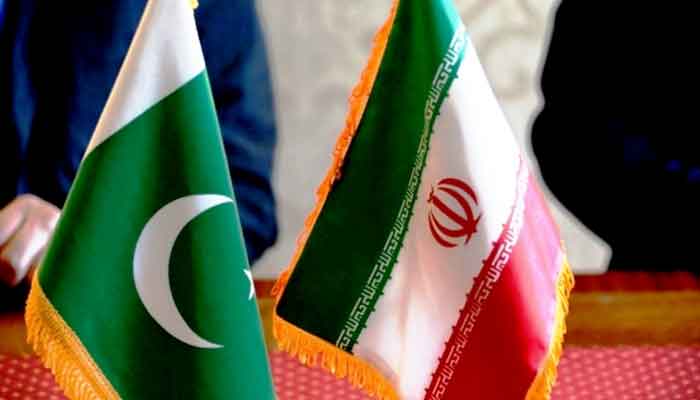
ISLAMABAD: The Auditor General of Pakistan (AGP) has questioned Inter State Gas Systems' management of strategic energy projects, stating that delays in the Iran-Pakistan gas pipeline exposed Pakistan to a potential risk of penalty amounting to Rs 5,167,742 million.
According to the AGP’s audit report for the audit year 2024-25, ISGS failed to make meaningful progress on several strategic energy projects, including the Iran-Pakistan (IP) Gas Pipeline, Pakistan Stream Gas Project (PSGP) and Turkmenistan-Afghanistan-Pakistan-India (TAPI) Gas Pipeline, despite being the government-designated company responsible for their execution.
The audit observed that ISGS incurred Rs192.918 million on consultancy services, tendering expenses, personnel costs, legal and professional services for the Machike-TaruJabba Oil Pipeline project without first obtaining the mandatory licence from the Oil and Gas Regulatory Authority (OGRA), as required under Section 23(3)(a) of the OGRA Ordinance, 2002.
The report states that the Economic Coordination Committee approved the Machike-TaruJabba Oil Pipeline project on November 1, 2017 for execution through ISGS. After completing the tendering process, ISGS issued a Letter of Intent to China's Energy Construction International Investment Company for construction of the pipeline on a Build, Own, Operate, Transfer basis and applied for an OGRA licence in March 2018. However, the regulator rejected the application in May 2019, while the Petroleum Division and ISGS failed to pursue the matter for grant of the licence, preventing execution of the project.
Audit concluded that initiating the project without obtaining the required regulatory approval reflected mismanagement and resulted in a loss of Rs192.918 million to the national exchequer. The Departmental Accounts Committee (DAC), in its meeting held on December 30, 2024, directed ISGS to provide a detailed breakup of the expenditure and identify those responsible for the loss. However, no further progress had been reported by the time the audit report was finalised.
The audit also raised serious concerns over the continued delay in implementing the Iran-Pakistan Gas Pipeline project, warning that Pakistan faces a potential financial exposure of US$18.589 billion under the Gas Sales Purchase Agreement's "take or pay" obligations by 2024, equivalent to Rs5,167,742 million, if contractual obligations remain unfulfilled.
According to the report, ISGS was required to construct a 781-kilometre pipeline from the Iran border to Shaheed Benazirabad before December 2014. Under the agreement, Pakistan was required either to start importing gas from January 1, 2015 or pay for the contracted quantity.
Although ISGS obtained the construction and operation licence for the Iran-Pakistan Gas Pipeline from OGRA on January 29, 2019, the audit noted that no meaningful progress was made on the project during the following four years.
The report stated that the National Iranian Oil Company served Pakistan with a notice of material breach on February 27, 2019. Subsequently, both countries signed Amendment Agreement No. 03 on September 5, 2019, extending the implementation period by another five years. However, the audit observed that despite expiry of the extended period, the project had still not been initiated.
The Petroleum Division informed in March 2022 that Pakistan's potential financial exposure under the "take or pay" clause would accumulate to US$18.589 billion by 2024, while termination of the agreement could also make ISGS liable to pay the book value of the Iranian seller's pipeline facilities amounting to US$589.65 million.
The audit further noted that the National Iranian Oil Company again served ISGS with a material breach notice on December 21, 2023, requiring Pakistan to take all necessary actions within 180 days. Although the Cabinet Committee on Energy approved construction of an 80-kilometre pipeline from the Pakistan-Iran border to Gwadar on February 23, 2024, ISGS expected completion only by July 2025, beyond the extended contractual deadline.
Audit concluded that defective project planning and failure to initiate the project within the agreed timeframe had exposed the country to a potential financial risk of Rs5,167,742 million.
The audit report also criticised ISGS for weak project management of the Pakistan Stream Gas Project and the TAPI Gas Pipeline despite being the government-designated entity responsible for implementing projects financed through the Gas Infrastructure Development Cess.
The report observed that despite the passage of 10 to 15 years, ISGS had failed to achieve significant progress on either project. It recalled that the Supreme Court of Pakistan, in its judgment dated August 13, 2020, directed the federal government to commence work on the North-South pipeline within six months, while the Cabinet Committee on Energy also instructed the Petroleum Division on October 15, 2020 to ensure implementation in accordance with the court's directions.
However, the audit found that no on-ground activity on the Pakistan Stream Gas Project had commenced until May 2024.
The auditors concluded that weak project management had prevented physical progress on strategic energy infrastructure projects despite repeated government decisions and judicial directions.
The Departmental Accounts Committee directed ISGS to submit a comprehensive report on both the Pakistan Stream Gas Project and TAPI Gas Pipeline. However, no further progress had been reported by the time the audit report was finalised.
The Auditor General recommended fixing responsibility for the Machike-Taru Jabba project, completing the Iran-Pakistan Gas Pipeline within the stipulated timeframe to avoid potential penalties and ensuring timely execution of all strategic energy projects under ISGS.
Inter State Gas Systems (Private) Limited (ISGS) was incorporated as a private limited company on August 4, 1996 under the Companies Ordinance, 1984. Initially established as a joint venture between Sui Northern Gas Pipelines Limited (SNGPL) and Sui Southern Gas Company Limited (SSGC), the company had a shareholding structure of 51 percent and 49 percent, respectively. During 2011-12, Government Holdings (Private) Limited (GHPL) acquired shares in the company, making ISGS its subsidiary.
ISGS is mandated to import, process, purchase, store, transport, transmit, market and export natural gas and related products in both gaseous and liquefied forms for domestic, commercial and industrial use, including power generation. The company is currently responsible for implementing Pakistan's key cross-border and strategic gas infrastructure projects, including the Iran-Pakistan (IP) Gas Pipeline, the Turkmenistan-Afghanistan-Pakistan-India (TAPI) Gas Pipeline and the Pakistan Stream Gas Project (PSGP).

The author is an investigative journalist. He can be reached at [email protected].
View all articles →Comments
No comments yet. Be the first to join the discussion!