Khawaja Asif sees economy growing 6–7pc, calls for unity on security challenges
Defence Minister Khawaja Asif told the National Assembly Pakistan is moving from insolvency to stability and may grow 6–7% in 1–2 years, urging parties to unite on security and governance.
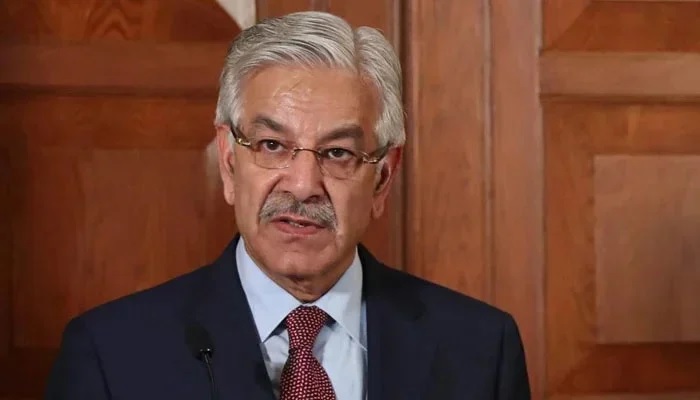
Defence Minister Khawaja Asif on Tuesday said Pakistan's economy had moved from insolvency towards stability and could record annual growth of 6% to 7% within the next one to two years, while urging political parties to adopt a unified approach towards security and governance challenges.
Speaking in the National Assembly during the budget debate, Asif said the economy inherited by the Pakistan Muslim League-Nawaz (PML-N) government three years ago had been in a state of severe distress before being stabilised under a reform programme backed by the International Monetary Fund (IMF).
“We were suffering, but from insolvency we are now solvent,” he said, adding that the economy was no longer in crisis mode and was showing signs of gradual recovery. While acknowledging that Pakistan had not fully overcome its economic difficulties, he said current indicators suggested stronger growth ahead.
The minister also defended the government's economic management, saying inflation, fuel prices and other economic pressures remained closely tied to international market developments. He noted that expectations of lower domestic petroleum prices were constrained by trends in global energy markets.
On taxation, Asif said the country's fiscal system contained multiple layers of taxation and argued that future reforms should focus on expanding the tax base rather than increasing the burden on existing taxpayers. He said sustainable revenue generation would require broader participation in the tax system and greater public confidence in tax compliance.
Turning to regional diplomacy, the defence minister hailed Pakistan's role in helping facilitate the recent understanding between the United States and Iran, describing it as a significant diplomatic achievement that had enhanced the country's international profile.
He congratulated the nation's civil and military leadership on the development and said the breakthrough demonstrated Pakistan's growing diplomatic relevance. Asif added that improved relations with Iran and the easing of restrictions on Tehran could create new economic opportunities for Pakistan, particularly in Balochistan.
Addressing the security situation, the minister said terrorism in Balochistan and Khyber-Pakhtunkhwa should not be viewed through a partisan lens, arguing that responsibility for addressing militancy rested with all political stakeholders.
He said the challenges facing Balochistan had accumulated over decades and required a collective political response. Referring to recent casualties among security forces, Asif said he had attended 21 funerals in recent days and paid tribute to personnel deployed in conflict-affected regions.
The minister also criticised political parties for selectively discussing the role of the establishment while overlooking their own past interactions with state institutions. He urged lawmakers to focus on national interests and strengthen public confidence in parliament.
On Afghanistan, Asif rejected claims that Pakistan had not pursued dialogue with the Afghan Taliban, saying extensive engagement had taken place through political, military and intelligence channels.
He said he had personally participated in multiple rounds of talks in Afghanistan as well as meetings in Türkiye and Qatar, but Pakistan's efforts to secure guarantees against the use of Afghan territory for attacks inside Pakistan had failed to produce a formal agreement.
According to the minister, Afghan officials had at one stage sought $10 billion in assistance from Pakistan during discussions. He said Islamabad remained willing to cooperate but had consistently sought assurances regarding cross-border militancy.
Asif also reflected on Pakistan's involvement in past regional conflicts, arguing that decisions taken during the Cold War and the US-led war in Afghanistan had left lasting security consequences that the country continued to face.
Calling for greater national cohesion, he said lawmakers should speak "the language of the federation" and avoid political posturing on issues involving security, economic stability and national unity.
Comments
No comments yet. Be the first to join the discussion!