Pakistan’s power generation slips 0.9% in May as production cost rises 16.9%
Output stands at 12,638 GWh as distribution companies seek Rs0.82-per-unit fuel adjustment; Generation up by 1.6% to 115,268 GWh in 11 months

Pakistan’s electricity generation declined 0.9% year-on-year to 12,638 gigawatt-hours in May 2026, while the cost of producing power increased 16.9% as lower hydropower and liquefied natural gas output increased reliance on imported coal, according to data compiled by Arif Habib Limited.
Generation stood at 12,755 GWh in May 2025. On a month-on-month basis, however, output increased 33% due to the seasonal rise in electricity demand.
During the first 11 months of 2025-26, total power generation reached 115,268 GWh, up 1.6% from the corresponding period of the previous fiscal year.
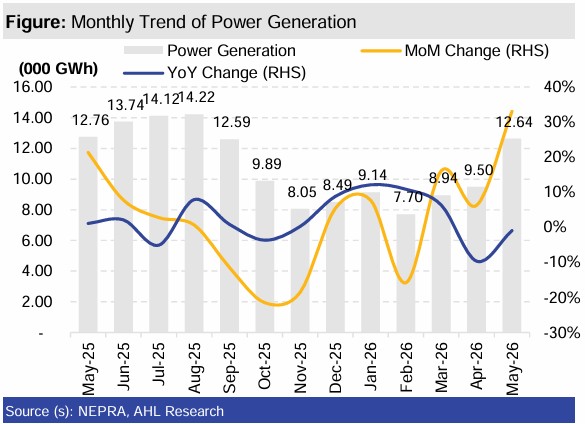
Despite the annual increase in cumulative output, power generation remained below the reference levels set by the National Electric Power Regulatory Authority.
The shortfall was attributed to consumption being restrained by government austerity measures, increased load-shedding following disruptions in regasified liquefied natural gas supplies and the continued expansion of distributed power generation, including electricity produced through rooftop solar systems.
Generation remained below regulatory projections despite lower electricity tariffs, the migration of some industrial consumers back to the national grid, incremental consumption packages for industrial and agricultural users and an improvement in economic activity.
Large-scale manufacturing grew 6.4% year-on-year during the first 10 months of 2025-26.
Lower-than-projected electricity sales could result in higher quarterly tariff adjustments, as fixed power-sector costs are recovered from a smaller volume of electricity supplied to consumers.
The adjusted fuel cost of electricity supplied to power distribution companies stood at Rs9.25 per kilowatt-hour in May, compared with the reference cost of Rs8.43 per unit.
As a result, distribution companies have requested a positive fuel charges adjustment of Rs0.82 per unit for electricity consumed during May.
The proposed increase mainly reflects lower hydropower generation, increased use of imported coal and elevated oil prices during the month.
Hydropower remained the largest source of electricity but declined 13.2% year-on-year to 4,205 GWh in May.
The decline was attributed to lower water flows and a high comparative base, as hydropower generation in May 2025 was the highest ever recorded for that month. Output in May 2026 nevertheless remained above historical averages.
Regasified liquefied natural gas-based generation fell 31.1% year-on-year to 1,493 GWh. It was, however, almost 3.9 times higher than in April, when Pakistan did not import any LNG cargoes.
The monthly recovery followed the arrival of three LNG cargoes imported by Pakistan State Oil under long-term contracts at a slope of 10.2%, along with one spot cargo purchased by Pakistan LNG Limited at a slope of 20.9% to the delivered ex-ship price.
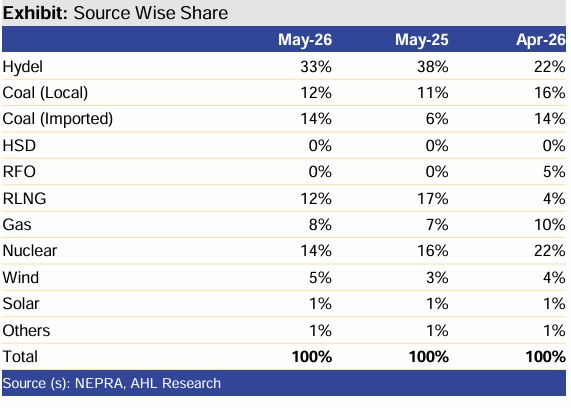
RLNG-based generation remained lower than a year earlier because only four cargoes were imported during May against eight originally scheduled for the month.
Imported coal-based generation, meanwhile, more than doubled year-on-year to 1,343 GWh. The increase helped offset lower contributions from hydropower, RLNG and nuclear energy.
Nuclear power generation declined 10.5% compared with May 2025.
Furnace oil-based generation dropped 96% month-on-month to only 20 GWh as higher hydropower output, recovering RLNG supplies and increased imported coal generation met most of the seasonal increase in demand.
The shift reduced the need to operate expensive furnace oil-based plants.
Electricity generation trends between December 2025 and March 2026 had indicated improving grid demand and a better outlook for quarterly tariff adjustments.
That improvement was supported by a Rs4-per-unit reduction in industrial tariffs, electricity consumption incentive packages and higher levies on gas supplied to captive power plants.
However, weaker-than-expected demand in April and May has created a near-term risk to that trend.
According to AHL, the outlook could improve if RLNG supply disruptions ease following the reported US-Iran peace agreement and the possible resumption of liquefied natural gas production by QatarEnergy.
A recovery in LNG availability could reduce load-shedding and support electricity demand, while falling international oil prices could lower fuel charges adjustments in the coming months.
NEPRA has projected electricity demand to increase 1% year-on-year during calendar year 2026.
Comments
No comments yet. Be the first to join the discussion!