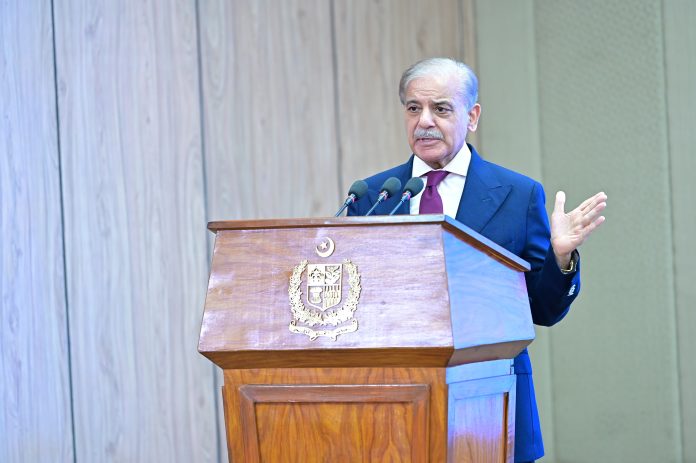
Federal Cabinet approves agricultural biotechnology policy to regulate GM crops, imports
NABP-2025 seeks to promote biotech research and commercialisation while setting rules for GM products, gene editing, recombinant animal vaccines and seed imports

The Federal Cabinet has approved the National Agricultural Biotechnology Policy 2025 to provide a framework for biotechnology research, product commercialisation, crop productivity and food and nutrition security.
Business Recorder reported that the policy aims to support the development of a biotechnology industry in Pakistan and provide a unified direction for work on genetically modified products, gene editing, plant tissue culture, genomic research and animal biotechnology.
The Ministry of National Food Security and Research informed the Cabinet that agricultural biotechnology is changing farming practices globally and that Pakistan has the scientific base, regulatory structure and research institutions needed to benefit from the sector.
However, the ministry said Pakistan had not fully utilised the potential of agricultural biotechnology due to the absence of a comprehensive national policy framework.
The Cabinet was told that key policy documents, including the Science and Technology Policies of 2011 and 2024, the National Food Security Policy 2018, the National Seed Policy 2025 and Pakistan Vision 2030, recognise the importance of biotechnology.
Under NABP-2025, agricultural biotechnology has been divided into regulated and non-regulated areas.
The regulated areas include the development and commercialisation of genetically modified organisms, gene editing, import and export of GM products, and recombinant vaccines for animals.
The non-regulated areas mainly include plant tissue culture and genomic research.
Both categories have been prioritised according to national requirements.
The Cabinet was informed that the Special Investment Facilitation Council, during its 6th Executive Committee meeting held on October 23-24, 2023, directed the ministry to prepare a comprehensive GMO policy.
A committee headed by the Chairman of the Pakistan Agricultural Research Council was constituted on November 20, 2023, to draft the policy.
After the initial draft, another committee led by the Chairperson of the National Seed Development and Regulatory Authority and comprising technical experts was assigned to refine the document.
A consultative meeting held on May 7, 2025, finalised the draft policy for submission to the Federal Cabinet.
Further consultations were held with provincial secretaries on June 2, 2025.
Additional consultations on animal biotechnology and meetings with private sector stakeholders were held on June 27, 2025, to support implementation of the policy.
The Cabinet was informed that the Prime Minister had approved submission of the summary under Rule 17(1)(a) of the Rules of Business, 1973, for formal Cabinet approval.
During deliberations, officials noted that many countries already have biotechnology policies and that Pakistan also required a framework to benefit from genetic engineering while managing potential risks.
The ministry said genetically modified crops are cultivated on around 201.5 million hectares globally, representing nearly 3% of the world’s cultivated land.
A total of 71 countries have adopted biotechnology in agriculture. These include 29 countries that grow biotech crops and 42 countries that import GM commodities such as maize, soybean and canola for food, feed and processing.
The 42 importers include 16 individual countries and 26 European Union member states.
The Cabinet was also informed that biotech crops have expanded beyond maize, soybean, cotton and canola.
Other biotech crops now include alfalfa on 1.3 million hectares, sugar beet on 473,000 hectares, sugarcane on 20,000 hectares, papaya on 12,000 hectares, safflower on 3,500 hectares, potatoes on 2,265 hectares and eggplant on 1,931 hectares.
Smaller-scale cultivation has also been reported in squash, apples and pineapple.
Public-sector research is also under way globally in crops such as rice, banana, wheat, chickpea, pigeon pea and mustard, focusing on economically important traits and nutritional quality.
Officials said the import of GM soybean and canola had been a major issue under the Trade and Investment Framework Agreement between Pakistan and the United States.
They said the GM soybean issue had been resolved through trade diplomacy, while the GM canola issue remained under review.
The Cabinet was told that import and export business linked to genetically modified products needed to be clarified, facilitated and eased.
The import of seeds, seedlings and cuttings for cultivation, and grains for food, feed and processing, will be regulated on a case-by-case basis under Rule 14(2) and Rule 14(2A) of the Pakistan Biosafety Rules, 2005, as amended in 2024.
Sources said the Government of Pakistan expects support for NABP-2025 from provincial governments, agricultural universities, plant breeders, seed producers, the seed industry, technology developers and other stakeholders.
They said the policy is expected to support sustainable agricultural development, food and nutritional security, and improved living standards for farming communities.

Our monitoring team diligently searches the vast expanse of the web to carefully handpick and distill top-tier business and economic news stories and articles, presenting them to you in a concise and informative manner.
View all articles →Comments
No comments yet. Be the first to join the discussion!