SNGPL unable to repay Rs50 billion loan as its circular debt burden hits Rs819 billion
State-run gas utility seeks extension in sovereign guarantee till June 30, 2030, saying past gas price freezes and RLNG diversion have left it without funds to retire LNG-related borrowing
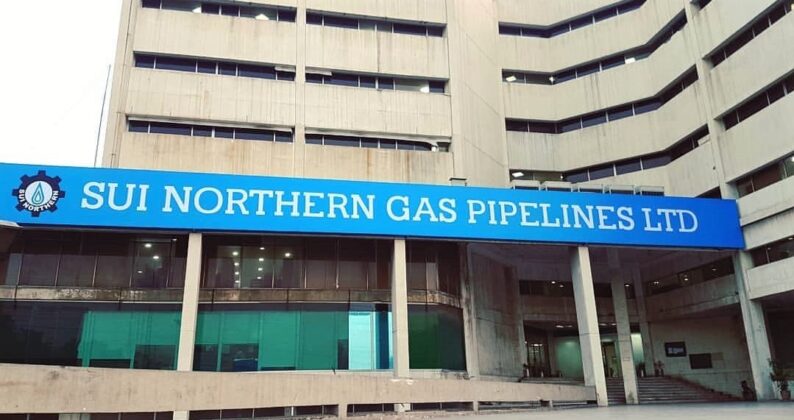
Sui Northern Gas Pipelines Limited (SNGPL) has told the government it is unable to repay a Rs50 billion bank loan taken for LNG payments, as past gas price freezes and diversion of expensive RLNG to lower-tariff domestic consumers have pushed its gas circular debt burden to Rs819 billion, The Express Tribune reported.
The state-run gas utility has requested an extension in the sovereign guarantee for the loan till June 30, 2030.
The Petroleum Division informed the economic decision-making body that SNGPL’s primary receivables of Rs819 billion were mainly due to tariff differential arising from the government’s past decisions not to revise consumer gas prices and from the diversion of costly RLNG to the domestic sector at lower tariffs.
The gas sector has been accumulating circular debt since financial year 2013 because consumer prices were either not increased or raised inadequately, preventing gas utilities from recovering the full cost of gas purchased from producers.
Although the increase in gas-sector circular debt has largely been contained since November 2023 due to regular price revisions, late payment surcharge has continued to rise. As of December 2025, SNGPL’s receivables stood at Rs1.095 trillion, while late payment surcharge had reached Rs931 billion.
The Rs50 billion borrowing was arranged after the Economic Coordination Committee of the cabinet, in 2023, approved a summary submitted by the Petroleum Division. The ECC agreed that the Finance Division would provide a sovereign guarantee along with a Letter of Comfort in favour of SNGPL for commercial borrowing.
Following the ECC decision, the Finance Division issued sovereign guarantees in July 2023 to Allied Bank, Faysal Bank and the National Bank of Pakistan for Rs20 billion, Rs20 billion and Rs10 billion, respectively.
The running finance facilities were obtained by SNGPL to make RLNG payments to Pakistan State Oil and Pakistan LNG Limited.
The ECC had approved the guarantee up to June 2026 and directed the Petroleum Division to provide cash-flow projections to determine SNGPL’s ability to retire the loans at the end of the facility period.
The Finance Division was later informed that Faysal Bank, one of the consortium members, had reportedly asked SNGPL for early settlement of its financing share.
SNGPL then held talks with multiple banks, after which Meezan Bank showed willingness to take over the entire Rs50 billion financing at improved terms of three-month KIBOR minus 30 basis points, compared with the existing one-month KIBOR arrangement.
The revised terms were expected to save SNGPL around Rs150 million annually in finance cost. The Finance Division was subsequently asked to issue a Letter of Comfort and sovereign guarantee in line with the ECC decision.
The Petroleum Division informed the Finance Division that revised consumer gas prices had helped contain further circular debt accumulation, but SNGPL did not have sufficient funds to clear previously accumulated liabilities.
It said the diversion of RLNG to the domestic sector and demand destruction in the captive power sector had added to SNGPL’s financial constraints, leaving the company unable to present a viable mechanism for retiring the Rs50 billion loan.

Our monitoring team diligently searches the vast expanse of the web to carefully handpick and distill top-tier business and economic news stories and articles, presenting them to you in a concise and informative manner.
View all articles →Comments
No comments yet. Be the first to join the discussion!