Global stocks waver as AI rally cools, oil jumps on renewed Middle East tensions
Brent rises 3.2% to $76.54 as US sanctions on Iranian oil and renewed fighting lift inflation risks; Asian markets turn volatile, Samsung slides and US Treasury yields climb


SINGAPORE: Global stock markets looked uncertain on Wednesday as investors reassessed the record-breaking artificial intelligence rally, while renewed fighting in the Middle East pushed oil prices higher and triggered selling in bond markets.
Asian equities turned volatile, with selling pressure concentrated in South Korea and Japan, while US and European stock futures were broadly steady.
The market mood was pressured by fresh US-Iran tensions after Washington said it struck Iranian air defences, coastal surveillance systems and drone launch sites.
Iran’s Revolutionary Guards said they targeted the US military in Bahrain and Kuwait, where air raid sirens sounded on Wednesday.
The renewed fighting threatened a fragile ceasefire and added to concerns over oil supply risks.
Brent crude futures rose 3.2% to $76.54 a barrel.
The price remains well below war-time peaks of more than $120 a barrel, but the increase was enough to unsettle bond markets by raising inflation concerns, particularly after months of conflict had drawn down global inventories.
Jason Wong, senior strategist at BNZ in Wellington, said the market was reacting negatively to the attacks, but the move did not amount to full panic.
Washington also moved to withdraw a concession that had allowed Iran to sell oil in global markets.
Iran’s foreign ministry said the decision breached the framework agreement aimed at ending the war.
US Treasury yields rose as bond prices fell.
The 10-year US Treasury yield climbed about three basis points to a one-month high of 4.565%, while the 30-year yield moved above 5%.
David Chao, Asia-Pacific global market strategist at Invesco in Singapore, said the latest escalation showed that geopolitical risk had not disappeared.
He said Brent was still trading at levels that did not fully reflect continued flare-ups in the Middle East.
Data this week showed crude stocks in the US Strategic Petroleum Reserve had fallen to their lowest level since 1983, increasing market sensitivity to future supply shocks.
In equities, Asian markets were unsettled by losses in Samsung Electronics, which fell for a second straight session despite flagging a 19-fold increase in profit.
A 5% fall in Seoul pulled South Korean stocks down more than 20% from last month’s peak. If sustained through the close, the move would meet some definitions of a bear market, even though the KOSPI index remains up 70% this year.
Sara Perring, head of APAC cash equity sales at J.P. Morgan, said short-term profit-taking in long-term winners, especially the AI theme, appeared to be a global trend.
She said J.P. Morgan Research expected elevated volatility and continued foreign selling in Korean equities in the near term.
The pressure followed losses on Wall Street, where the Nasdaq fell through its 50-day moving average overnight.
Japan’s Nikkei declined 1.2% on Wednesday.
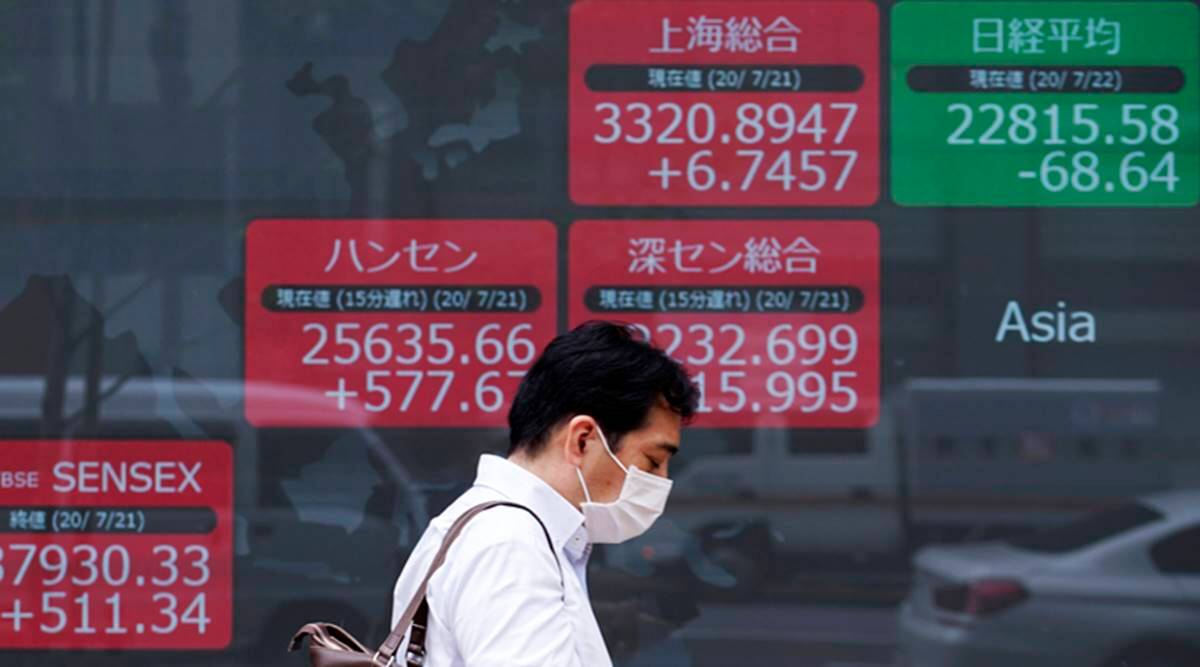
Hong Kong was a bright spot, with the Hang Seng Index gaining ground and the Hang Seng Tech Index rising 3.8%, putting it on track for one of its best sessions of the year as investors bought lagging technology stocks.
In currency markets, the dollar remained firm after easing from recent highs.
The euro was pushed back to just above $1.14, while the dollar climbed past 162 yen, raising the risk of a response from Japanese authorities.
The New Zealand dollar rose about 0.5% to $0.57 after the Reserve Bank of New Zealand raised interest rates, broadly in line with market expectations.
Investors were also awaiting minutes from last month’s Federal Reserve meeting, due later on Wednesday.
Traders expect new Federal Reserve Chair Kevin Warsh may reduce the level of detail in the minutes to avoid sending a strong policy signal.
Steve Englander, head of North America macro strategy at Standard Chartered, said avoiding discussion of rate hikes could be interpreted by markets as reluctance to move.
Comments
No comments yet. Be the first to join the discussion!