Supreme Court rules dividend income cannot be taxed at 35% corporate rate
Court upholds Islamabad High Court verdict, ruling that dividend income falls exclusively under Section 5 of Income Tax Ordinance 2001
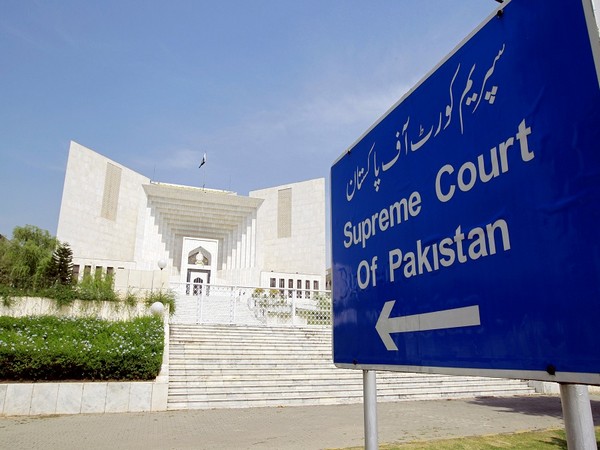
The Supreme Court has ruled that dividend income received by companies is taxable under Section 5 of the Income Tax Ordinance 2001 and cannot be subjected to the 35% normal corporate tax rate.
As per media reports, a two-member bench comprising Chief Justice Yahya Afridi and Justice Aqeel Ahmed Abbasi dismissed nine civil petitions filed by the Commissioner Inland Revenue, Large Taxpayers Office Islamabad, and upheld the Islamabad High Court’s September 19, 2024 judgment.
Justice Abbasi authored the verdict, which had been reserved on July 3, 2026.
The court held that Section 5 is a special and self-contained provision governing the taxation of dividend income, with a separate tax rate and collection mechanism.
It ruled that dividend income cannot be treated as income from other sources under Section 39 for the purpose of applying the 35% normal corporate tax rate.
The judgment noted that bringing dividend income under Section 39 would render Section 5 redundant, contrary to the established principle that no statutory provision should be interpreted in a way that makes it unnecessary or ineffective.
The bench said Section 5 operates as a separate charging provision under the Income Tax Ordinance, imposing tax on dividends through a distinct regime outside normal corporate taxation.
Referring to its earlier judgment in Fawad Ahmed Mukhtar versus Commissioner Inland Revenue (2022 SCMR 426), the Supreme Court reiterated that dividend income constitutes a separate block of income and is taxable only under Section 5.
The court also rejected the FBR’s position that an amendment inserted into Section 8 through the Finance Act 2007 excluded dividends received by companies from the final tax regime.
It held that Section 8 is procedural in nature and cannot alter or restrict the substantive legal effect of Section 5.
Concluding that the Islamabad High Court’s judgment was in accordance with the law, the Supreme Court dismissed all petitions filed by the FBR.

Our monitoring team diligently searches the vast expanse of the web to carefully handpick and distill top-tier business and economic news stories and articles, presenting them to you in a concise and informative manner.
View all articles →Comments
No comments yet. Be the first to join the discussion!