August 16, 2023
Circular debt is at Rs 2.31 trillion. What does it mean?
Figure represents an increase from the end of FY 2022, but a contraction from April 2023

August 16, 2023
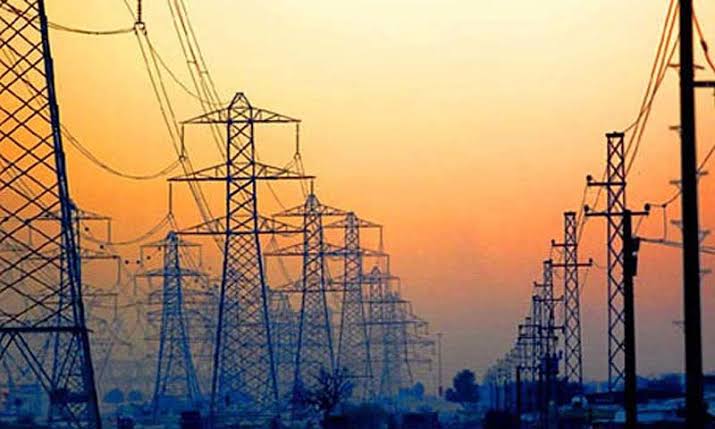
As the fiscal year 2023 draws to a close, the energy sector is crippled by a staggering surge in the stock of circular debt. Preliminary estimates disseminated by the media indicate that the sum amounts to Rs 2.31 trillion — an escalation from the Rs 2,253 trillion at the end of the preceding fiscal year, but also a reduction from the Rs 2.631 trillion recorded in April of this year.
“The provisional figures appear to be accurate,” elucidates Ruhail Mohammad, Chief Executive Officer at Lucky Electric Power Company. “Under pressure from the International Monetary Fund, the Ministry of Energy (Power) has taken measures to ensure that the stock of circular debt on 30th June 2023 remains more or less unchanged from its level on 30th June 2022.” Mohammad goes on to explain that “a staggering subsidy of Rs 142 billion was disbursed to independent power producers (IPPs) on the final working day of June 2023,” to achieve this.
So, what is circular debt again? Let’s start with the basics.
Circular debt 101
In essence, circular debt is a public debt that arises from the cascade of unpaid government subsidies. In Pakistan this problem is acutely present in the power sector which leads to a relentless spiral of unpaid bills among distribution companies. This situation prevents distribution companies from paying independent power producers, who then fail to pay fuel suppliers — thus creating a chain reaction of debt that afflicts the entire system, and subsequently Pakistan.
To explain further, circular debt is a payment deficit at the Central Power Purchasing Agency (CPPA), which fails to receive outstanding dues from power distribution companies (DISCOs) owing to their inefficiency in collecting revenues from consumers. This comprises both state-owned distribution companies (DISCOS) and privatised K-Electric (K-El). As a result, CPPA does not make prompt payments to other power entities in the supply chain, namely state-owned generation companies (GENCOs), the IPPs, and the National Transmission and Dispatch Company (NTDC).
GENCOs renounce their liabilities to fuel suppliers due to delayed payments from CPPA. Likewise, IPPs, owing to the government’s sluggishness in clearing their invoices, fail to pay their fuel suppliers. The fuel suppliers, in turn, default on their obligations towards refineries and international fuel suppliers.
What does this mean for the industry, and customers? And what about the price hikes?
Despite the astronomical surges in the electricity tariff — a staggering Rs 8 per unit in June 2022, a modest 50 paisa per unit in February 2023, and, most recently, a whopping Rs 7.5 in July 2023 — the debt continues to mount inexorably. What are these hikes even achieving then?
“With the recent escalation in tariffs, revenues may experience a fleeting surge, but losses are poised to intensify as paying customers gravitate towards solar or curtail their consumption,” cautions Zaheer Ghanghro, Chief Executive Officer at Halmore Power Generation and Director at Lalpir & Pakgen Power.
“The consumers will be the ones who bear the brunt in the entire value chain. The IPPs will persist in their operations by resorting to borrowing from banks, which means that banks will emerge as the ultimate beneficiaries,” Ghanghro adds.
The author is a member of the staff, and covers the automobile, energy and advertising insdusties as a sector analyst. He can be reached at [email protected]
View all articles →465 Comments
No comments yet. Be the first to join the discussion!