
Inside PIA’s second coming
After decades of losses and failed attempts, Pakistan finally privatizes its national carrier in a landmark $482 million deal
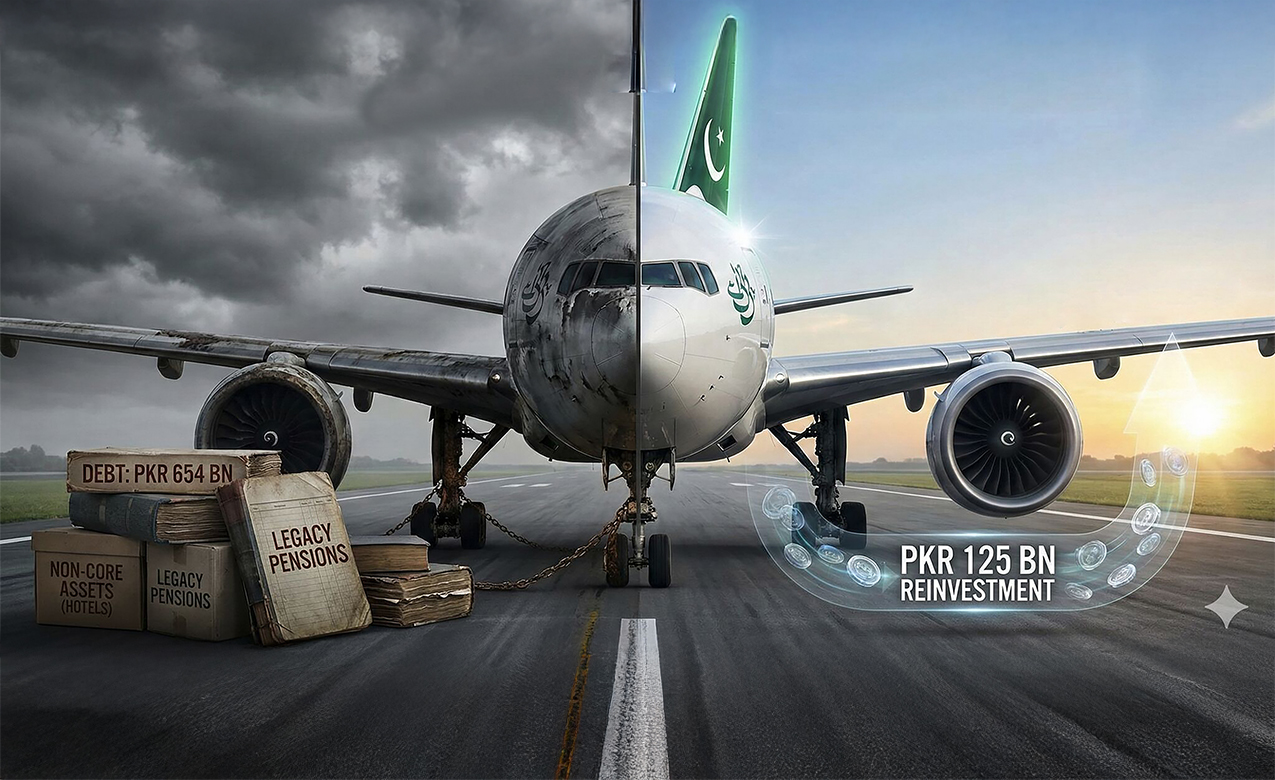
On a December afternoon in Islamabad, history was made in a five-star hotel ballroom. Three consortiums sat across a televised auction table, bidding for what was once the pride of South Asian aviation, Pakistan International Airlines. After ninety minutes of competitive bidding, the gavel fell at Rs 135 billion ($482 million), marking the end of a seven-decade era of state ownership and the beginning of what many hope will be a new chapter for the beleaguered national carrier.
The winning bid came from a consortium led by Arif Habib Corporation, a Karachi-based securities brokerage, alongside Fatima Fertilizer, private school network City Schools, and real estate firm Lake City Holdings. Fauji Fertilizer Company, a military-backed conglomerate that had withdrawn from the bidding just days earlier, has also joined the consortium as a partner, a development that adds both intrigue and a measure of institutional backing to the transaction.
Why privatization became inevitable
The story of PIA's decline is a cautionary tale of political interference, chronic mismanagement, and institutional decay. Decades of political patronage transformed the airline into a bloated bureaucracy. At its worst, PIA employed approximately 300 workers per aircraft, compared to the international benchmark of fewer than 200. Successive governments treated it as an employment agency rather than a commercial enterprise. From 2016 to 2024 alone, the airline accumulated losses of Rs 500 billion, requiring annual government subsidies of billions simply to stay operational.
The 2020 Karachi crash, which killed 97 people, proved to be a turning point. Investigations revealed that nearly a third of the airline's pilots held fake or dubious licences, prompting the European Union Aviation Safety Agency to ban PIA from European skies. The reputational damage was devastating, and the ban persisted until November 2024, when EASA finally lifted it after the airline demonstrated compliance with international safety standards.
The International Monetary Fund had long demanded privatization as a condition of Pakistan's bailout programmes. Under the current $7 billion IMF package, the government had committed to completing the sale by year's end. This time, unlike previous failed attempts, there was no turning back.
Subscribe to Continue Reading
The rest of this article is available exclusively to subscribers.

The author works as an Editorial Consultant at Profit and can be reached at [email protected]
View all articles →2 Comments
No comments yet. Be the first to join the discussion!


