April 1, 2026
The value of the Iranian Rial is rising dramatically in Pakistan’s currency markets. What is behind the increase?
Border trade, looser export rules and postwar bets lift Karachi-Lahore cash quotes even as the rial stays weak against dollar and euro.
April 1, 2026
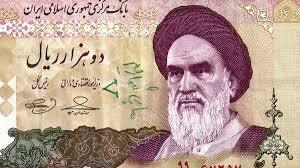
KARACHI/LAHORE: In the midst of a war with the United States and Israel, the value of the Iranian Rial has risen fourfold in Pakistan since the start of hostilities just over a month ago. Dealers in Karachi say 10 million rials that sold for about ₨2,500 before the war are now being quoted near ₨10,000, while money changers in Lahore describe a similar move from about ₨2,000 to ₨8,000.
But the increased value of the Iranian rial in Pakistan’s money market is less a story of a global currency comeback and more the effects of an undocumented border economy suddenly needing more rial cash. In other words, what has surged is the Pakistani street price for rial notes, especially in markets linked to under the table trade on Pakistan’s Western borders. The rial’s standing in the wider world remains at a historic low.
Why is demand for Iranian currency rising in Pakistan?
One reason is that Pakistan has made trade to and through Iran easier at exactly the moment when the western route matters more. The commerce ministry approved a temporary exemption from normal financial-instrument requirements for certain exports to Iran and for rice exports to Central Asia through Iran’s land route, effective March 24 to June 21. That move widened an earlier pattern of workarounds, including a previous exemption for mango exports to Iran, and was meant to keep trade moving where normal banking channels are weak or unavailable.
That matters because Pakistan and Iran already do a great deal of business outside ordinary formal banking. As an earlier investigation by Profit has covered, there has long been trade between Iran and Pakistan despite the heavy sanctions Iran is under. In fact, a large informal economy exists along the 909-kilometer border between Iran and Pakistan.
Everything from Iranian snacks, chocolates, crockery and other items are illegally transported along the Gabd-Rimdan line, including the most precious commodity coming in from Iran: fuel. The smuggling of petroleum products into Balochistan from Iran has long been a practice that has left Balochistan’s fuel economy relatively free from the shocks of the rest of the country’s fuel economy. The region of Balochistan extends into Iran, and the neighbouring country has a small province by the same name. The border is largely barren and sparsely populated and the common culture between people on either side of the border makes it extremely difficult to impose strict border regulations. Hundreds of thousands if not millions are involved in this illicit trade.
Under pressure of international sanctions, Pakistan-Iran commerce has long been shaped by barter, weak banking links and informal settlement. In this kind of an economy, the demand for currency is driven not just by official trade documents but by whoever needs rial notes or rial settlement to move goods. That helps explain why the rial is suddenly attracting buyers in Karachi and Lahore. More goods moving through the Iran corridor means more traders wanting rial exposure.
Some buyers also appear to be making a second bet: that if the war eases and trade continues, the rial could be worth more later than it is today. Global markets have been trading on similar expectations. Reuters reported this week that investors were lifting risk assets in hopes the conflict could end within weeks after signals from Washington pointed to possible de-escalation.
The state of Iran’s currency
But the rial has not staged a broad international recovery. Reuters reported on Jan. 27 that the currency had fallen to a record low of 1.5 million rials to the dollar after unrest tied to economic stress. On Apr. 1, open-market quotes in Iran still showed roughly 1.592 million rials to the dollar, with the euro near 1.846 million rials. That means the rial remains weak against major currencies, even if it is fetching a much higher cash quote in Pakistan’s local market.
That distinction is central to the story. The rial can be weak against the dollar and euro, yet still become more expensive in Karachi or Lahore if Pakistani traders suddenly need more of it. Sanctions, broken banking links and informal settlement systems can produce sharp local premiums that do not show up cleanly in standard international exchange-rate screens. Pakistan’s border trade with Iran has long run through exactly those kinds of channels.
In fact, the global weakness of Iran’s currency can be gauged from the odd numbers in which it is calculated. Dealers in Pakistan often talk about the rial in blocks of 10 million because the denomination has become unwieldy after years of inflation and devaluation. Iran’s open-market trackers commonly quote prices in toman, not rials, with one toman equal to 10 rials. So when exchangers in Karachi or Lahore say “10 million rials,” they are discussing a very large note bundle rather than a normal retail-style exchange quote.
There is also a business case behind the speculation. Reuters reported in mid-March that Iran had managed to keep crude exports flowing at close to normal levels through Hormuz despite the war, with shipments of 13.7 million to 16.5 million barrels by mid-month. That does not prove a sustained currency recovery, but it does help explain why traders in Pakistan may believe Iran is still earning and that rial demand could remain firm for now.
What comes next depends on whether this demand turns out to be temporary or structural. If Pakistan extends the waiver, if the Iran route keeps carrying goods, and if the war does wind down, the rial could stay in demand in Balochistan, Karachi and other connected markets. If the exemption expires, enforcement tightens or postwar optimism fades, the premium now visible in Pakistan’s cash market could ease just as quickly. For now, the best answer to the headline is simple: the rial is rising against the rupee in Pakistan because border trade, informal settlement and speculation have all started pulling in the same direction, even while the currency remains weak against the world’s major units.
Abdullah Niazi is senior editor at Profit. He can be reached at [email protected]
View all articles →0 Comments
No comments yet. Be the first to join the discussion!