April 3, 2026
The mobile app petrol subsidy for bikes is not going to work. There are other solutions.
The government has finally passed on the rising price of oil on the international market after dragging its feet and spending billions on a blanket subsidy. What is needed is a targeted subsidy, and the infrastructure is already in place.

April 3, 2026

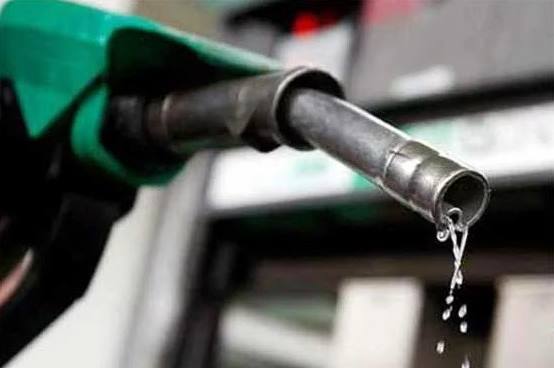
The Government of Pakistan has finally done what it should have done earlier, and what it could not afford to postpone forever. It has passed on a large part of the international oil shock to domestic consumers. Petrol has been raised to ₨458.41 a litre and high-speed diesel to ₨520.35, after weeks in which the state tried to slow the adjustment through a blanket subsidy that was fiscally costly and economically clumsy. The pain is real. So is the logic. In a country that imports its oil, a government cannot wish away a geopolitical shock at the pump.
This shock also has a name. Zionist-imperialism and the resultant military campaign against Iran has changed the global economic client. That escalation has now reached households that do not speak in the language of geopolitics, but know exactly what it means when bike fuel, bus fares, freight costs and food bills all rise together.
The danger at such a moment is not only inflation. It is policy panic. Governments under pressure often reach for two bad options at once. First, they deny the price signal and spend scarce money on keeping fuel cheap for everyone, including those who do not need help. Second, when they finally recognise that the subsidy bill is unsustainable, they improvise a complicated “targeted” fix that looks clever on paper and breaks down in contact with administrative reality.
That is exactly how Pakistan has reacted. The blanket subsidy had to go. The government dragged its feet for a bit and now it has been removed. But even before this the government had announced it was working on a mobile app fuel quota system for motorcycles and rickshaws. The roll out and implementation of such a system is a mammoth task, especially when it needs to be done. The Institute of Cost and Management Accountants of Pakistan (ICMAP) has now outlined several operational and administrative issues regarding this quota system.
Others have also pointed out that it risks becoming a high-friction, low-trust mechanism built around petrol pumps, handsets, vouchers, and district verification. The system is prone to both systemic and grassroot corruption. While the goal is commendable, the government is planning on crafting a new tool that is the wrong instrument for a correct objective. The better course is to keep the fuel price honest, and protect vulnerable households through cash and social protection channels the state already has.
That is also the central merit of the framework advanced by former State Bank governor Dr Ishrat Hussain. Writing in Dawn, he put the point plainly: “Across-the-board fuel subsidies are fiscally unsustainable and poorly targeted.” His alternative was not abstract. Pakistan should build on BISP, protect food and fertiliser availability, and use this crisis to begin constructing deeper buffers in foreign exchange and energy security.
Painful price signals are better than fake comfort
There is no serious economic case for pretending that imported fuel can remain cheap when the global market has turned sharply against you. Pakistan has learned that lesson before, and expensively. In 2022, the former government’s four-month relief package cut fuel prices and taxes in a largely untargeted way, reversing prior fiscal commitments; the IMF later said those measures widened the fiscal deficit in FY22 by more than 1.5 per cent of GDP. The subsequent government then had to unwind the package and recommit to passing through international oil price changes to consumers.
Blanket subsidies are often sold as pro-people measures. Prime Minister Shehbaz Sharif has addressed the nation during this current crisis and told them he is “rejecting” fuel price hike advice and keeping the prices stable. This is sold as a favour to the electorate. In practice, these blanket subsidies are blunt transfers to all consumers, including upper-income households with more vehicles, higher fuel use and greater ability to absorb shocks. They also suppress the one signal that matters in an import crisis, namely that consumption must adjust because the country is poorer in foreign exchange terms than it was a week ago.
The present government appears to understand that much, even if they have only now admitted it begrudgingly. The problem is that it did not move quickly enough. One of the earlier reports on the proposed quota system said the state had kept petrol and diesel rates unchanged for two weekly revisions after an initial increase, while the additional fiscal burden was being met through development cuts and emergency budget allocations. That same report estimated the cost of just two weeks of unchanged prices at about ₨ 70 billion.
In other words, Pakistan managed to choose the worst sequencing. It first dragged its feet, then delivered a very large correction. That is politically understandable, but economically punishing. The later the adjustment, the larger the jump. And the larger the jump, the greater the temptation to dress up a relief scheme that promises precision but may end up collapsing under its own design.
Still, the first principle should remain intact: the fuel price itself should not become a fiction. The country cannot repeat the cycle in which imported oil becomes a fiscal time bomb, the exchange rate comes under strain, and the eventual correction is sharper when denial lasts too long. The pain might be deferred but it is exacted with interest.
The app scheme has too many problems and no clear direction
The proposed fuel quota system has the appeal of a modern state. It sounds targeted, digital and efficient. It would link a vehicle to a registration number and CNIC, allow the user to generate a voucher through an app, and require retailers to validate the quota before dispensing subsidised fuel. Petrol stations would need dedicated phones, selected dispensers or nozzles, site-level focal persons, training, monitoring and emergency procedures. There has even been discussion over whether the scheme should stay confined to two- and three-wheelers or extend to cars up to 800cc.
But as the people of this country know all too well, words are wind. Implementation of sound projects can be a nightmare in Pakistan, and when you look at the proposed quota system, every additional layer creates a new failure point. The mobile phones and handsets at petrol pumps may not work. Connectivity may drop. A rider may not own a smartphone. Vehicle records may not match. District verification may lag. Pump staff may enter data incorrectly. Emergency overrides may become routine loopholes. The same earlier report noted that retailers would have to acquire specialised phones and deposit funds to enable device delivery, while OMCs and Ogra would maintain round-the-clock contact structures to handle complaints and operations. And these are just the issues that will be faced in earnest. We are not yet taking into account scams, the greed of individual pump owners and even employees, and even misuse.
Recent criticism by ICMAP clarify this point even more. Retrofitting stations, ensuring reliable connectivity, training staff nationwide, managing quotas for millions of users, handling exemption requests and preventing duplicate registrations or misuse would impose a large administrative burden. Its suggestion that the scheme should at least include USSD and SMS channels is sensible, but it also reveals the underlying problem. If the system must now be redesigned to compensate for weak smartphone access, patchy internet and uncertain data, then perhaps the state is building the wrong machine.
There is another weakness here, more fundamental than technology. Fuel pumps are not welfare institutions. Their job is to sell fuel, not to function as the front line of social protection. Once a relief scheme is tied to pump-side verification, complaint handling, exception management and real-time quota enforcement, the state shifts the burden of poverty targeting onto a retail network designed for commerce. The result is likely to be friction for users, disputes for stations and leakage for the system.
Targeting also becomes conceptually confused. A motorcycle is not a poverty certificate. Nor an 800cc car. Some riders are delivery workers whose fuel use is income-generating. Some are daily commuters. Some are occasional users. Some households with no registered vehicle at all are poorer still, and they will feel the fuel shock through transport fares and food inflation, not through direct fuel purchases.
Pakistan already has a better targeting system
Rather than constructing a new fuel bureaucracy from scratch, Pakistan should build on the one national safety-net platform it already has. BISP was launched in 2008 as the country’s premier cash transfer programme in response to rising food and fuel prices and broader economic distress, with the immediate aim of smoothing consumption for poor households.
BISP’s National Socio-Economic Registry, established in 2011 and later updated, now covers 35 million households and is transitioning to a dynamic registry with tehsil-level registration centres and verification linked to NADRA. The registry is designed to function as a shock-responsive platform that can capture changes in the socio-economic condition of affected areas.
Its core Kafaalat programme is already providing cash assistance to around 9 million families. Beneficiaries are selected through the NSER and proxy means testing, and payments are disbursed after biometric verification through partner banks. Official BISP material also says the programme has recently been moving further towards digital payment architecture, with public discussion of bank-account choice and mobile-wallet-based delivery pilots. A 2025 BISP update described digital payments as a scaling priority and said the programme currently supports nearly 10 million low-income families.
That infrastructure is not perfect. No serious observer of Pakistan’s welfare state would claim that it is. There are inclusion errors, exclusion errors, data lags and local frictions. But the relevant question is comparative. Which is more likely to work in the middle of an oil shock: topping up an existing national cash transfer platform that already identifies poor households, or deputising every filling station in the country into a digital ration shop?
The answer should be obvious. If the government wants to cushion the immediate blow, it can use BISP and adjacent provincial systems to deliver temporary inflation supplements, transport allowances or fuel-shock cash top-ups to already identified vulnerable households. It can separately design narrower occupational support for groups like rickshaw drivers, couriers and small transport operators, but that support should still be routed through welfare and registry systems, not through a nozzle-based app architecture.
This would also solve the most important targeting problem. Rising fuel prices do not hurt only people who buy petrol. They hurt people who buy bread transported by diesel trucks, vegetables delivered across cities, or bus rides whose fares soon rise. A cash transfer can recognise that wider inflation channel. A litre-quota app cannot.
Protecting the poor now, building buffers for later
Once the immediate relief mechanism is corrected, the wider architecture becomes clearer. In his earlier mentioned column, Dr Ishrat gives a useful framework because it distinguishes between what must be done now and what must be built for the next shock. On the short-term side, he argues for social protection and for food and fertiliser security. On the longer horizon, he points to foreign exchange resilience and energy security as the buffers Pakistan keeps promising itself and rarely constructing.
The short-term priorities are the right ones. Fuel inflation spills into food inflation, and poor households experience that transmission quickly. That is why BISP matters more than a bike app. It is also why food and fertiliser policy cannot be treated as a separate domain. At the same time domestic fertiliser availability must be protected, including continued gas supply from the Mari fields to fertiliser manufacturers. He supports maintaining strategic wheat reserves, releasing stocks in lean months to stabilise prices, and targeting support to small farmers more effectively through instruments such as Kissan Cards and provincial direct-payment mechanisms.
These measures are not glamorous, but crises are rarely solved that way. They are solved by stock, cash and logistics. If the state can keep fertiliser available, prevent wheat policy from veering back into distortionary procurement excesses, and put cash into the hands of those whose real incomes are being crushed by transport and food costs, then it can reduce the social damage of a global oil shock without pretending it can repeal that shock.
The longer-term agenda is more demanding because it asks the state to behave strategically rather than theatrically. Pakistan needs more foreign exchange resilience through non-debt inflows, better trade access, more credible export policy and more durable investment flows. It needs energy security through strategic oil reserves, domestic resource development, refinery upgrades, better fuel transport infrastructure and reduced dependence on imported oil in urban mobility.
None of that will ease the next refill for a motorcyclist in Lahore, Karachi, or any part of Pakistan. But that is precisely why Pakistan must separate crisis relief from structural reform. The former should be quick, simple and targeted. The latter should be patient, credible and sustained. Confusing the two leads to the sort of policy improvisation now on display, where a government under pressure tries to solve an inflation shock with a new app.
The better answer is less flashy and more serious. Let fuel prices reflect reality. Let BISP absorb the social pain. Let food and fertilizer buffers protect the next line of vulnerability. Then use this crisis, finally, to build the foreign exchange and energy resilience that would make the next shock less brutal. Pakistan does not need a smarter petrol pump. It needs a state that knows which institutions already work, and has the discipline to use them.
4 Comments
No comments yet. Be the first to join the discussion!