Pakistan can’t import cheaper Iranian oil because of sanctions. Is there a case to be made to do it anyways?
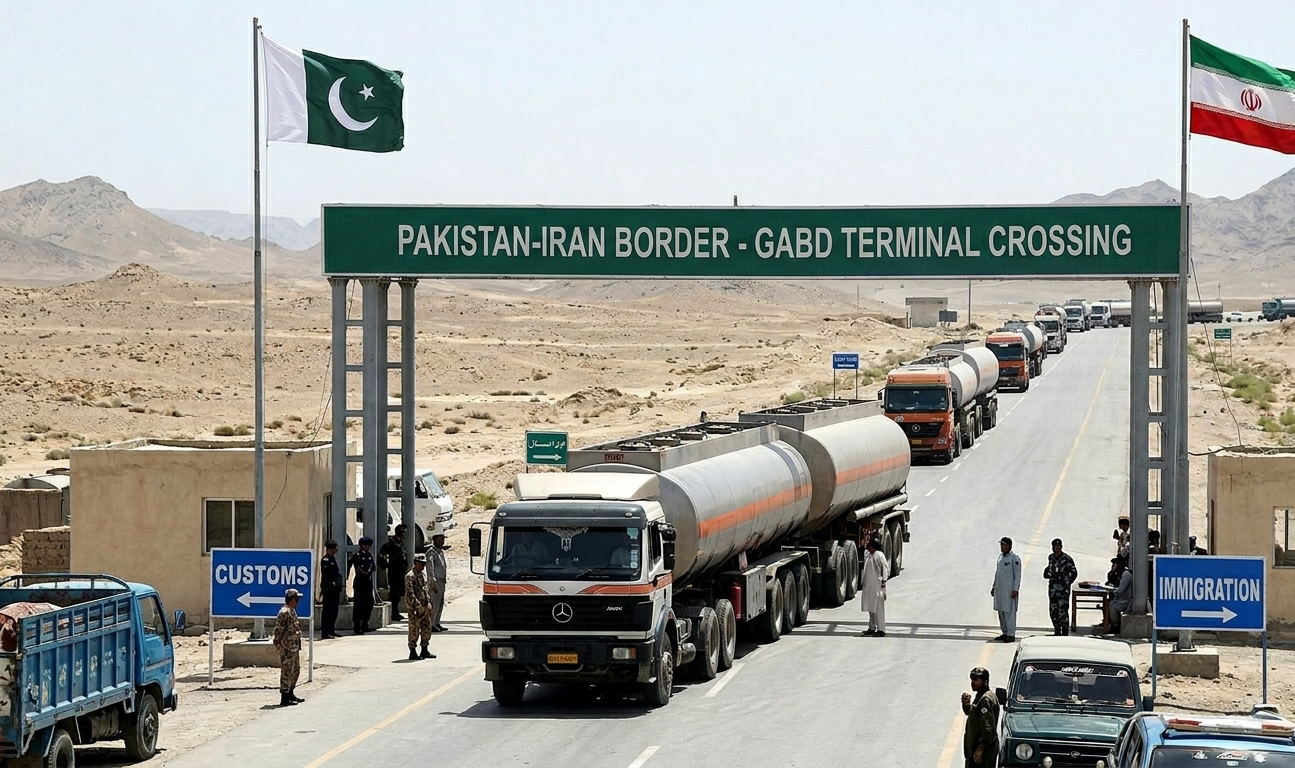
Iranian oil has always been traded in Pakistan, albeit in very small quantities because of persistent sanctions. What would happen if Pakistan decided to go ahead with it anyways?
ISLAMABAD: Amid a sharp seven-day increase of Rs137.24 per litre in petrol and Rs184.49 per litre in high-speed diesel — pushing prices to Rs458.41 and Rs520.35 per litre respectively — a familiar question has returned to Pakistan’s energy debate: if Iran is right next door and has oil to sell, why does Pakistan not simply buy it?
At first glance, the argument seems difficult to dismiss. Pakistan is an energy-importing country with recurring balance of payments problems, high inflation, and a long history of fuel price shocks feeding into transport, food and industrial costs. Iran, meanwhile, is a neighbouring producer that has for years supplied small amounts of petroleum products across the border through informal channels. In moments of crisis, the temptation is always the same: if the fuel is closer and possibly cheaper, why not formalise what already happens in fragments and use it to reduce the import bill?
But once the question moves from smuggling and small-scale border trade to state-backed commercial imports, the issue stops being a simple pricing matter. It becomes a test of how much economic risk Pakistan is willing to absorb in exchange for cheaper energy. That is because formal oil imports from Iran would not be taking place in a vacuum. They would intersect with sanctions, banking channels, refinery standards, sovereign financing, trade access, and Pakistan’s dependence on external partners. What looks like an energy decision would quickly become a broader geopolitical and macroeconomic one.
That is the real debate. It is not whether Iranian oil exists, nor whether some quantity of it has always found its way into Pakistan. It is whether the Pakistani state can afford to turn an informal reality into formal policy.
What Pakistan could gain by going ahead
There is a case to be made, and it is not a frivolous one. Pakistan’s need for imported energy is persistent, while its domestic reserves of natural gas have declined and imported fuel remains a major source of pressure on prices, industry and external accounts. In that sense, the attraction of Iranian energy is obvious. It is nearby, transport routes are shorter, and the logic of geography is difficult to ignore. Energy imported overland from a neighbouring country can, in principle, be cheaper and less logistically cumbersome than energy brought in through long sea routes.
That logic has long underpinned Pakistan’s interest in Iranian gas, and some of it carries over to oil as well. The appeal is not only price. It is also convenience, distance and strategic diversification. Pakistan has spent years trying to patch over its energy shortages through imported LNG, imported coal, domestic coal, nuclear expansion and other adjustments in the power mix. Those measures have reduced some urgency, but they have not removed the structural vulnerability that comes from relying on imported fuel and expensive external financing to keep the system running.
If Pakistan were to proceed with formal oil purchases from Iran, the immediate economic argument would be that even a modest discount could matter at scale in a high-price environment. It could provide some relief to refiners, reduce part of the import burden, and potentially soften the pass-through of global shocks into domestic fuel prices. For a country where every rise in petrol and diesel quickly spills into freight, food and industrial input costs, even limited savings can appear attractive.
There is also a strategic argument. Pakistan has often found itself with very little room for manoeuvre in energy markets. Long-term commitments, external funding constraints and limited domestic production have narrowed its choices. Buying from Iran could be presented as a way of increasing policy autonomy, reducing overdependence on a narrow set of suppliers, and using geography to Pakistan’s advantage rather than treating it as a diplomatic inconvenience.
Yet this argument has limits. The first is that Iranian oil is not necessarily available at the kind of deep discount many assume. The second is that Pakistan does not usually import petrol and diesel as finished products when crude can be processed more economically through domestic refineries. And the third is that once the trade becomes official, the benefit has to be large enough to justify the risk. That is where the case begins to weaken.
What would happen if Pakistan did it anyway
If Pakistan decided to go ahead with formal purchases of Iranian oil despite sanctions, the first impact would not be at the pump. It would be in the financial system.
Oil is not bought with rhetoric. It has to be paid for, shipped, insured, financed and cleared. That means banks, payment channels, shipping companies, insurers and traders become involved. And that is where sanctions bite. A formal arrangement with Iran would expose Pakistan to the risk of secondary sanctions, which could complicate international payments and make counterparties far more cautious about doing business with Pakistani entities tied to the trade. The issue would no longer be one cargo of oil. It would be whether Pakistan was willing to place parts of its access to the global financial system under strain for the sake of that cargo.
This is why the comparison with small-scale border trade is misleading. Informal petroleum flows can survive in legal grey zones because they remain fragmented, local and unofficial. State-backed imports are different. They require visibility, contracts and financial traceability. The moment Pakistan moves from tacit tolerance to official procurement, it invites a response not just from Washington but from the broader network of institutions that underpin cross-border trade.
The consequences could quickly spread beyond energy. Pakistan’s wider economy depends on access to external financing, remittance channels, trade settlement systems and support from multilateral institutions. It also depends heavily on ties with partners such as Saudi Arabia and the United Arab Emirates, which have not only supplied oil but also helped Pakistan through deferred payment facilities and other forms of financial support during periods of stress. A turn towards Iranian oil would not automatically end those relationships, but it could complicate them at exactly the moment Pakistan has the least room for diplomatic or financial friction.
There is also Europe to consider. Pakistan’s preferential trade access under GSP Plus supports billions of dollars in exports. Any move that creates the perception of sanctions non-compliance would introduce a risk far larger than the immediate savings from cheaper fuel. The arithmetic is brutal: even if Iranian oil offered some discount, that gain would be small beside the damage that could come from disrupted exports, financing pressure or reduced investor confidence.
Then there is the technical side. A senior refinery official cited in the original story noted that Iranian crude is relatively heavy and that refined products from Iran do not fully meet Pakistan’s Euro V specifications. That does not make imports impossible, but it does make the idea less simple than it sounds. Pakistan would not merely be buying cheaper fuel next door. It would be buying a politically sensitive commodity that may not fit neatly into existing quality and refining requirements.
And that is before the broader policy question is addressed: what, exactly, would Pakistan be risking sanctions for? If the answer is short-term consumer relief, the logic is weak. Pakistan has a long history of using energy pricing for political management rather than productive restructuring. Cheap fuel distributed as a temporary cushion can provide immediate relief, but it does little to solve the underlying problem of how scarce and costly imported energy should be allocated in an economy with repeated external crises.
If, however, the answer is that Pakistan wants to secure energy for productive sectors, protect industry, reduce pressure on imported fuels and make a longer-term strategic shift, the argument becomes more serious. But even then, it remains a high-risk trade-off. Pakistan would not simply be buying oil. It would be choosing to absorb a set of diplomatic, financial and trade consequences in exchange for uncertain savings and complicated implementation.
That is why the issue has remained unresolved for so long. The attraction is real, but so are the costs. Iranian energy may look like an obvious solution when prices spike and public anger rises. In practice, it is less a shortcut than a wager. And for Pakistan, a country that already lives close to its external limits, that wager could end up costing more than the oil ever saves.

The author is a an investigative journalist at Profit. He can be reached at [email protected].
View all articles →4 Comments
No comments yet. Be the first to join the discussion!