
After months of brinkmanship and one collapse, Packages Group and AkzoNobel set to sign a deal
The paint manufacturer will be acquired by the Packages Group in what industry sources are calling a very good deal. But how will Packages operate in an industry that is plagued with issues?
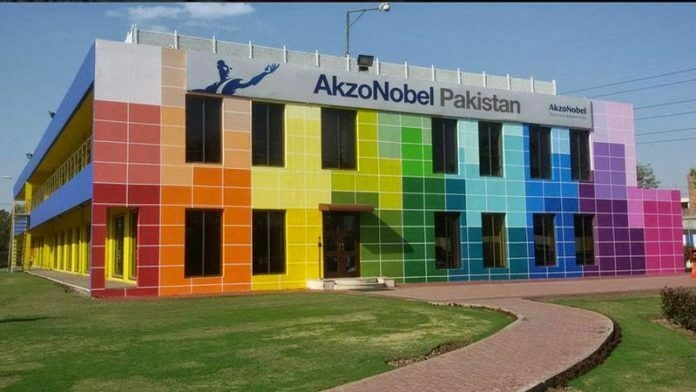
After months of due diligence, posturing, back-and-forth, and brinkmanship, AkzoNobel and the Packages Group are set to reach a deal to sell the dutch paint manufacturer's business and assets in Pakistan. Negotiating teams from both sides have gone to Istanbul where Profit has been told they are at the stage of crossing the t’s and dotting the i’s.
This is despite the fact that exactly one month ago, the deal had come close to completely falling through. Back then Profit had reported that despite an initial figure being discussed, the Packages Group had revised their offer downwards by as much as 40% after due diligence. AkzoNobel responded by saying the new figure was not acceptable, and the entire six month process behind the saga seemed like it was on the brink of collapse.
Now, with both sides likely to make announcements very soon, the final figure will become clear. It is pertinent to note that no material information has been shared regarding any ongoing negotiations or a deal being closed. At the same time, the share price for IGI Holdings, the holding company behind Packages Group, hit its upper lock two days in a row, hitting the upper lock at Rs 223.37 at 11 53 AM on the 16th of April (today). The increase in price is strange. While the overall stock market is generally optimistic because of the continued ceasefire between Iran and the US, the appreciation in IGI Holding’s stock does not match the scale of the sentiment. On top of this, IGI Holdings is a holding company, and its only function is maintaining ownership shares of the Packages Group’s companies. None of these companies have seen a similar increase in share price. This might indicate that there are insiders privy to the information that the AkzoNobel deal is about to go through increasing the share price.
The initial deal and Akzo’s struggles
IGI Holdings first informed the PSX they were interested in AkzoNobel in October 2025. An initial figure for the sale was also discussed privately between the two parties. Packages and AkzoNobel naturally declined to comment on what this figure was considering the deal has still not reached an official conclusion. However, a senior executive of a different paint manufacturing company told Profit the figure circulating in the industry was Rs16 billion — including all of AkzoNobel’s real estate assets.
AkzoNobel entered Pakistan in 2008 when the Dutch company acquired the British giant ICI. The Pakistan business came along with the deal. There was a time when ICI Pakistan used to set standards in Pakistan’s corporate landscape, but over time the paints business has gotten awfully dirty. AkzoNobel quickly discovered that the market they had walked into was rife with operators that were more than willing to bend rules and even engage in bribery.
As construction demand surged in the late 2010s, a fragmented network of small, largely unregulated manufacturers flooded the market with low-cost alternatives, unconstrained by quality standards, taxation, or imported input costs. These players relied on locally mixed chemicals, bypassing global compliance regimes, and built tight relationships with distributors and painters on the ground. The most corrosive practice was the widespread “token” system—cash incentives embedded in paint boxes—that effectively turned product choice into a bidding war for painters. By some estimates, this informal segment now controls roughly 64% of the market, leaving formal, tax-paying multinationals squeezed into a shrinking share.
For AkzoNobel, this shift proved particularly damaging. Once a flagship employer and a benchmark for corporate success in Lahore, the company found itself caught between its global governance standards and local market realities. It hesitated on the token system, briefly adopted it without matching local competitors, and then withdrew under pressure from its international parent—each move costing it market share. Unable to compete on price due to higher input costs and tax obligations, it leaned into premium positioning, which only further eroded margins. The result was a compounding loss of volume, relevance, and eventually strategic confidence, culminating in its delisting from the PSX in 2020 and a later decision by its parent to consider divestment.
Financially, the trajectory tells a stark story. In 2016, the company reported Rs5.1 billion in revenue, with gross margins of 42% and net margins around 15%, closely mirroring its Indian counterpart. But even as revenues fluctuated between Rs4.5 billion and Rs5.8 billion through 2020, margins steadily deteriorated. Post-2020, revenues rose sharply—reaching Rs9.1 billion by 2024—but largely on the back of inflation rather than real growth. Over the same period, gross margins collapsed to 20.9%, operating margins turned negative at -16%, and net margins fell to -7.3%, with losses per share recorded at Rs-13.77. Production volumes also declined, from 21 million litres in 2016 to around 16 million litres in 2024, reflecting a sustained shift towards cheaper alternatives. What emerges is not just the story of one company’s decline, but of an industry where informality has reshaped competition, pricing, and profitability at a structural level.
Why buy AkzoNobel?
As one might expect, AkzoNobel was clearly not a particularly lucrative prospect. A number of insiders within the Packages Group were against the potential acquisition, fearing that the paint business was not a good fit for what is known in Pakistan to be a clean and above board company. They would suffer for the same reasons that AkzoNobel did — having international standards in a market that only allowed success through underhanded methods.
Informed sources told Profit that Syed Hyder Ali, the current head of the group and Syed Babar Ali’s son, was keen on the deal and that is why it went through. One reason for this is that even if AkzoNobel’s paint business turns out to be a dud, their assets might make buying it worth the risk.
Read more: Why the Packages’ bid to buy Akzo Nobel fell through, and what comes next
For anyone potentially looking to buy the company there will be two things that might justify the price: legacy and assets.
AkzoNobel, ICI, and Dulux are all well recognised brand names in Pakistan. For those that do not remember the heights of ICI, it is difficult to imagine what it must feel like to the business leaders of today who came up in their careers idolising this grand old company. Not only is there a premium to be paid for the ICI legacy, anyone looking to enter the paint business would do well to have established brand names on their side.
But perhaps the most attractive factor is land. AkzoNobel has a large facility spread over 88 kanals (11 acres) at 346 Ferozpur Road Lahore. The facility sits on one of the most lucrative intersections in Lahore. Its front faces out onto main Ferozpur Road right at a terminal of the Metro Bus Station. It sits on a corner with its other side sitting in the middle of Model Town, one of the most expensive areas in the city. On top of that its main gate is a 30 second drive away from the Gulab Devi Hospital U-turn which leads directly to Walton, Cantt, DHA, and recently CBD’s route 49. In 2019, when AkzoNobel was preparing to delist from the PSX, that property was reevaluated and its forced sale land value was estimated close to Rs2.6 billion. This does not include the cost of the building. Since 2020, the property’s value is bound to have gone up, particularly because of continuous development work in the area and in particular on this patch of Ferozpur Road.
According to one source, buyers are not just interested in the paint business but also in the potential of this property. While they might want to give running the paint business a fair shot, even if it does not work out, the prime property can be managed or converted into a commercial real estate project.
Why did the deal rise from the ashes?
Up until a month ago the deal was as good as dead. AkzoNobel told packages that the exclusivity arrangement they had for a certain period was also off the table and they would be seeking out other buyers. However, it became clear to AkzoNobel that this would be a time consuming process. They would have to seek out new offers and then go back to the drawing board with a new offer and once again spend six months going through due diligence, with the potential of a deal falling through.
Despite the initial posturing, it seems AkzoNobel is in a rush to get out. That is not unprecedented. Only a few months ago Lotte Chemicals sold their business in Pakistan. Lotte had also once been a part of ICI Pakistan as its plastics arm. The deal went through for $69 million, or around Rs 17 per share of the publicly listed company. Lotte’s share price the day the deal was announced was Rs 27.75, which would indicate that the South Koreans sold it at a discount. They were in a rush to exit Pakistan.
It is entirely possible that the same has happened here. While the original 40% reduction in the reported Rs 16 billion figure is likely to have changed, it seems that the Packages Group is about to get AkzoNobel at a price they are happy with. The increase in IGI Holding’s share price also indicates that the deal is favourable for the Packages Group.
The Packages Group did not respond to queries from Profit.
Comments
No comments yet. Be the first to join the discussion!


