
Chishty finally gets the keys to K-Electric
More than two-and-a-half years after AsiaPak Investments bought out what was formerly Abraaj’s stake in K-Electric, Shaheryar Chishty has been appointed as Chairman of the Board for the utilities company.

Almost four years after he first bought K-Electric, Shaheryar Chishty has been appointed chairman of K-Electric’s board of directors. The announcement was made in a disclosure to the Pakistan Stock Exchange (PSX) on the 15th of April.
His election as chairman comes after a protracted legal battle that ranged from the Cayman Islands and the UK Judicial Committee of the Privy Council all the way to the Sindh High Court, pitting investors from Saudi Arabia and Kuwait against Mr Chishty’s company, AsiaPak Investments.
The appointment comes at a time when KE’s management has been in shambles. The company’s CEO since 2018, Moonis Alvi, resigned in February this year after getting a clean chit from then-Sindh Governor Kamran Tessori in a workplace harassment case. He was replaced by interim head Adeeb Ahmad. On the 24th of March, the company announced Syed Taha, an engineer with an MBA who was formerly CEO of Pakistan State Oil (PSO), would be the next CEO. His appointment was to come into effect on the 15th of April, the same day Chishty’s elevation as Chairman was announced to the PSX.
Who is Shaheryar Chishty?
A career banker, Chishty grew up in Karachi where he attended KGS before studying economics at Ohio Wesleyan University. His father was a naval officer and retired as an admiral. He joined Citibank in Karachi and spent a lot of time with the bank in Hong Kong, where he moved in 1997. His specialisation during this time was mergers and acquisitions.
He first came to prominence as a businessman in his own right in 2011, when he moved back to Pakistan after buying the Daewoo bus service from Korean investors. In his own words, this was the beginning of his vision to pick up “orphan assets” and turn them around. But Daewoo was only the beginning. In 2012 he formed AsiaPak Investments. The company owns Daewoo but two of its other key investments are Thar Coal Block 1 (a CPEC “early harvest” project consisting of 7.8 mln tons per annum coal mine and 1,320 MW mine mouth IPP) and Liberty Power Limited (a 235 MW gas fired IPP).
Chishty’s involvement in Thar Coal has long made him interested in the potential of acquiring K-Electric. Founded in 1913, KE is Pakistan’s only vertically integrated utility company. It was privatised in 1952 and was passed around different ministries and government departments (including WAPDA) until 2005 when the Musharraf Administration decided to privatize it. In the two decades since its ownership has been subject to both change and controversy.
The government sold off 66.4% of KE to a consortium of the Al-Jomaih Holding Company, a diversified Saudi Conglomerate, and the National Industries Group, a publicly listed Kuwaiti financial conglomerate (which also owns a large stake in Meezan Bank). For three years, the Saudi-Kuwaiti conglomerate failed to make any headway in turning around the company, finally turning in 2008 to Arif Naqvi, the former Karachiite who had gone on to create Abraaj Capital in Dubai.
Abraaj bought out half of the Jomaih-NIG stake in KESC, injecting $391 million into the company. It then began a turnaround effort the likes of which have never been seen in Pakistan before. Abraaj spared no expense in trying to turn around KESC, investing upwards of $1 billion in the company’s power generation and transmission infrastructure, which brought the utility’s power generation efficiency rate from 30% in 2008 to 37% in 2016, and its transmission losses from 4% to 1.4% in the same period.
It was a remarkable turnaround. In 2016 they were ready to sell. That was the first time Chishty showed an interest in acquiring the asset, but KE was eventually sold to China’s state-owned Shanghai Electric for $1.77 billion.
But then came the roadblocks. To cut a very long story short, consistent delays on the part of the government meant the Shanghai deal could not go through. What should have taken a year or two at most was dragged on for three years. Despite no lack of political lobbying on the part of Abraaj’s Arif Naqvi, the deal was dead in its tracks. And then came the crash. In 2019, Arif Naqvi and Abraaj were involved in an international scandal that ended with the company utterly bankrupt. If the deal had gone through, it is possible Arif Naqvi would have been able to stave off his debts for some time longer, but the deal’s paralysis made this impossible. Eventually Abraaj, and along with it the Shanghai Electric deal, went kaput. Abraaj’s assets, including KE, were set for liquidation. And this is where Shaheryar Chishty stepped in.
Why buy K-Electric?
This is where the story gets a little complicated, and also moves away from Karachi’s shores. When the government had first privatised KE in 2005, its buyers, the Al Jomaih Group, created a company called the KES Power Limited (KESP) in the Cayman Islands. This company paid the government of Pakistan directly and acquired a 66.4% stake in K-Electric in Pakistan. The government of Pakistan controls 24.36% shares in KE, while the rest is owned by institutional investors and the general public.
In 2009 when Al Jomaih decided to sell, Abraaj funneled over $370 million in foreign direct investment into KE through the KESP company in Cayman. Abraaj’s investment in KE was undertaken through the Infrastructure & Growth Capital Fund L.P. (“IGCF”), a $2 billion Cayman Islands private equity fund with investment contributed by over 100 different international investors, managed then by Abraaj Investment Management.
When the IGFC fund was created, it only bought 53.8% shares in the holding company called KESP with the rest of the amount remaining with investors from Al Jomaih. To clarify, 66.4% of K-Electric was owned by a holding company in the Cayman Islands called KESP. When Abraaj entered the picture in 2009, they purchased 53.8% of that holding company. This means that even though Abraaj did not have the majority shares in K-Electric (their total ownership comes out to around 35%) they did control the majority of the holding company that controls them, giving them management control and rights over KE.
When Abraaj went bankrupt, their share in KESP was up for liquidation. This is when Sheheryar Chishty enters the picture. In 2022, through a special purpose company called Sage Ventures registered in the British Virgin Islands, his company called AsiaPak Investments acquired Abraaj’s former stake in the holding company called KESP, becoming the ultimate beneficial owners of KE.
Legal troubles
Despite what was a clear-cut sale, management control of KE was not transferred. What followed instead was a series of complicated legal cases. Chishty became a partner in Sage Venture Group Ltd – a BVI special-purpose company of AsiaPak Investments – became a general partner of IGCF. The subsequent sale of Abraaj’s stake in KESP, the Cayman based holding company originally founded by Al Jomaih, was sanctioned by a Cayman Island court.
While the sale was cleared in the Cayman where it was entirely based, the minority shareholders of KES Power went to the Sindh High Court and obtained a stay order that prevented changes to K-Electric’s board – blocking proposed new directors and leaving vacancies unfilled.
The market consequence of that stay was outsized. A listed utility can muddle through a lot – tariff disputes, fuel price shocks, political heat – so long as its governance mechanism keeps turning. But when the board cannot be reconstituted, everything else starts to jam: approvals slow down, strategic decisions become harder to defend, and every rumour about “who really runs the place” becomes a risk premium in the share price.
The conflict then centred on board appointments and control rights. It essentially became a high-stakes contest between Gulf investors and Chishty’s camp. Caught in the middle of all this was Shanghai Electric. The company had continued interest in acquiring KE but their patience was wearing thin. The board battle risked derailing a multi-billion-dollar reform and investment programme for Karachi’s electricity infrastructure.
Then came the fatal blow. Shanghai Electric announced it was withdrawing from the deal in September 2025. They had finally pulled the plug.
For more than three years, deceptively narrow court order has functioned like a padlock on K-Electric’s corporate governance: no meaningful changes to the board, no clean resolution to shareholder wrangling, and – crucially – no straightforward path for fresh capital or a credible change-of-control story to take shape.
That padlock was finally opened in January 2026. KE announced in a notice to the PSX that it had been discharged from Civil Suit No. 1566 of 2025 – formerly Suit No. 1731 of 2022 in the Sindh High Court – after the plaintiffs, Al Jomaih Power and Denham Investment, withdrew their claims against K-Electric and three related defendants.
The plaintiffs’ own paperwork makes clear why the retreat happened now. Their withdrawal application cites a July 20, 2023 judgment of the Grand Court of the Cayman Islands granting an anti-suit injunction and directing them to withdraw the Pakistan proceedings against these defendants, and notes that subsequent appeals – including an attempt to go up to the UK Judicial Committee of the Privy Council – had been dismissed.
With no other route out, the case had to be withdrawn. This ended the board paralysis that KE had been under, and finally allowed for new directors to enter the scene. It has been this that finally culminated in the election of Shaheryar Chishty as Chairman of the board for K-Electric.
What will the new management do with KE?
K-Electric is a far cry from the hot product it was in 2016 when Shanghai Electric first wanted to pay $1.77 billion to buy it. Nearly a decade of neglect has made this a company that needs a lot of attention.
In fiscal year ending June 30, 2024, the latest full year for which data is available, K-Electric’s bill recovery rate – the total amount of bill payments collected as a percentage of the total amount of bills issued – was about 91.5% across all of its customers, according to data from the National Electric Power Regulatory Authority (NEPRA).
That number sounds impressive, and indeed represents a sharp increase in bill recovery rate relative to where the company was privatized in 2005, but is down from the 96.7% it had achieved just two years prior, in fiscal year 2022. And when one looks at the source of this decline, it is driven in very large part due to a decrease in collections from household consumers, which has seen a relatively sharp deterioration in the past four years, going from 92.2% collection in 2020 to just 82% in 2024.
This is bad, to say the least, and so bad, in fact, that K-Electric has gone from having a bill recovery rate about 700 basis points above the state-owned electricity companies’ average (which basically means all other companies in the country since K-Electric is the only privately-owned electric utility) in 2021 to now being 1,000 basis points below the state-owned companies. It is a 10% drop in just three years.
And it does not seem to be improving either. In the first half of the fiscal year ending June 30, 2025, K-Electric’s bill recovery rate dropped even further, with a household consumer bill recovery rate now at 78.4%, a sharp decline in just six months.
This publication has done an in-depth analysis of the problems plaguing KE back in June last year.
Read more: K-Electric: Asleep at the switch
To put a long story short, KE has been suffering from a serious problem of not having adapted to the solar revolution. Its best customers, the ones that would always pay their bills, are rapidly shifting away from the grid and moving towards solar energy. On top of this, a bruising fight over ownership has left the company with no clear leadership that has a mandate to turn things around.
There is a lot that can be done at KE. There is also proof of precedent that turning this company around is not impossible – what Abraaj did between 2009 to 2016 was as difficult if not more so than the current situation. With the corporate governance issues fixed, the new management might look to bring in new ideas to old problems. Mr Chishty has long expressed his desire to use AsiaPak’s interest in Thar Coal to develop synergies that provide cheap and effective energy to Karachi’s citizens.
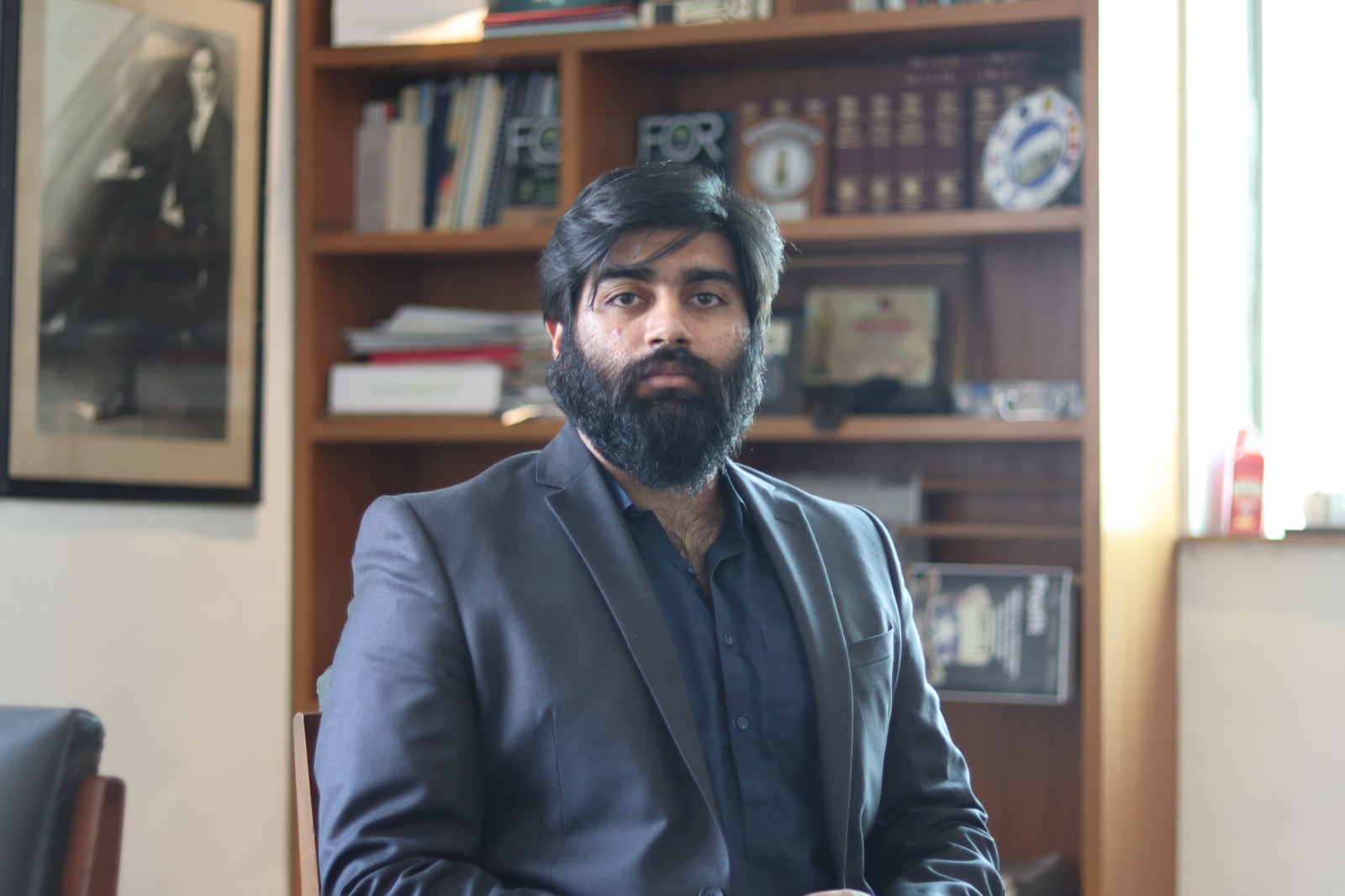
Abdullah Niazi is senior editor at Profit. He can be reached at [email protected]
View all articles →2 Comments
No comments yet. Be the first to join the discussion!


