Dar declares Pakistan “Open for Business” as Islamabad deepens economic push with China
Deputy PM highlights B2B expansion, $13bn in signed deals and over 300 MoUs as Pakistan and China accelerate cooperation under CPEC 2.0 framework
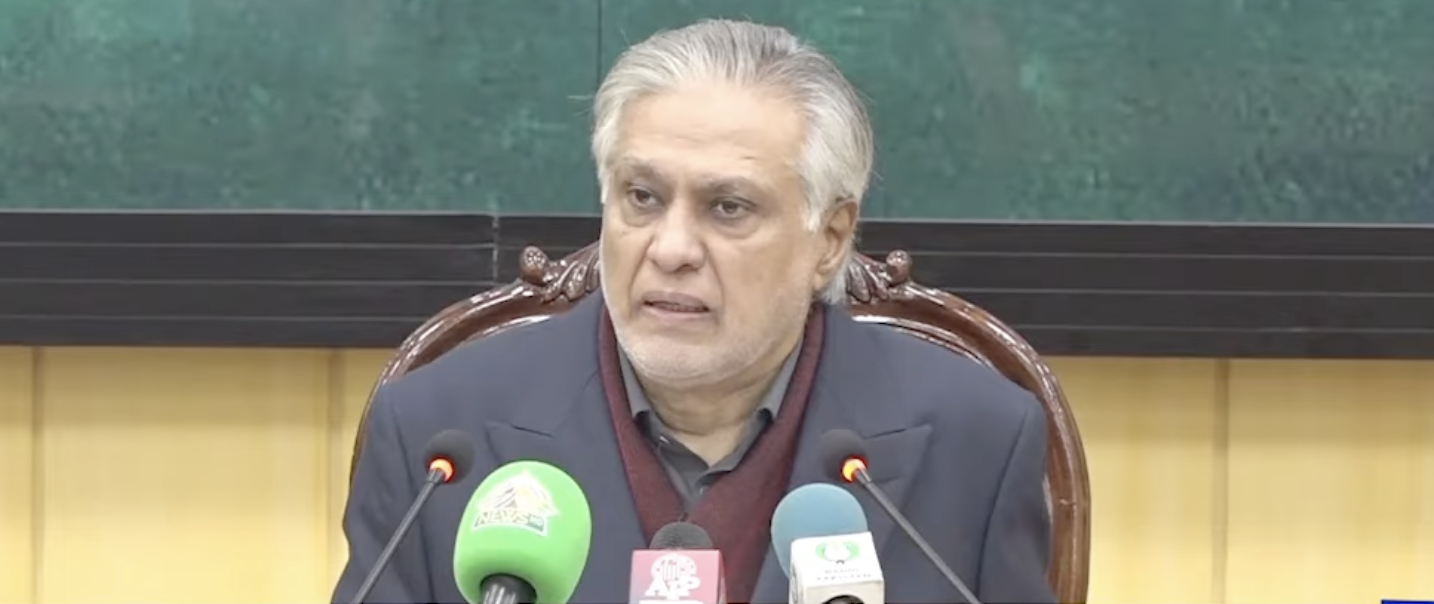
Deputy Prime Minister and Foreign Minister Ishaq Dar on Sunday said Pakistan was “open for business,” positioning economic reform and investment-led growth at the centre of Islamabad’s engagement with China during Prime Minister Shehbaz Sharif’s ongoing visit.
Dar made the remarks while addressing the Pakistan-China Business-to-Business Investment Conference in Hangzhou, where discussions focused on information technology, telecommunications, battery energy storage systems and agriculture as priority sectors for economic cooperation.
He described these areas as key pillars of Pakistan’s “economic transformation and industrial modernisation,” and said the government was pursuing a reform agenda aimed at stabilisation, industrial expansion and long-term growth.
“Pakistan is open for business. Pakistan is reforming. Pakistan is rising,” he said, adding that the country’s economic direction was shifting toward investment-driven development.
The deputy prime minister said more than 500 companies from Pakistan and China participated in the conference, reflecting expanding business-to-business engagement between the two countries.
He added that the Foreign Ministry had reoriented its role toward economic diplomacy, with B2B cooperation now forming a central component of foreign policy strategy.
Dar said Pakistan and China had jointly organised two business conferences in each country and that cumulative results included more than 300 memorandums of understanding and nearly three dozen joint ventures worth over $13 billion.
He stated that around a 30 percent conversion rate had been achieved from MoUs into formal agreements and contracts, describing the figures as evidence of trust and long-term commercial confidence.
Highlighting recent investment activity, he said the IBI Pakistan Digital Economy headquarters had been established in Islamabad within eight months of discussions held in Beijing, resulting in MoUs exceeding $1 billion.
He also referred to a planned joint venture between Pakistan’s Servis Group and China’s Longstar Group, which he said was expected to develop into a billion-dollar investment project in Pakistan.
Dar praised Pakistan’s diplomatic mission in China, particularly Ambassador Khalil Hashmi, for supporting business matchmaking and investment coordination initiatives across multiple Chinese cities.
He also noted that the ambassador had received the Chinese Government Friendship Award, calling it recognition of his contribution to strengthening bilateral relations.
Referring to the broader economic framework, Dar said Pakistan viewed China’s model of economic diplomacy as a benchmark, combining targeted engagement, institutional coordination and measurable outcomes.
He added that Pakistan’s missions in China were now actively engaged in “economic diplomacy in action,” focused on facilitating partnerships and investment flows.
Marking the 75th anniversary of diplomatic relations, the deputy prime minister said Pakistan-China ties had remained resilient through changing global and regional conditions, describing the relationship as an “iron brotherhood.”
He said traditional state-to-state ties were now being reinforced by expanding business-to-business cooperation, signalling a deeper economic dimension in bilateral relations.
Dar also referenced Chinese wisdom, quoting: “A journey of a thousand miles begins with a single step,” and said Pakistan had taken its first step toward deeper economic integration during earlier engagements in Shenzhen.
Meanwhile, Prime Minister Shehbaz is scheduled to meet Chinese President Xi Jinping and Premier Li Qiang during the visit.
He is also expected to attend events marking 75 years of diplomatic ties, meet senior Chinese business leaders, and visit the China Academy of Agricultural Sciences.
The Foreign Office said the visit would add “new dimensions” to bilateral relations, particularly through expanded cooperation under the second phase of the China-Pakistan Economic Corridor.
Earlier engagements this year, including President Asif Ali Zardari’s visit to China, also produced multiple agreements in agriculture, desalination and industrial cooperation, further strengthening economic ties.
Both countries have agreed to advance CPEC 2.0, shifting focus toward industry, agriculture and mining, alongside improvements in connectivity, trade facilitation and regional economic integration.

Our monitoring team diligently searches the vast expanse of the web to carefully handpick and distill top-tier business and economic news stories and articles, presenting them to you in a concise and informative manner.
View all articles →Comments
No comments yet. Be the first to join the discussion!