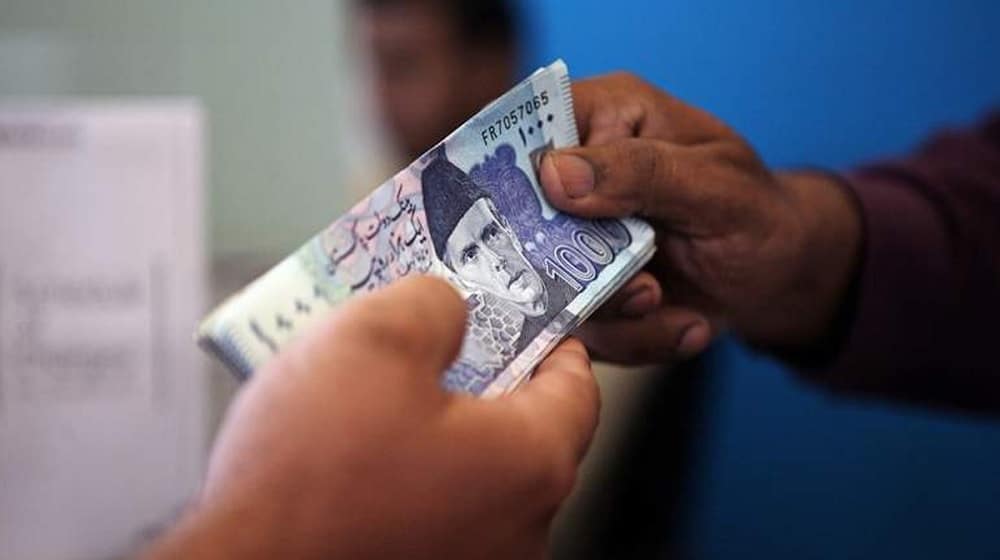
PIDE recommends raising minimum wage to ₨45,000 for FY2026-27
Think tank proposes national wage benchmark with provincial adjustments, citing inflation, food insecurity and worker affordability concerns


The Pakistan Institute of Development Economics (PIDE) has recommended increasing the national minimum wage to ₨45,000 per month for fiscal year 2026-27, up from the current notified level of ₨37,000, while proposing a new framework linking wage setting to inflation, productivity, affordability and enforcement capacity.
In a policy brief submitted to the government, PIDE said the proposed ₨45,000 benchmark is based on a hybrid methodology that incorporates purchasing power protection, worker and household adequacy, partial productivity sharing, labour-market affordability and implementation feasibility. The institute noted that the existing minimum wage has yet to be fully implemented across many federal and private-sector jurisdictions.
The institute has recommended a “national reference benchmark with provincial calibration” model under which the federal government would publish a transparent methodology and national wage benchmark, while provinces would retain the constitutional authority to notify wage rates at or above that level based on local economic conditions and enforcement capacity.
Under the proposed framework, indicative provincial wage levels would be ₨45,000 for Punjab and Khyber Pakhtunkhwa, ₨46,000 for Sindh and ₨45,500 for Balochistan, subject to affordability assessments, sectoral reviews and compliance considerations.
PIDE said the proposal focuses not only on the wage figure itself but also on establishing a governance system that ensures transparent wage determination, evidence-based provincial adjustments, phased enforcement and annual monitoring of implementation outcomes.
Speaking on the proposal, PIDE Vice Chancellor and Planning Commission member Dr. Nadeem Javaid said minimum wage policy should not remain an annual administrative exercise disconnected from labour welfare and economic realities.
“Pakistan now requires a credible wage governance system that balances worker protection, productivity, business sustainability, and macroeconomic stability within a transparent institutional framework,” he said.
According to the study, the proposed framework rests on four pillars: transparent evidence-based wage setting, provincial calibration, credible enforcement mechanisms and annual reporting on implementation.
Dr. SM Naeem Nawaz, Professor of Economics at PIDE and co-author of the study, said wage-setting should move beyond approaches based solely on inflation or poverty thresholds.
“A credible wage floor must be one that workers can realistically receive and provinces can realistically enforce,” he said, noting that nearly 80% of Pakistan's employment remains in the informal sector.
The study recommends phased enforcement beginning with public procurement contracts, outsourced government services and large registered businesses before gradually extending compliance requirements to small and medium-sized enterprises, agriculture and domestic work.
PIDE argued that minimum wage policy affects not only labour markets but also household purchasing power, poverty levels, labour informality, domestic demand, productivity and social stability. The institute noted that average inflation stood at 6.19% during July-April FY2026, while year-on-year inflation reached 10.9% in April 2026. It also highlighted that household food insecurity increased to 24.35% in 2024-25 from 15.92% in 2018-19.
Among its recommendations, PIDE proposed adopting the ₨45,000 benchmark for FY2026-27, introducing enforceable wage compliance clauses in public procurement contracts, implementing phased enforcement mechanisms and requiring provinces to publish annual Minimum Wage Implementation Reports.
The institute said it has forwarded the framework to the Planning Commission of Pakistan for consideration as part of efforts to develop a coordinated and transparent minimum wage governance system.
Comments
No comments yet. Be the first to join the discussion!