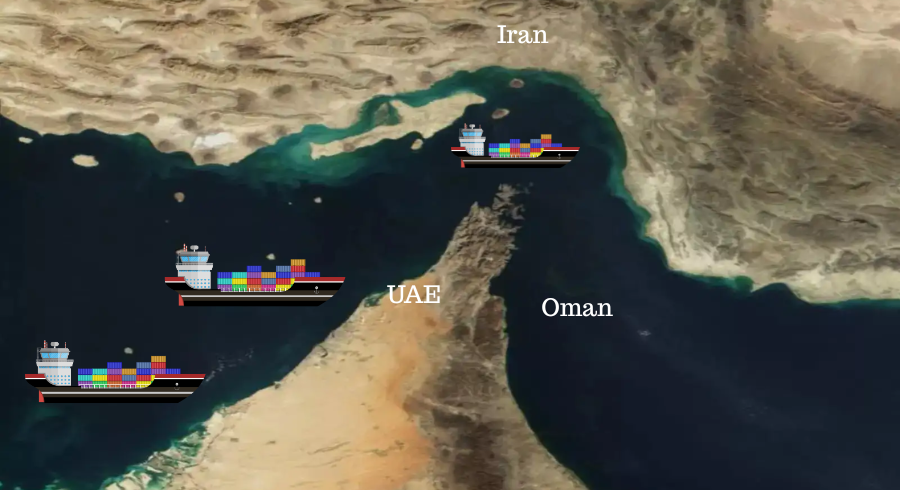
Shippers remain on edge as Hormuz deal fails to trigger return of tanker traffic
Asian and European shipowners say it may take weeks to rebuild confidence for Strait of Hormuz transits after a US–Iran framework deal, citing mines, insurance and safety gaps.

Shipping companies in Asia and Europe said on Monday that a recovery in confidence for transit through the Strait of Hormuz could take weeks, even after a US–Iran framework agreement to reopen the critical waterway.
The deal, expected to be formally signed on Friday as a memorandum of understanding, is aimed at ending the conflict and restoring maritime traffic through the strait, which is a key route for global oil and liquefied natural gas shipments.
Markets reacted immediately to the announcement, with global oil prices falling about 5% as traders priced in the potential return of disrupted supply flows.
Despite the political breakthrough, shipowners said they would not resume full operations until clear safety assurances are in place, citing concerns over naval mines, insurance coverage and operational risks in the region.
US President Donald Trump said in a Truth Social post that oil-laden vessels had begun moving through what he described as a “Southern Highway,” calling it “totally safe, secure and pristine.” However, vessel-tracking data showed no major increase in tanker crossings on Monday, apart from a single LNG carrier.
Shipping data providers reported that dozens of tankers remained positioned on both sides of the Strait of Hormuz, while some vessels continued to operate discreetly along Oman’s coastline, reportedly sailing with limited tracking signals under naval protection.
The Strait of Hormuz, a strategic chokepoint for roughly one-fifth of global oil and LNG flows, has seen severely reduced traffic since the conflict that began on February 28 with US-Israeli strikes, which disrupted shipping routes and energy flows across the Gulf.
India’s Petronet LNG tanker Disha was the only clearly identified commercial vessel to transit the strait on Monday, according to data from Kpler and LSEG. The vessel had loaded at Qatar’s Ras Laffan terminal in early March and is scheduled to arrive in India on June 18.
Shipping associations said conditions remain highly uncertain. BIMCO warned that transit through the strait is still considered dangerous, with unresolved risks related to mines and maritime security.
“The next step is for shipowners to be reassured that transiting the Strait of Hormuz is not only permitted, but also safe,” said Jakob Larsen, BIMCO’s chief safety and security officer.
Industry groups in Japan and Italy also urged caution, saying they are awaiting clearer implementation details and noting that previous ceasefire announcements in the region had failed to produce lasting stability.
Analysts said that although the agreement is positive for supply expectations, a full recovery in shipping flows will depend on verified security conditions, insurance clarity and confidence among vessel operators.
Comments
No comments yet. Be the first to join the discussion!