June 23, 2026
Gulf equities slip as oil softens on Iran talks, Fed rate fears weigh on sentiment
Saudi, Qatar and Dubai indices lead declines as Brent eases and markets price in higher probability of U.S. rate hikes
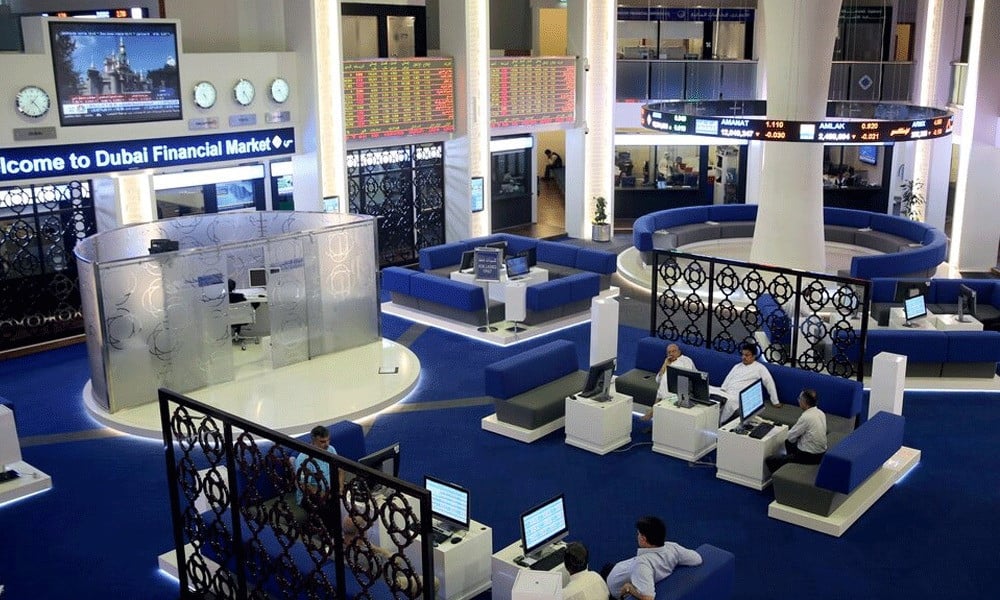
Equity markets across the Gulf ended mostly lower on Tuesday, as investors reacted to easing geopolitical tensions linked to U.S.-Iran discussions alongside rising expectations of a more aggressive U.S. Federal Reserve stance on inflation.
Sentiment was pressured after a U.S. waiver allowed Iran to resume limited oil sales for 60 days as part of an emerging peace framework aimed at de-escalating hostilities in the Middle East. The development contributed to a sharp drop of over 3% in global oil prices, a key driver for Gulf financial markets.
Brent crude futures slipped 26 cents, or around 0.3%, to $77.64 per barrel during the session, reinforcing concerns over near-term energy price softness.
In parallel, markets also tracked comments from U.S. Vice President JD Vance, who said progress had been made in talks with Iran and confirmed that the Strait of Hormuz remained open.
Saudi Arabia’s benchmark index declined 0.4%, weighed by a 1.3% drop in Saudi Basic Industries Corp, while Saudi Aramco edged 0.2% lower. Qatar’s main index also fell 0.4%, dragged by a 1% decline in Industries Qatar.
Dubai recorded one of the sharper regional losses, with its main index sliding 1.3%, pressured by a 2.3% fall in Emaar Properties. Abu Dhabi’s index was comparatively steady, closing down 0.1%.
Outside the Gulf, Egypt’s blue-chip index slipped 1.6%, while Kuwait lost 0.4%, Oman declined 1.2%, and Bahrain bucked the regional trend with a 0.3% gain.
Market participants are closely monitoring diplomatic developments between Washington and Tehran, with analysts suggesting that any sustained progress could influence risk appetite across GCC equities. At the same time, softer crude prices remain a headwind for energy-linked sectors.
Adding to global market sensitivity, investors are also pricing in a higher likelihood of tighter U.S. monetary policy, with Fed funds futures implying a 54% probability of at least two 25-basis-point rate increases before year-end, compared with 15.2% a week earlier, according to CME Group’s FedWatch tool.
Gulf markets typically remain highly responsive to shifts in U.S. interest rate expectations due to the dollar peg maintained by most regional currencies.
0 Comments
No comments yet. Be the first to join the discussion!