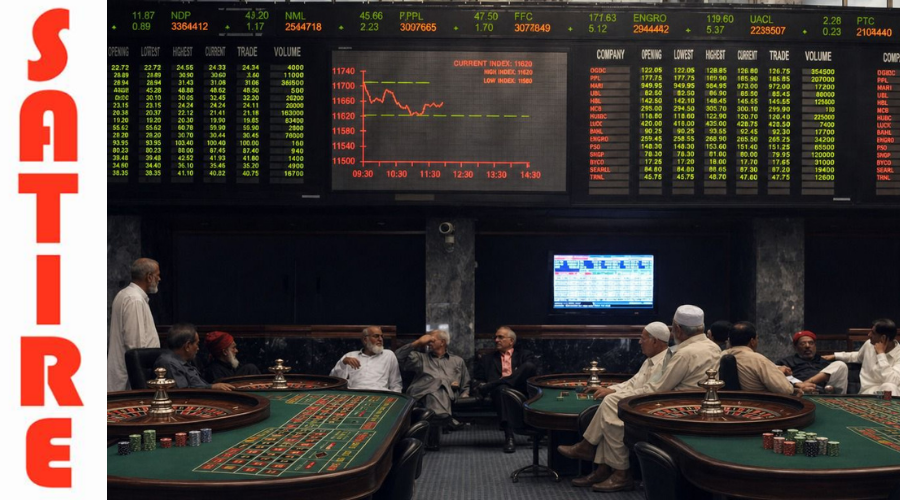
“Not your typical business school” doesn’t have traditional classes, evaluations, group projects or employed graduates


{Disclaimer: This is a work of fiction and does not present itself as the truth. Learn to take a joke; you’ll live longer.}
Touted as “Pakistan’s most disruptive educational experience,” Lahore’s newly expanded Imperial School of Business Innovation (ISBI) has quickly become one of the country’s most sought-after MBA programs despite lacking nearly every feature traditionally associated with education.
The private institution, which charges upwards of Rs 2.8 million for its flagship two-year MBA, proudly advertises that it has “reimagined learning” by doing away with lectures, examinations, attendance requirements, and, according to alumni records, meaningful employment outcomes.
“This isn’t your father’s business school,” said ISBI Vice Chancellor Dr. Muneeb Farooqi while unveiling the university’s new glass-fronted campus in DHA. “In old-fashioned institutions, students waste time studying, being graded, and getting jobs. Here, we focus on confidence, networking, and invoice generation.”
Admission into the university has also been described as “refreshingly inclusive,” with applicants only required to submit a bank statement and spell “entrepreneur” within three attempts.
Students say the ease of entry is part of the appeal.
“I applied at 11:30 pm and got my acceptance letter by 11:42,” said first-semester MBA candidate Hammad Raza, who says he chose ISBI over tougher universities because “their merit was more aligned with my strengths.”
The institution’s curriculum mainly consists of PowerPoint presentations about “mindset,” mandatory LinkedIn profile photography, and weekly guest lectures by start-up founders whose companies are “currently pivoting.”
Instead of exams, students are assessed through “vibe-based evaluations,” where faculty determine grades based on handshakes, eye contact, and the number of times a student uses the word “scalable” in casual conversation.
Group projects have also been abolished after university management concluded they were “too operational.”
“Our students are future CEOs,” explained one professor. “Delegation begins in the classroom.”
Despite its premium fees, ISBI boasts an impressive 94% placement rate, though most graduates clarify that “placement” refers to being seated at their father’s office after graduation. The remaining 6% have reportedly launched podcasts.
University officials insist critics are missing the bigger picture.
“People ask what exactly students are paying for,” said Dr Farooqi. “And that’s the beauty of modern business education. Nobody really knows.”
At press time, ISBI had announced a new Executive MBA for Rs 4.5 million, specifically designed for people who are already calling themselves founders.
Comments
No comments yet. Be the first to join the discussion!