
OGDC’s new discoveries start adding to company’s bottom line
The nation’s largest oil and gas company has been able to continue finding enough new fields to replace its older ones as they reach depletion levels

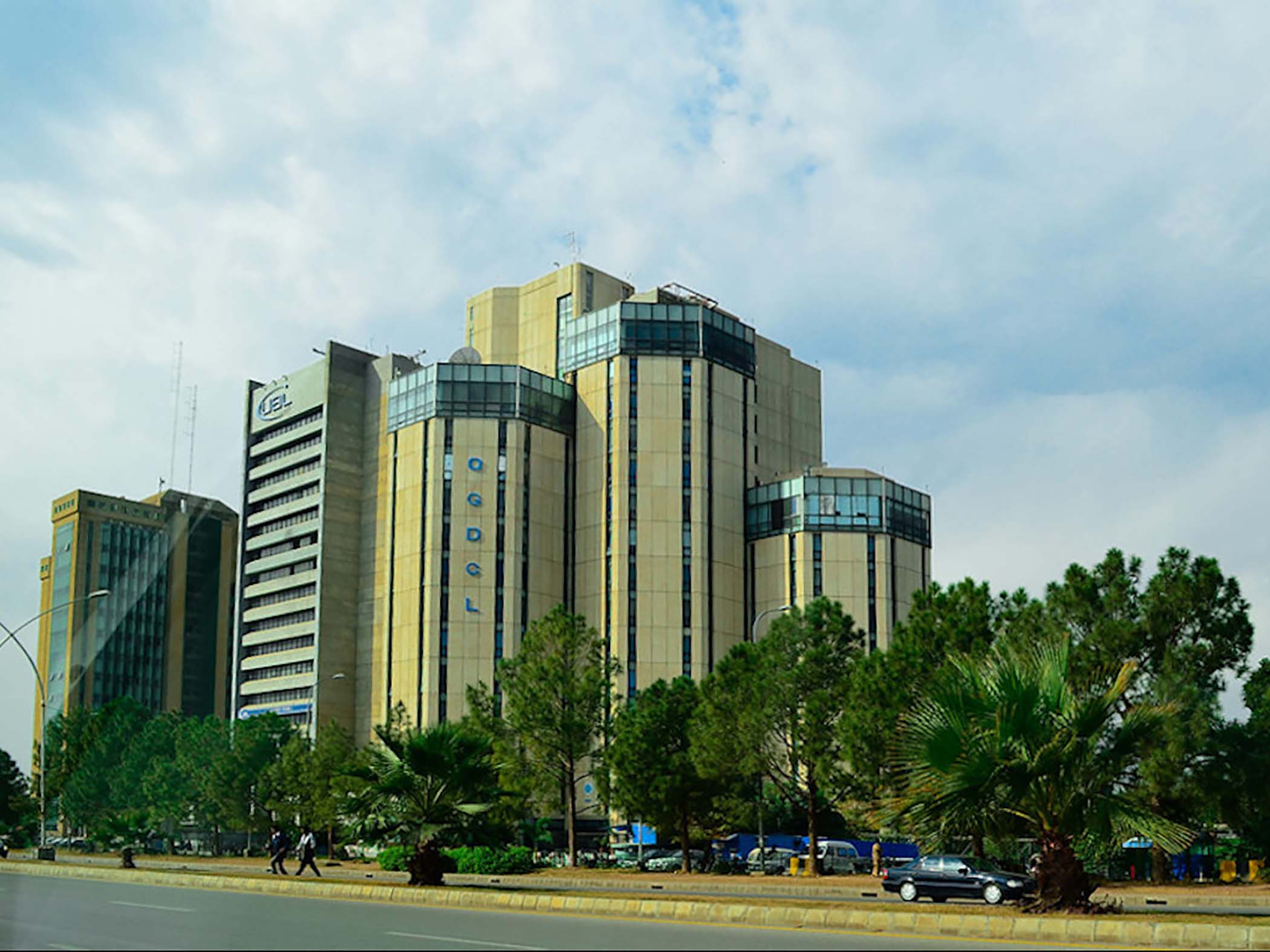
It is hard for a company as large as the Oil and Gas Development Company (OGDC) – the largest publicly listed company in Pakistan by market capitalisation – to sustainably continue growing. Yet OGDC keeps managing to find ways to grow its bottom line.
The company, established in 1961 by the Government of Pakistan (which still owns a majority and controlling stake), is the country's largest oil and gas exploration and production company. It covers 50% of domestic oil production, and holds 28% of domestic gas production, and has significant oil and gas fields in Nashapa, Qadirpur and Maramzai, to name a few.
The company’s two new fields continue to add to its production capacity and are helpful to the company maintain production levels even as some of its older fields are depleted. These are chiefly: two new production sites in Kohat, stable exploration efforts, and buffers in place for any field depletions. Plus, it helps to be counted as an ‘essential’ industry in the middle of any lockdown.
To the first point: OGDC is benefitting from two production sites in Kohat. The first is the Dhok Hussain Gas field, which was discovered in December 2017. This has a capacity of 15.4 million cubic feet per day of gas, or 360 barrels per day of condensate, according to Ali Asghar Poonawala, a research analyst at AKD Securities, an investment, who wrote about the company in a note to clients on July 6.
While the field was meant to start production in September 2018, the project was significantly delayed, in what is alleged to be ‘political elements’ who tried to stop the pipe from being laid down. Nonetheless, the field has finally begun operation this year. It has an annual earning impact of Rs0.45 per share, (helped in part by the fact that OGDC owns 97.5% of the asset).
The production site was discovered in August 2019, in Togh-1. This has an initial flow of 12.7 million cubic feet per day of gas, and 250 barrels per day of condensate. But though it is smaller in size, Togh-1 was able to be added to production in less than eleven months. As OGDC has a 50% stake in the field, the annual incremental earnings impact amounts to Rs0.21 per share.
Together the two new discoveries contribute 1.6% to annual crude production, and 3% to annual gas production. Why does this come at a crucial time? Well, during the first nine months of fiscal year 2020, the average oil production slipped 7% year-on-year, when compared to the same period the year before, while gas production fell 8% year-on-year.
Despite this, the company is experiencing a stable success ratio. During the first 11 months of fiscal year 2020, the success ratio stood at 37%; it stood at 38% in 2019; and 33% in 2018. Sure, these ratios are not as great as the peak levels of 2016 (40%) or 2017 (57%) but they are still roughly in the ballpark range of the average between 2014 and 2018 (36.8%).
In 2020, OGDC found four discoveries from six exploratory wells and five development wells which were spudded - or commenced drilling - during the year.
“Based on the same, we believe renewed exploration activity in North region, is likely to remain firm,” said Poonawala, noting that OGDC acquired 1,503 line kms of 2D of seismic data during the first half of fiscal year 2020, compared to the 1,324 line km of data acquired in the same period the year before. That is an impressive 75% of seismic activity domestically for the first half of 2020.
Even the fact that some of OGDC’s fields are naturally being depleted does not faze the company. To illustrate, the fields Nashpa, Sinjhoro and Qadirpur are naturally depleting, some seven gas wells have reported declines, and there has been lower gas demand from WAPDA run state independent power producers. As mentioned before, oil production fell 6.7% year-on-year, while gas production fell 8% year-on-year, which are levels previously seen in 2012.
But, the company has an ‘aggressive developmental project pipeline’ up its sleeve, according to Poonawala. Between fiscal year 2020 and 2022, new gas projects are expected to add 840 million cubic feet per day of gas production. The Uch field will be the largest, at 460 million cubic feet per day, followed by Qadirpur field, at 280 million cubic feet per day.
The company has not always been the greatest about hitting its drilling targets. Mostly this was due to very Pakistan-specific problems, such as an absence of a decent road network, or an unstable security situation. But since security has somewhat stabilized, and rigs have become cheaper for a fall in international oil prices, perhaps exploration is also looking up. This year, the company spudded 15 wells (nine explanatory and six development) manainting its trajectory since 2019, where it spudded eight explanatory and eight development wells.
For the coming years, Poonawala estimates that the price of Arab Light will be at $40 a barrel, while the US dollar will appreciate around 4.5% against the rupee. Even if the currency were to further devalue however, Poonawala notes that a “dollar denominated top-line provides effective hedging.”
One spot to watch out for? OGDC has said that it will cut capital expenditures if crude remains below $40 a barrel, which would sacrifice any growth in exploration. Again thought, that would also depend on how long oil prices remain at that low level.
Comments
No comments yet. Be the first to join the discussion!


