UAE, Kuwait suspend trading as Gulf markets fall on Iran conflict
Abu Dhabi Securities Exchange, Dubai Financial Market closed for March 2–3 as regional indices slid up to 5.5%
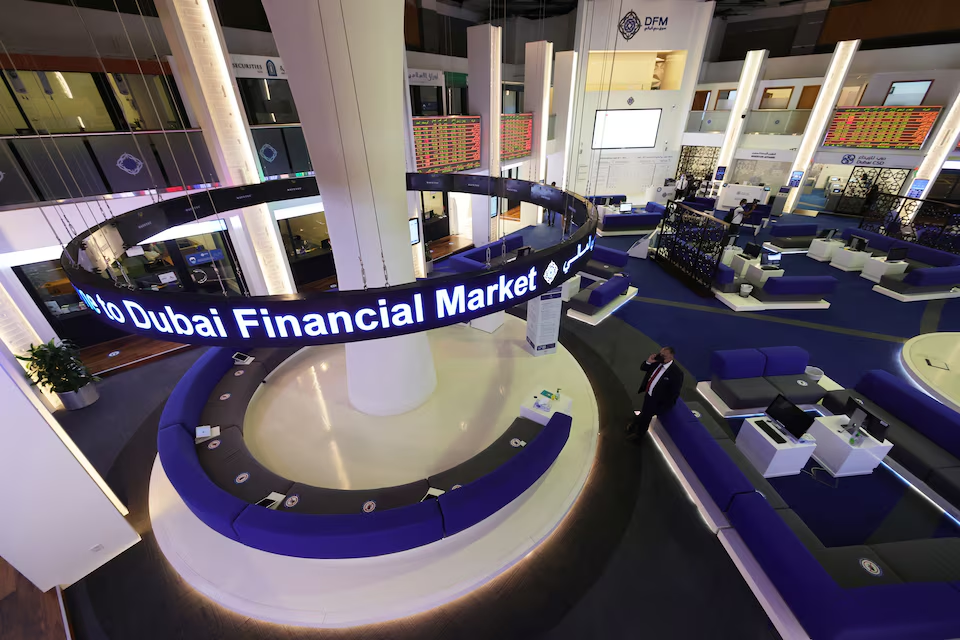
The United Arab Emirates closed its Abu Dhabi and Dubai stock exchanges for two days while Kuwait suspended trading and other Gulf markets recorded sharp losses after Iran’s retaliatory missile and drone strikes escalated regional tensions and unsettled investors across the Middle East.
The UAE Capital Markets Authority said the Abu Dhabi Securities Exchange (ADX) and Dubai Financial Market (DFM) would remain closed on March 2 and March 3. The regulator stated it would continue to monitor developments and take further steps if required.
The two exchanges host some of the Gulf’s largest listed companies, placing billions of dollars in market value temporarily on hold while investors assess the scale of the damage from strikes targeting airports, ports and residential areas in the UAE and other Gulf states.
Markets that remained open in the region on Sunday recorded significant declines. Saudi Arabia’s benchmark index fell more than 4% at the open before trimming losses to close 2.2% lower. Oman’s index dropped over 3% early in the session and later reduced losses to 1.4%, while Egypt’s main index declined 5.5% in early trade before settling 2.5% lower.
Kuwait suspended trading on its stock exchange from March 1 until further notice, citing exceptional circumstances linked to rising regional tensions. Boursa Kuwait said the decision was taken by the Capital Markets Authority’s Board of Commissioners.
In Saudi Arabia, Al Rajhi Bank declined 3%, budget airline flynas dropped 6.9%, Jabal Omar Development fell 2.6% and shipping company Bahri lost 4.2%. Saudi Aramco rose 3.4%, marking its largest intraday gain in over four months amid expectations of higher oil prices.
The escalation followed U.S. and Israeli strikes on Iran and subsequent retaliatory attacks across Gulf cities. Reports of explosions near Dubai and over Doha continued for a second day, while major regional airports, including Dubai, were closed.
Analysts said the market response reflects rising geopolitical risk. Barclays revised its Brent crude price forecast to about $100 per barrel from an earlier estimate of $80.
Market participants noted that Gulf Cooperation Council equities may remain under pressure as investors factor in prolonged instability. Concerns have also emerged over potential disruption to shipping routes, particularly through the Strait of Hormuz, which could affect global energy flows and trade.
Bahrain’s index fell 1%, while Qatar’s stock exchange remained closed for a bank holiday.
Investors are expected to closely track further regional developments, with analysts warning that additional escalation or damage to infrastructure could deepen volatility across regional and global markets.

Our monitoring team diligently searches the vast expanse of the web to carefully handpick and distill top-tier business and economic news stories and articles, presenting them to you in a concise and informative manner.
View all articles →Comments
No comments yet. Be the first to join the discussion!