April 2, 2026
Solar equipment is getting more expensive despite a foreseen drop in demand, why?
Despite NEPRA’s prosumer regulations, solar panels and batteries is getting increasingly more expensive, here is why

April 2, 2026
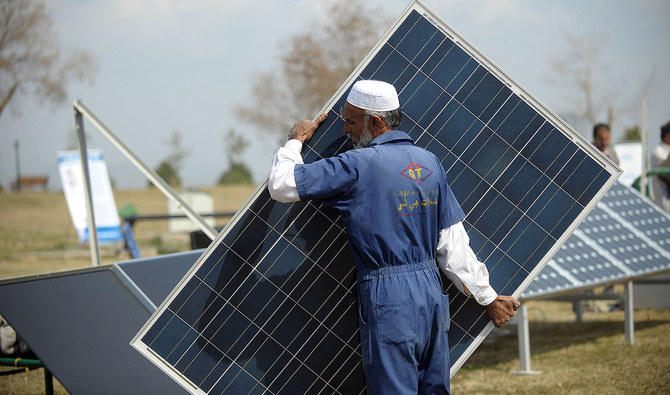
The market for any product is seldom entirely logical. Take Pakistan’s solar panel market. The new prosumer rules were supposed to make rooftop solar less attractive. NEPRA’s 2026 regulations replaced unit-for-unit net metering with net billing, meaning exported electricity is no longer credited at the same rate consumers pay for imported electricity.
Under the newly proposed regulations, prosumers would buy electricity from the grid at the applicable retail tariff of roughly Rs37 to Rs55 per unit and sell surplus power at around Rs10 to Rs11 per unit.
The rules were meant not only to discourage a shift toward net metering, which was increasingly putting pressure on IPPs’ capacity payments and, in turn, circular debt, but also to reduce the burden on the import bill. According to a recent market report, solar panel imports alone cost more than $2.1 billion in 2024, making Pakistan the world’s third-largest importer of solar panels.
On paper, the policy change should have cooled the rooftop market. And yet, in early 2026, even before the outbreak of the war with Iran and the closure of the Strait of Hormuz, a strange shift was already underway. Retail prices for both panels and batteries began to move up.
A diversified market
The first thing to understand is that Pakistan’s solar market is larger than net-metering economics. Reuters reported in February that most of the country’s solar panels are not connected to the grid to sell excess electricity at all.
Many households and businesses buy solar for self-consumption, outage protection and tariff avoidance rather than for export income, because even then, the numbers make sense.
This also matters because a policy that lowers the buyback rate, while it hurts the export-led model, does not erase the appeal of producing your own daytime electricity in a country with high tariffs, unreliable supply and a long habit of consumers hedging against the grid.
Pakistan’s solar import wave was already enormous before the rule change. According to Reuters, imports of Chinese solar components jumped fivefold from around 3,500 MW in 2022 to 16,600 MW in 2024, and crossed 10,000 MW in the first four months of 2025 alone. In other words, this is not a niche market anymore.
A halt in the policy decision
There is also an important timing issue. The regulatory shock did not land on a clean slate.
Firstly, after immediate backlash, the government moved to protect existing users and pending applicants. It was reported that all net-metering applications submitted before Feb. 8 would be processed under the previous rules, covering 5,165 pending applications and around 250.822 MW of capacity. It was also proposed to preserve existing billing terms for already contracted users until their agreements expire.
That meant the market did not suddenly move from “old economics” to “new economics” for everyone at once. A section of buyers still had reason to rush, installers still had a backlog, and traders still had an incentive to price for a transition.
But then something more interesting happened. After intense backlash, just three days after the approval of the new regulations, the prime minister-led panel told the National Assembly that implementation of the policy would be halted.
This gave new entrants a window to sign agreements on the old terms for as long as the policy change remained on hold. That, in turn, created even more demand and pushed prices higher.
Keeping in mind that registration takes roughly one month, someone who gets registered within that period can still sign an old contract, regardless of whatever changes happen later. So instead of easing, the urgency increased.
But this is also the broad frame. The real story splits in two, because panels and batteries become expensive for different reasons.
Panels
The January retail jump in panel prices was real enough in local reporting. The Express Tribune reported that prices of imported Chinese panels rose by roughly Rs5,000 per unit in common wattage categories, with a 585-watt panel moving from around Rs16,000-Rs17,000 to Rs20,000-Rs21,000, and dealers blaming higher raw-material costs, taxes and firmer Chinese prices.
It lines up with what was happening globally in the inputs that matter to solar panel production. Silver prices had surged 130% over the previous year in February alone, squeezing solar manufacturers, and that silver paste accounts for 30% of total solar cell costs. Copper also hit record territory in January and analysts expected it to average nearly $11,975 a tonne in 2026, the highest annual consensus in its survey history.
Then came the policy shift in China, which matters because Pakistan’s solar market is overwhelmingly import-led and heavily exposed to Chinese supply. On Jan. 9, Reuters reported that China would cancel VAT export rebates for photovoltaic products from April 1. The China Photovoltaic Industry Association said the move should help stop an excessive decline in export prices, and noted that some exporters had been using rebates as a discount for foreign buyers.
For Pakistani importers, that matters even if local demand softens somewhat, because the landed cost can rise regardless of local demand.
Pakistan then added its own layer. The government’s proposed 18% GST on imported solar panels in the 2025-26 budget was later reduced to 10%, but a 10% tax is still a tax. The revised rate was retained after parliamentary pressure. Even though traders had reportedly already begun lifting prices ahead of the budget measure taking effect, the tax played a huge role in the price increase.
NEPRA may have weakened the economics of oversizing a rooftop system purely to dump excess units into the grid. But panels are not priced only by Pakistani policy. They are priced by Chinese export policy, global metals, local taxation and dealer expectations about replacement cost.
Batteries
If panels face a tug-of-war between weaker local incentives and higher global costs, batteries face something more straightforward. The bottomline is that NEPRA’s new regime may make storage more valuable, not less.
Once exported daytime electricity is compensated at around Rs10-Rs11 per unit while evening electricity bought from the grid costs several times more, the financial logic shifts to storage.
A unit of solar power used instantly in your own home or stored for use after sunset becomes much more valuable than a unit sold to the grid. Institute for Energy Economics and Financial Analysis (IEEFA) notes that solar-plus-battery systems store cheap daytime electricity and discharge it during the evening peak, helping consumers reduce grid dependence and bills. Battery demand rises precisely because the grid now pays less for exported solar.
Talking to Profit, various solar equipment vendors noted that there was a visible uptick in the sale of batteries since February. That is one of the main reasons why battery prices stayed firm, or even rose, despite a weaker policy mood around rooftop solar.
Another structural reason is that Pakistan’s battery market is still deeply import-dependent and burdened by taxes and duties. IEEFA reported that solar with battery energy storage still pays back in roughly three to five years in Pakistan’s residential sector despite a 48% cost increase from surcharges and duties on lithium-ion batteries.
Even though there have been reports of local companies beginning the process to assemble batteries in Pakistan, with Treet entering an agreement with a Chinese company, they are still at the import stage. Their first shipment of Lithium Ion batteries only arrived in Pakistan a week ago.
Additionally, just as with panels, global Chinese policy turned less friendly. Reuters reported in January that China would cut VAT export rebates for battery products to 6% from 9% between April and December 2026, before scrapping them entirely from Jan. 1, 2027.
Three days later, lithium prices in China jumped after the announcement, with the most-active lithium carbonate contract rising 9% in a day and prices having climbed 167% from the previous year’s low.
For Pakistan, which remains a net importer of advanced battery storage as well, this is bad news. A market that already pays a tax-and-duty premium is being asked to absorb a higher export-side cost too.
So batteries are expensive for almost the opposite reason from panels. A household that once maximized rooftop size and used the grid as a virtual battery under favorable net metering now has a stronger reason to buy an actual battery.
What we are seeing right now is a re-pricing of the solar value chain. NEPRA’s latest prosumer rules may yet slow some categories of rooftop adoption, especially for new grid-exporting users. But they do not automatically make solar cheap. In fact, by colliding with global cost pressures and shifting the commercial logic toward storage, they may make the next phase of Pakistan’s solar revolution feel more expensive.
So in this solar market, urgency, speculation, regional conflict and the search for energy independence all converged at once. The government’s policy shift was supposed to make rooftop solar less attractive, but the temporary halt in implementation did the opposite by giving consumers a narrow chance to secure older, more favourable terms. Solar equipment became costlier not despite uncertainty, but because uncertainty itself became part of the price.
0 Comments
No comments yet. Be the first to join the discussion!