May 23, 2026
Lucky Motors’ Rs 6.39m Aion UT was supposed to sell fast. Here is why it isn't—so far
Despite record high petrol prices and an apparent aggressive price tag, the budget-friendly electric hatchback is stalling at dealerships.

May 23, 2026
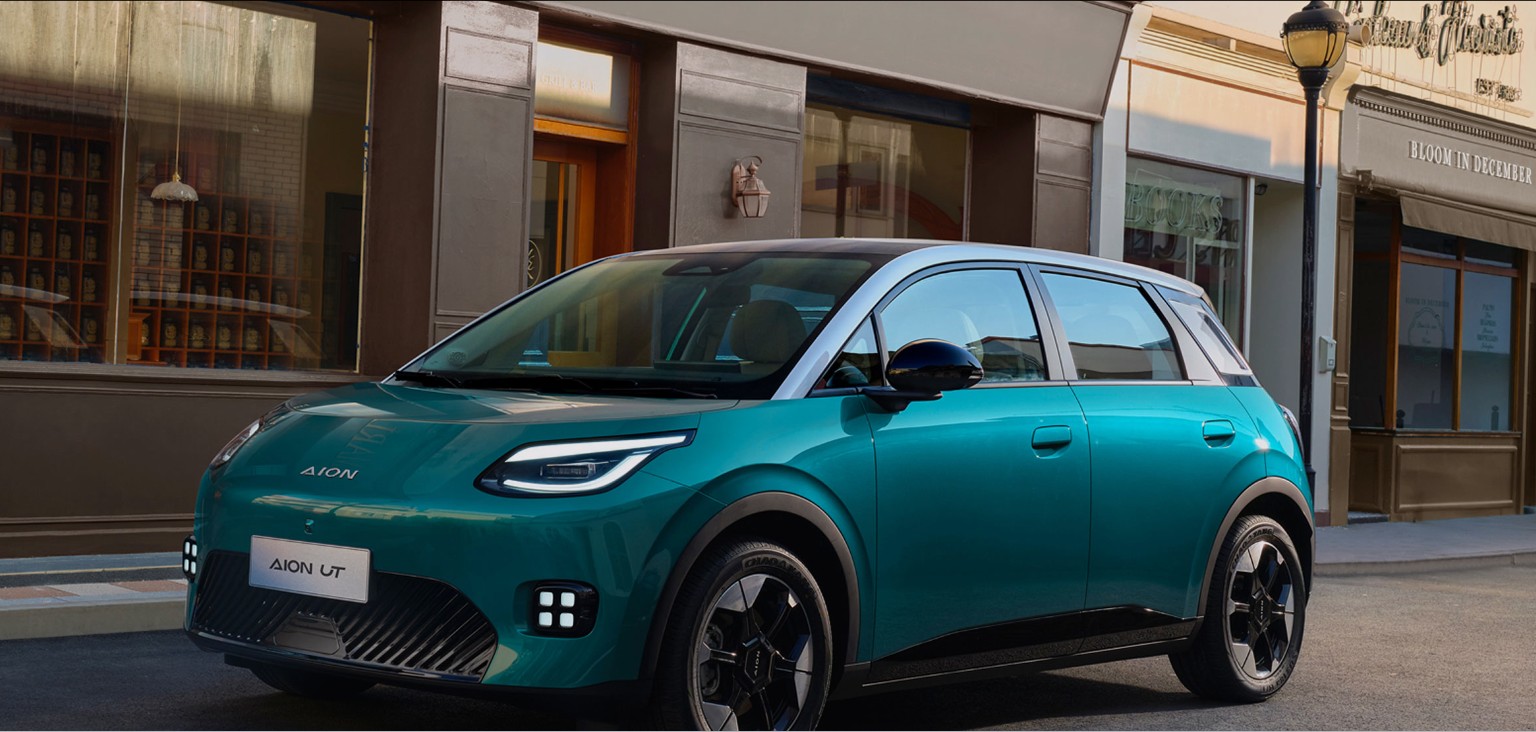
LAHORE: When GAC Aion vehicles rolled into Pakistani showrooms earlier this week, soaring local petrol prices led to strong market expectations that the entry-level Aion UT would be the undisputed volume driver. Priced at an aggressive Rs 6.399 million, the hatchback seemed perfectly positioned to disrupt the local auto sector and offer immediate relief at the pump. However, initial showroom realities are telling a different story. Dealerships report that during the first three days the UT struggled to convert foot traffic into sales. Instead, consumers walking through the gates showed significantly more interest in the higher-end Aion V and the premium Hyptec HT models. This is despite that Lucky Motors Aion has strategically priced the Aion UT to lure consumers away from premium combustion-engine hatchbacks and compact sedans, placing it squarely in the crosshairs of popular local options like the KIA Stonic, Suzuki Fronx, Toyota Yaris, Honda City, Hyundai Elantra (old shape) and Suzuki Swift.
But why isn't an apparently competitively priced EV pulling buyers away from aging internal combustion engine (ICE) platforms?
The answer lies in a combination of consumer psychology, perceived brand equity, and most importantly feature deficits.
The "Pure EV" Leap
Feedback gathered from consumers visiting Lucky Motors' showrooms, coupled with sentiment analysis of social media commentary, reveals a distinct hesitancy among the target demographic. For a buyer currently cross-shopping traditional ICE vehicles, the transition to a pure EV represents a significant psychological leap. Lingering concerns regarding charging infrastructure, range anxiety, and unfamiliar battery technology mean that many prospective buyers are ultimately not willing to take the risk on an entry-level electric hatchback. A visitor at one of the dealerships told Profit “I would have booked it, had this been a Plug-in hybrid or a REEV.”
BYD Atto 2 vs Aion UT
For the segment of the market that is ready to embrace electric mobility, the Aion UT is falling short on perceived value and brand image. Those willing to leap into the EV space are demonstrating that they do not want a bare-bones experience. Instead of settling for the UT, these buyers are overwhelmingly continuing to choose the BYD Atto 2.
- Brand image: Despite a retail price difference of Rs 900,000, and an ongoing open market premium (or "on") of Rs 200,000 to Rs 400,000, the Atto 2 is dominating sales. A major qualitative factor driving this is brand image. BYD has firmly established itself globally as an EV and battery technology pioneer. This international recognition translates locally into high consumer confidence regarding safety, longevity, and resale value—a level of prestige the GAC Aion brand currently lacks in the eyes of the Pakistani consumer.
- The Feature Disparity: This price and brand gap is further justified on the showroom floor. The Aion UT, despite its C-SUV level claims, presents a strictly utilitarian cabin. It features manual fabric seats, a basic manual day and night rear-view mirror, and lacks modern EV staples like a panoramic sunroof and wireless charging. In stark contrast, buyers spending nearly Rs 7.3 million on an Atto 2 are securing a more premium package. The extra capital buys vegan leather, ventilated electric seats, an auto-dimming mirror, and significantly punchier performance—delivering 290 Nm of torque compared to the UT's 145 Nm. Furthermore, the Atto 2 offers a more commanding SUV-like physical presence, standing 1,675 mm tall compared to the UT's 1,575 mm, and riding on larger 17-inch alloys.
- The Silver Lining: While the Atto 2 wins on showroom appeal and performance, the Aion UT does hold a significant trump card regarding long-term ownership. Lucky Motors is offering a robust 8-year or 200,000 km warranty on the UT's battery, alongside an 8-year or 160,000 km vehicle warranty. This gives it an edge over BYD's standard 8-year/160,000 km battery and 6-year/150,000 km vehicle warranties. Furthermore, the modular structural design of magazine batteries that Aion uses can potentially make them cheaper and easier to repair on a cellular level compared to the highly integrated structure of BYD's Blade Battery system.
Why UT can still make it work
This is not the UT's first stumble in the local market. Roughly six months ago, Gugo Motors introduced the exact same model with a superior specification sheet and a premium price, a strategy that quickly failed to gain traction. But this time it is vastly different. Not only is the pricing strategy very different, Lucky Motors brings a vastly superior dealership network and manufacturing pedigree to the table which was missing last time.
But for now, the GAC Aion UT finds itself caught in an awkward middle ground. It requires too much of a technological leap for the cautious ICE buyer, while feeling too stripped-down for the enthusiastic EV buyer.
To offset the feature deficit against BYD Atto 2 and to convince ICE buyers to finally take the EV leap, Lucky Motors may need to price the vehicle even lower, making it an undeniable, purely economic value proposition.
2 Comments
No comments yet. Be the first to join the discussion!