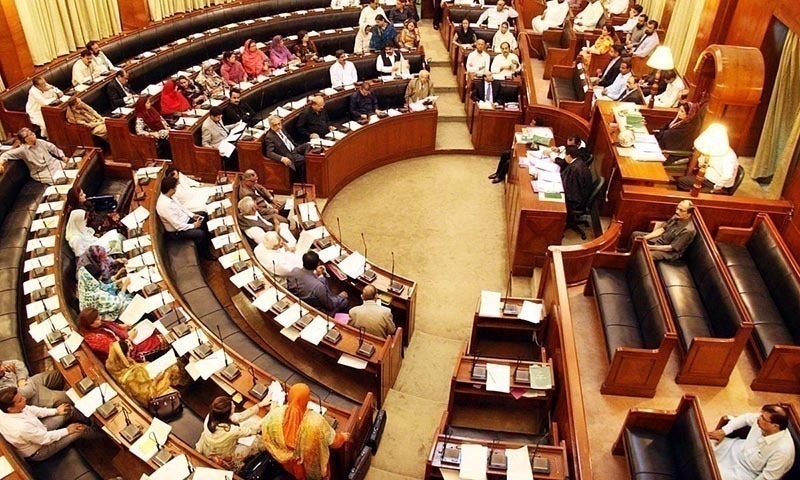
Tarar defends budget, cites Rs800bn recovery and tax relief for salaried class
In Pakistan’s National Assembly budget debate, Information Minister Attaullah Tarar defended the plan as a reform-led relief budget, citing Rs800bn recoveries and expanded tax breaks for the salaried class amid opposition concerns over inflation and revenue targets.

The federal budget debate in the National Assembly on Sunday turned sharply contested, with the government defending its fiscal plan as a reform-led “relief budget,” while opposition lawmakers challenged its revenue assumptions, inflation impact, and overall economic direction.
Information Minister Attaullah Tarar said enforcement measures had generated around Rs800 billion in recoveries, arguing that the budget reflects stabilisation and early-stage growth. He claimed the fiscal framework had received positive international attention and urged critics not to undermine the country’s economic narrative.
On taxation, he said no income tax applies to those earning up to Rs50,000 monthly, while those earning between Rs50,000 and Rs100,000 are charged 1 percent, adding that relief has been extended across income brackets, particularly for the middle class. He said broader adjustments in services and export taxation are aimed at supporting consumption and competitiveness.
Tarar also defended Federal Board of Revenue reforms, saying structural changes are reducing discretionary influence and strengthening enforcement. He cited around Rs60 billion recovered from the sugar sector and reiterated that total enforcement-led recoveries stood at about Rs800 billion. He added that modernisation measures such as faceless customs appraisal and a revised transfer system are being used to curb corruption and improve efficiency, while around 3.6 million retailers have been brought into the tax net under a fixed taxation scheme.
Presenting the macroeconomic case, he said Pakistan has moved away from earlier default risks, citing GDP growth of about 3.7 percent, per capita income rising from roughly $1,751 to $1,901, improved remittances, stronger reserves, and a current account deficit narrowed to around 0.7 percent of GDP. IT exports, he added, have reached nearly $3.8 billion.
Opposition lawmakers, however, questioned the credibility of fiscal projections. Hussain Tariq said the new FBR target of Rs15.264 trillion represents a steep rise and may be difficult to achieve given existing inflation pressures. He pointed to a 14.75 percent rise in the Sensitive Price Indicator and a 54 percent increase in electricity costs, arguing that wage earners are facing severe pressure from rising living expenses. He also warned that repeated shortfalls in tax collection continue to strain federal-provincial fiscal relations.
Asad Qaiser criticised governance and alleged exclusion from political processes, while also highlighting severe electricity shortages in his constituency despite local generation capacity, calling the situation unjust for consumers.
Sharmila Faruqui argued that the salaried class continues to carry a disproportionate tax burden despite limited relief. She said indirect taxation has expanded through new levies and revised sales tax structures affecting essential goods, while debt servicing, pensions, and circular debt are consuming a large share of fiscal resources. She also pointed to uneven development spending, particularly in Karachi, despite its major tax contribution, and warned that poverty and unemployment trends remain concerning.
The government maintained that the budget is the result of broad consultations across agriculture, industry, IT, and commerce, and said targeted measures in housing, exports, and agriculture are aimed at supporting employment and growth. It highlighted export incentives, reduced taxes for exporters, and housing finance schemes as part of a broader reform strategy.
The debate ended without consensus, with the government framing the budget as a stabilisation-to-growth transition, while opposition parties described it as vulnerable to inflationary pressure, weak revenue realism, and structural imbalances in taxation and spending.
Comments
No comments yet. Be the first to join the discussion!