Asian stocks climb on AI spending boost as oil reaches six-week high
South Korea’s KOSPI rises more than 3% on chip demand, while Brent hits $96 a barrel and the yen remains near a 40-year low.

SINGAPORE: Asian stocks advanced on Thursday after major US technology companies signalled continued heavy investment in artificial intelligence infrastructure, while escalating Middle East tensions pushed oil prices to six-week highs.
Alphabet and Tesla reported no slowdown in AI-related spending, with Alphabet raising its capital expenditure plans for the year. The outlook lifted Asian chipmakers expected to benefit from higher demand for semiconductors, memory and data-centre equipment.
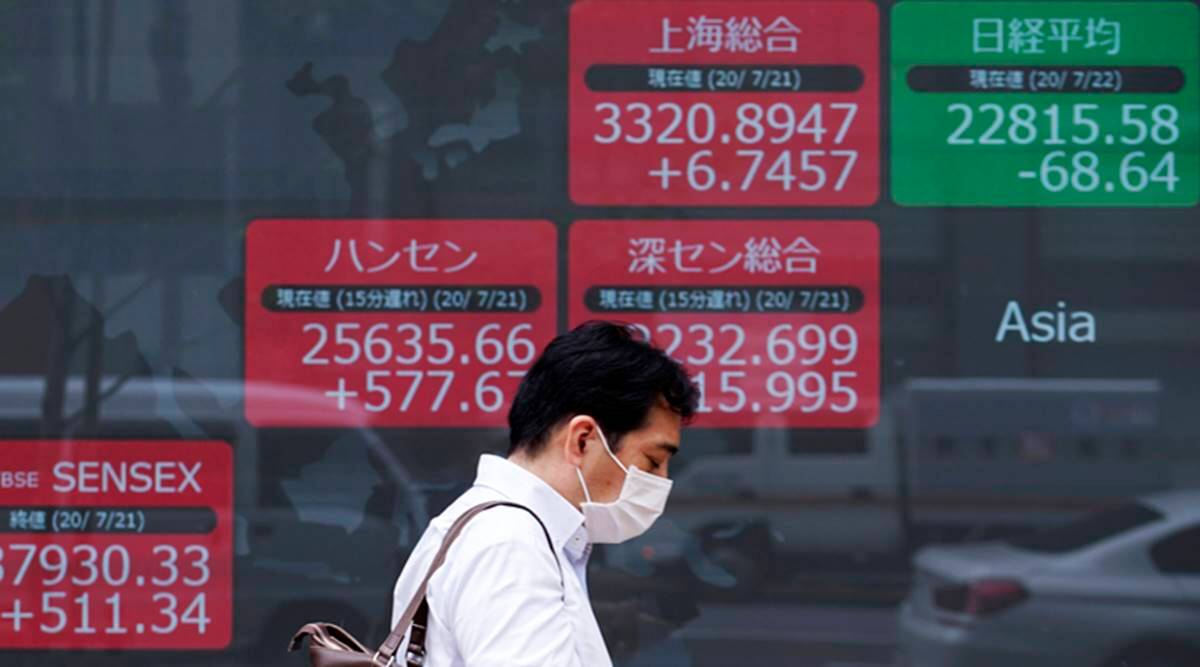
South Korea’s KOSPI surged more than 3%, led by SK Hynix and Samsung Electronics, while Japan’s Nikkei gained 0.7%.
MSCI’s broadest index of Asia-Pacific shares outside Japan rose about 1% and was on course for a 3% weekly gain, snapping a two-week losing streak.
Gary Tan, portfolio manager at Allspring Global Investments, said stronger cloud growth supported higher AI expenditure and suggested that spending by large technology companies still had room to continue.
However, investors remained focused on whether the scale of AI investment would translate into sufficient earnings and justify elevated valuations.
Charu Chanana, chief investment strategist at Saxo in Singapore, said the concern was no longer demand for AI but the returns companies would generate from their spending.
Nasdaq futures slipped 0.1% as markets awaited capital expenditure updates from Microsoft, Meta and Amazon, which are scheduled to report earnings next week.
European stock futures pointed to a muted opening ahead of the European Central Bank’s policy decision. The ECB is expected to keep rates unchanged while retaining the option of an increase in September following inflationary pressure linked to the Iran conflict.
Brent crude futures rose 2% to $96 a barrel after the United States launched another round of attacks on Iran and Yemen’s Houthis targeted oil tankers in the Red Sea.
Nearly five months of conflict have reduced global inventories and increased inflationary pressure. Analysts warned that disruption to both the Strait of Hormuz and the Bab el-Mandeb Strait could affect shipping routes carrying more than a quarter of global oil and gas supplies.
Thierry Wizman, global foreign exchange and rates strategist at Macquarie Group, said higher energy prices had revived concerns about global economic growth.
Rising oil prices also pushed short-term US Treasury yields to their highest level in 17 months as traders increased bets that the Federal Reserve would raise interest rates sooner than previously expected.
Markets are pricing in 42 basis points of US rate increases during 2026, with a September hike fully reflected in current pricing.
In currency markets, the Japanese yen weakened to 163.07 against the dollar, surrendering gains made after reports that Bank of Japan officials were considering faster interest-rate increases.
The yen fell to 163.24 on Tuesday, its weakest level since December 1986, prompting traders to watch for possible intervention by Japanese authorities.
OCBC strategists said intervention or stronger domestic asset purchases could slow the yen’s decline, but a lasting change would likely require the Bank of Japan to accelerate monetary tightening.
The US dollar remained firm, supported by safe-haven demand and growing expectations of higher Federal Reserve interest rates.
Comments
No comments yet. Be the first to join the discussion!