Pakistan's FDI Report Card
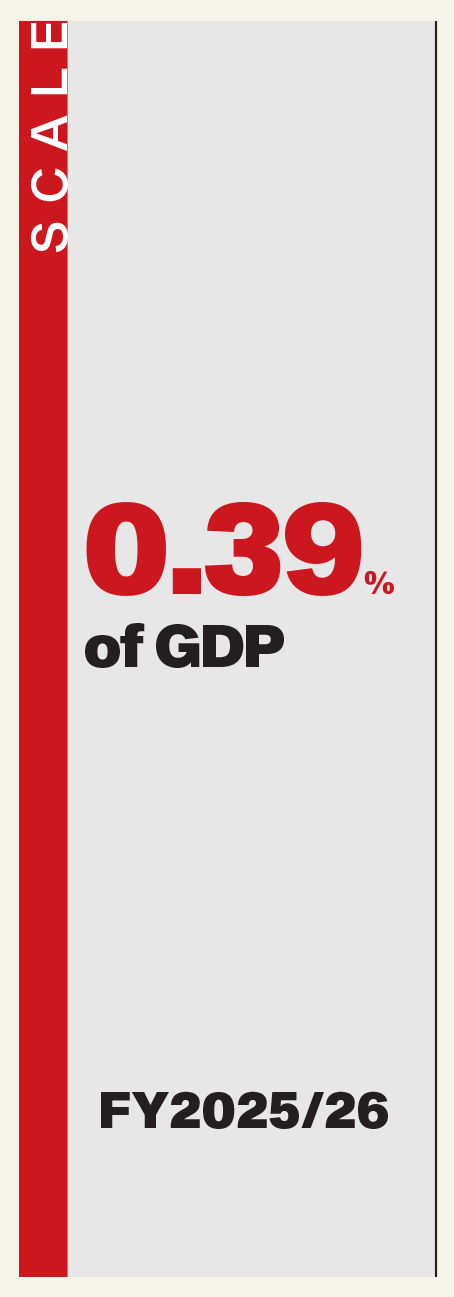
Foreign Direct Investment in Pakistan is equivalent to 0.39% of the national GDP. This number should alarm every policymaker

Pakistan's latest Foreign Direct Investment (FDI) figures expose far more than weak investment inflows; they reveal the underlying health of the country's entire investment ecosystem. They expose the deeper structural weaknesses of the country's investment infrastructure, fragmented governance, policy inconsistency, and the persistent culture of ad hoc economic management. Unless Pakistan undertakes genuine institutional course correction, macroeconomic stability alone will not restore investor confidence or deliver sustainable growth.
Pakistan's latest Foreign Direct Investment (FDI) figures are not merely an economic statistic; they are a national report card!
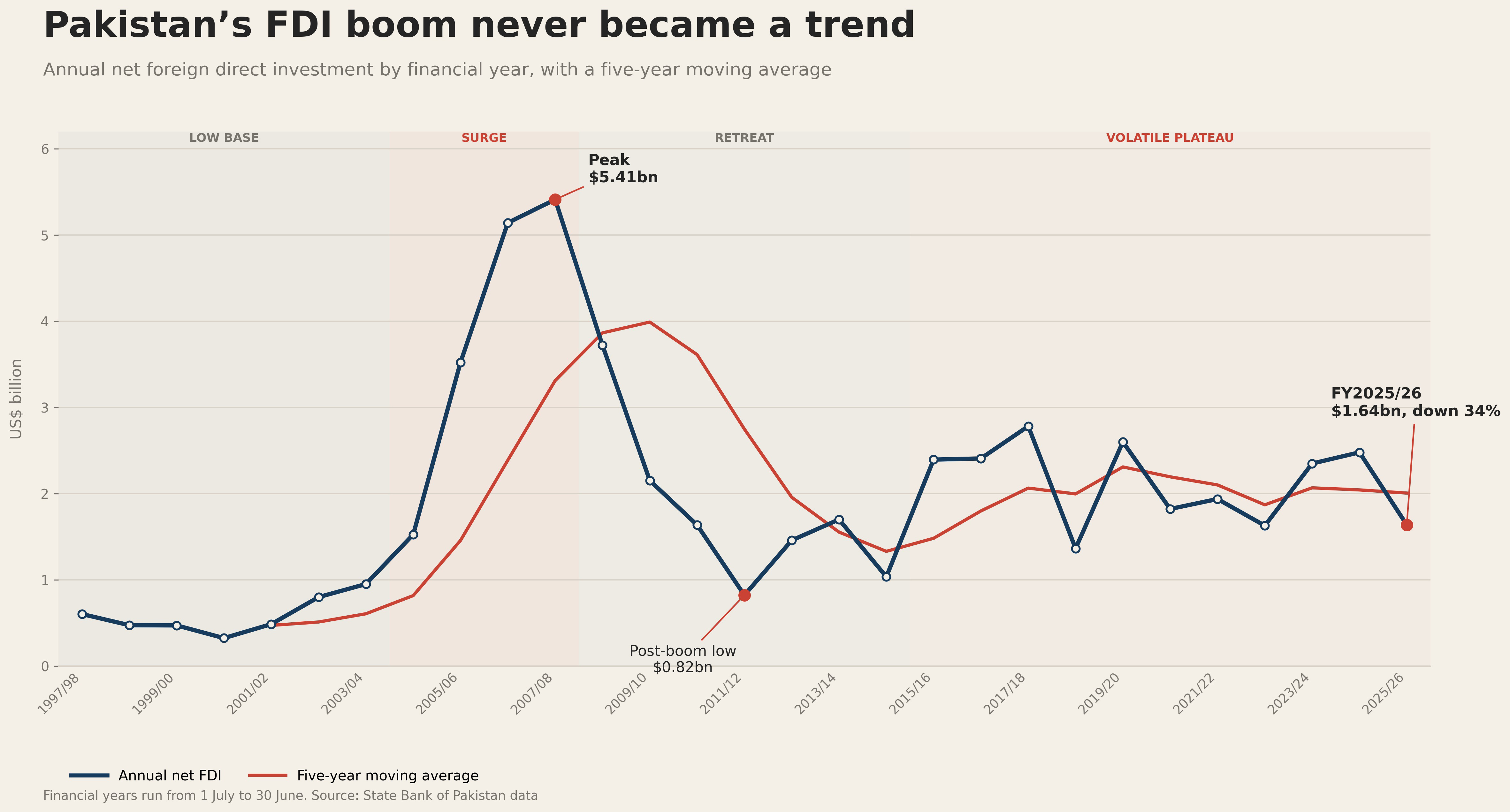
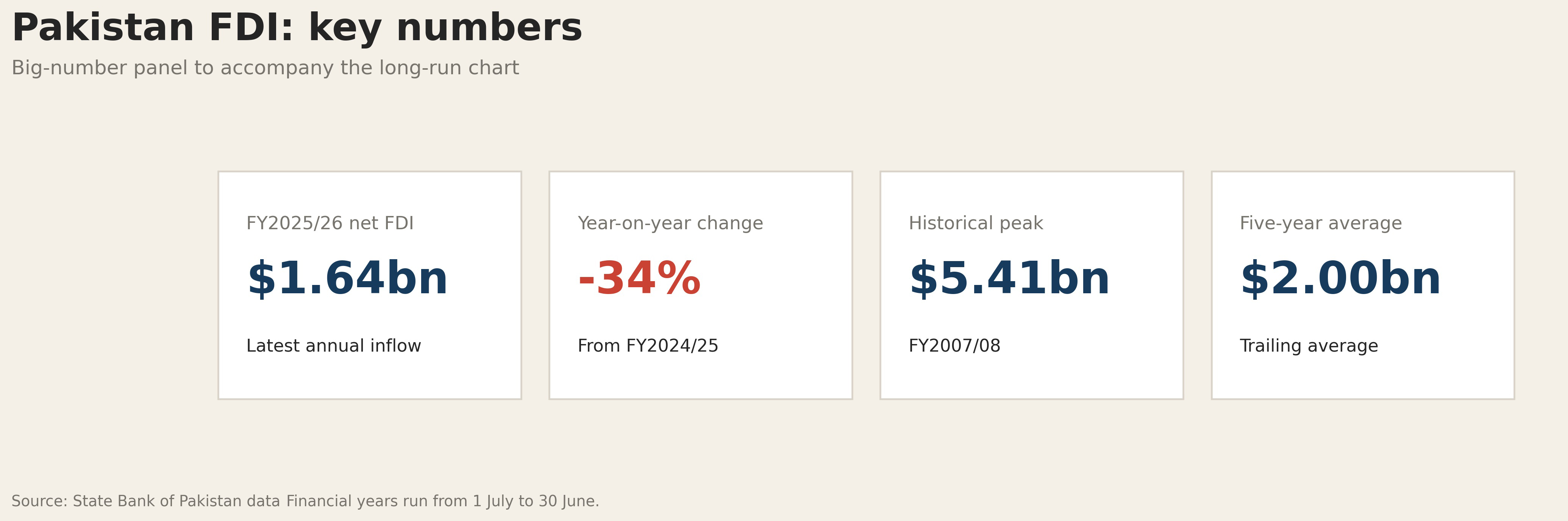
The State Bank of Pakistan (SBP) has now released the final FDI figures for FY2025-26. The numbers speak for themselves. Net FDI inflows stood at just USD 1.64 billion, equivalent to 0.39% of Pakistan's GDP, down 34% YoY, and among the weakest performances recorded over the past twenty-five years. This is not simply another disappointing economic indicator. It is a comprehensive assessment of Pakistan's investment infrastructure, business climate, governance standards, institutional credibility, policy consistency, and reform agenda. More importantly, it exposes the widening gap between the narratives we celebrate and the reality investors continue to experience.
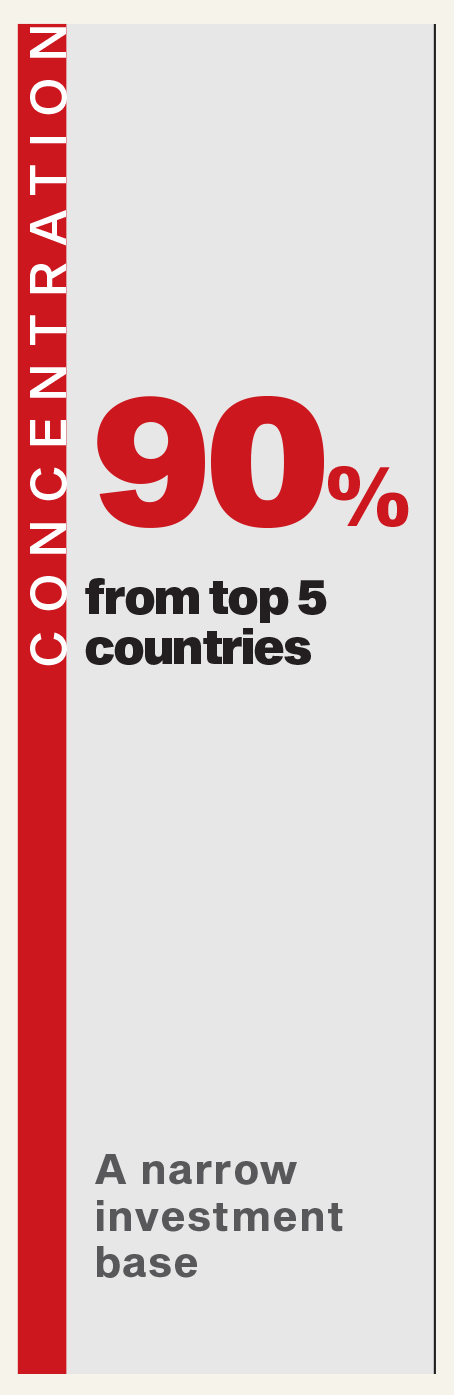
Equally revealing is the composition of these inflows. China remained Pakistan's largest foreign investor during FY2025-26, contributing USD 862 million, representing approximately 52.7% of total net FDI. Hong Kong followed with USD 339.4 million (20.7%), while the United Arab Emirates contributed USD 235.9 million (14.4%). Yet all three recorded significant year-on-year declines. Chinese investment fell by 28.5%, declining from approximately USD 1.20 billion in FY2024-25. Hong Kong's investment declined by 27.8%, falling from roughly USD 470 million, while the UAE registered a decline of 19.8% compared to the previous year. Even Pakistan's three largest investment partners are reducing their exposure rather than expanding it. That trend should concern policymakers far more than the headline FDI figure itself because it reflects weakening confidence among investors who already possess firsthand experience of Pakistan's investment environment.
The concentration of Pakistan's FDI presents an equally serious structural concern. China, Hong Kong, the UAE, Switzerland, and the United Kingdom together accounted for the overwhelming majority of Pakistan's FDI during FY2025-26. China, Hong Kong, and the UAE alone represented almost 88% of total net FDI, while the addition of Switzerland and the United Kingdom pushed the share above 90%. Such concentration demonstrates that Pakistan continues to rely on a very narrow group of largely traditional investment partners while attracting only negligible levels of investment from the rest of the global economy. For a country of Pakistan's size, strategic location, and economic potential, this limited geographical diversification is not merely an investment gap; it reflects the increasingly narrow international confidence in Pakistan as an investment destination.
More than ten African economies, many with significantly smaller populations, narrower domestic markets, and fewer natural advantages than Pakistan, now attract substantially higher annual FDI inflows. I deliberately refrain from comparing Pakistan with the Central Asian Republics, ASEAN economies, the Far East, or the Middle East because the gap has become too wide to offer any meaningful comparison. For the world's fifth most populous country, this should concern every policymaker.
For far too long, we have become comfortable announcing initiatives, launching institutions, introducing facilitation mechanisms, signing memoranda of understanding, and celebrating intentions. Yet investment has a remarkable habit of ignoring narratives. It responds only to confidence. Confidence, however, cannot be manufactured through official statements or optimistic projections. It must be earned through credibility, consistency, institutional competence, and disciplined execution. The latest FDI figures suggest that despite improvements in certain macroeconomic indicators, Pakistan has yet to restore the level of confidence required for long-term investors to commit their capital.
Why FDI matters as a marker for the economy
FDI occupies a unique position in economic policymaking across the world. Governments celebrate rising inflows as evidence of investor confidence. International institutions monitor them as indicators of economic integration, financial markets interpret them as signals of policy credibility, and economists increasingly regard them as one of the most objective measures of a country's investment climate.
Unlike aid, FDI is not negotiated. Unlike loans, it is not borrowed. Unlike remittances, it is not driven by emotional or family considerations. Unlike portfolio investment, it cannot enter today and disappear tomorrow at the click of a button. FDI represents a long-term commitment of capital, technology, management expertise, and business confidence. Before making that commitment, investors undertake extensive due diligence, evaluating political stability, macroeconomic fundamentals, institutional quality, contract enforcement, regulatory certainty, taxation, infrastructure, governance standards, security conditions, judicial effectiveness, labor productivity, and long-term growth prospects before deciding where to allocate capital.
This is precisely why FDI should never be viewed merely as another economic statistic. It is the world's most objective confidence barometer. FDI does not measure the confidence governments claim to have created; it measures the confidence investors are willing to risk their capital on. Every dollar invested reflects thousands of independent judgments made by investors, boards of directors, financial institutions, consultants, lawyers, and risk analysts. When FDI rises consistently, it signals confidence in a country's future. When it stagnates or declines over prolonged periods, it reflects structural weaknesses that no amount of official optimism can conceal.
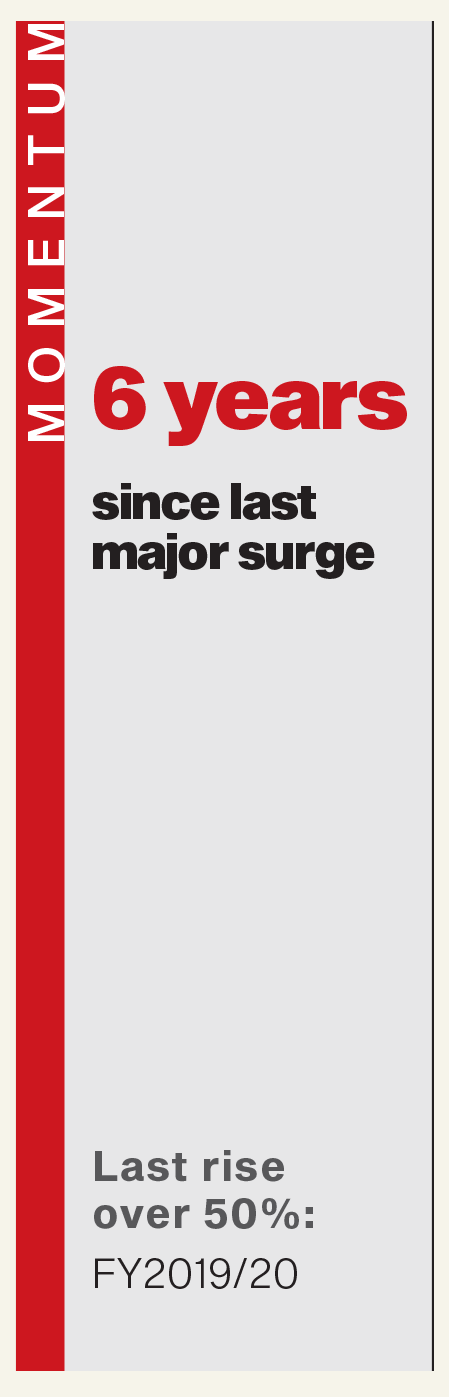
It is equally important to recognize that FDI is a lagging indicator rather than an immediate one. Major investment decisions are often made only after months, and sometimes years, of due diligence, board approvals, financing arrangements, and regulatory assessments. Consequently, today's FDI figures largely reflect yesterday's policy environment rather than today's announcements. This reality makes sustained policy continuity even more important. Governments cannot expect immediate investment responses to isolated reforms or short-term stabilization measures. Credibility is accumulated gradually through consistent execution and is equally lost through repeated policy reversals.
Unlike short-term capital flows, FDI builds productive capacity. It establishes factories, creates employment, transfers technology and managerial expertise, strengthens supply chains, expands exports, and contributes to sustainable long-term economic growth. That is precisely why economists regard it as one of the most reliable indicators of a country's investment climate. Investment is the only vote of confidence that is backed by irreversible financial commitment.
History also offers an important lesson. No country has achieved sustained high economic growth over a prolonged period while consistently attracting negligible levels of productive foreign investment. FDI is not the only driver of growth, but every major economic success story demonstrates that long-term investment and long-term growth reinforce one another.
This distinction has become particularly important for developing economies such as Pakistan. Countries competing for global investment are no longer competing primarily through tax concessions, subsidized land, or generous fiscal incentives. Such measures may influence individual investment decisions at the margins, but they rarely determine long-term capital allocation. Modern investors seek something far more valuable than incentives. They seek predictability. They seek confidence that policies will remain consistent beyond political cycles, contracts will be honored irrespective of changing governments, regulators will facilitate rather than frustrate business activity, and institutions will function professionally. Countries no longer compete for capital through incentives alone; they compete through credibility.
The latest FDI figures therefore deserve to be viewed not merely as another annual statistic but as an invitation to honestly examine why a country with enormous economic potential continues to struggle to earn the confidence of long-term investors. The report card is now before us. The question is whether we are prepared to learn from it.
Unlike aid, FDI is not negotiated. Unlike loans, it is not borrowed. Unlike remittances, it is not driven by emotional or family considerations. Unlike portfolio investment, it cannot enter today and disappear tomorrow at the click of a button. FDI represents a long-term commitment of capital, technology, management expertise, and business confidence. Before making that commitment, investors undertake extensive due diligence, evaluating political stability, macroeconomic fundamentals, institutional quality, contract enforcement, regulatory certainty, taxation, infrastructure, governance standards, security conditions, judicial effectiveness, labor productivity, and long-term growth prospects before deciding where to allocate capital.
This is precisely why FDI should never be viewed merely as another economic statistic. It is the world's most objective confidence barometer. FDI does not measure the confidence governments claim to have created; it measures the confidence investors are willing to risk their capital on. Every dollar invested reflects thousands of independent judgments made by investors, boards of directors, financial institutions, consultants, lawyers, and risk analysts.
When FDI rises consistently, it signals confidence in a country's future. When it stagnates or declines over prolonged periods, it reflects structural weaknesses that no amount of official optimism can conceal.
Unlike short-term capital flows, FDI builds productive capacity. It establishes factories, creates employment, transfers technology and managerial expertise, strengthens supply chains, expands exports, and contributes to sustainable long-term economic growth. That is precisely why economists regard it as one of the most reliable indicators of a country's investment climate. Investment is the only vote of confidence that is backed by irreversible financial commitment.
It is equally important to understand that headline FDI figures capture only one dimension of investor confidence. Equally revealing is the level of reinvested earnings generated by companies already operating in a country. When existing investors consistently retain and expand their profits domestically rather than repatriating them abroad, they signal confidence in the future of that economy. Conversely, weak reinvestment often reflects growing caution among investors who understand the local business environment better than anyone else. For this reason, policymakers should monitor not only new investment but also the reinvestment behavior of existing investors, because both together provide a far more complete picture of investment confidence.
History also offers an important lesson. No country has achieved sustained high economic growth over a prolonged period while consistently attracting negligible levels of productive foreign investment. FDI is not the only driver of growth, but every major economic success story demonstrates that long-term investment and long-term growth reinforce one another.
This distinction has become particularly important for developing economies like Pakistan. Countries competing for global investment are no longer competing primarily through tax concessions, subsidized land, or generous fiscal incentives. Such measures may influence individual investment decisions at the margins, but they rarely determine long-term capital allocation. Modern investors seek something far more valuable than incentives. They seek predictability. They seek confidence that policies will remain consistent beyond political cycles, contracts will be honored irrespective of changing governments, regulators will facilitate rather than frustrate business activity, and institutions will function professionally. Countries no longer compete for capital through incentives alone; they compete through credibility.
The latest FDI figures therefore deserve to be viewed not merely as another annual statistic but as an invitation to honestly examine why a country with enormous economic potential continues to struggle to earn the confidence of long-term investors. The report card is now before us. The question is whether we are prepared to learn from it.
Pakistan's persistent weakness in attracting FDI is often explained away by external shocks, geopolitical uncertainty, regional instability, or temporary economic challenges. While these factors undoubtedly influence investor sentiment, they do not explain why Pakistan has consistently underperformed for decades while many countries facing similar, or even greater, challenges have succeeded in attracting substantially higher levels of investment. The problem runs much deeper.
The confidence deficit
Pakistan does not primarily suffer from an investment deficit; it suffers from a confidence deficit.
Confidence is not created through investment promotion campaigns or official declarations. It is built through institutions. Investors place their trust in countries where policies remain predictable, governments honor legal commitments, taxation remains transparent, regulators facilitate rather than intimidate businesses, and institutions continue functioning professionally irrespective of political transitions. Unfortunately, Pakistan has struggled on almost every one of these fronts.
Frequent policy reversals have become routine. Long-term investment commitments are disrupted by changes in governments. Legal and contractual obligations are revisited with alarming regularity. The tax regime remains unpredictable, while the culture of excessive discretion and harassment within the Federal Board of Revenue (FBR) continues to discourage both domestic and foreign investors. Businesses frequently spend more time navigating regulatory uncertainty than expanding productive capacity. The result is an investment environment where uncertainty itself has become institutionalized.
The first test of any investment climate is not whether it attracts new investors but whether existing investors choose to reinvest. Existing investors already understand the country's strengths and weaknesses. They have firsthand experience of its institutions, regulatory framework, and policy environment. If they remain reluctant to expand their operations, it sends a far more powerful signal than any international ranking or investment promotion campaign. Weak FDI inflows therefore indicate not merely the absence of new investors but also the hesitation of those who are already operating within Pakistan.
Existing investors are Pakistan's most credible ambassadors. Their reinvestment decisions carry far greater weight than any investment promotion campaign because they are based on lived experience rather than expectation. When existing investors hesitate to expand, that signal travels quickly through international boardrooms and investor networks, influencing future investment decisions far beyond Pakistan's borders.
The same factors discouraging foreign investors also suppress domestic private investment. No one understands Pakistan's business environment better than Pakistani entrepreneurs themselves. When domestic investors increasingly diversify their capital abroad or postpone expansion plans at home, they are expressing the very same concerns that foreign investors identify during their due diligence. In reality, the investment climate is one ecosystem. It cannot be attractive for domestic investors while remaining unattractive for foreign investors, or vice versa.
This explains why Pakistan's challenge is fundamentally one of credibility rather than capital. The country possesses a large domestic market, a strategic geographic location, abundant natural resources, and one of the world's youngest populations. Yet these undeniable advantages have repeatedly failed to translate into sustained investment because they are overshadowed by institutional uncertainty. Pakistan therefore suffers from a widening credibility gap between what policies promise and what investors actually experience.
Persistently weak FDI carries consequences that extend far beyond disappointing investment statistics. It slows industrialization, limits technology transfer, weakens export competitiveness, reduces the creation of quality jobs, discourages innovation, and increases dependence on external borrowing instead of productive capital. Countries that consistently fail to attract long-term investment eventually find themselves financing consumption rather than building productive capacity. That is precisely where Pakistan finds itself today.
Another important reality deserves attention. FDI is inherently a lagging indicator. Investors rarely respond immediately to reform announcements or temporary macroeconomic improvements. They observe whether reforms survive political transitions, whether institutions behave consistently over time, whether contracts continue to be honored, and whether implementation matches official commitments. In other words, today's FDI reflects yesterday's credibility. Similarly, the reforms implemented today will influence investment decisions several years from now. This time lag makes sustained policy continuity even more critical because confidence cannot be built through episodic reforms; it is accumulated through consistent execution over time.
Finding our investment strategy
Compounding this challenge is the absence of any coherent long-term national investment strategy. Pakistan has no comprehensive twenty-year investment vision identifying priority sectors, institutional responsibilities, measurable milestones, and a stable policy framework capable of surviving political transitions. Equally concerning, the country continues to operate without a comprehensive export strategy that integrates investment, industrial development, technology, productivity, competitiveness, and global market integration.
Investment and exports are not separate policy domains. Investment creates productive capacity, while exports sustain investment by expanding markets, improving competitiveness, and generating foreign exchange. Countries that excel in one invariably perform well in the other because both are built upon the same institutional foundations and long-term policy discipline. Pakistan's inability to formulate either strategy reflects a deeper absence of strategic economic thinking.
No successful economy competes for global capital without a coherent long-term investment strategy supported by measurable targets, institutional ownership, professional execution, and periodic performance review. Pakistan cannot reasonably expect different outcomes while continuing to operate without a clear national roadmap.
In the absence of a coherent national investment strategy, institutions inevitably begin pursuing their own priorities instead of a shared national objective. Fragmentation, duplication, policy inconsistency, and weak accountability are therefore not accidental outcomes; they are the predictable consequences of operating without one national vision, one strategic roadmap, and one institution responsible for coordinating investment policy across the federation.
This challenge extends beyond the federal level. Since investment decisions are implemented on the ground, the consistency of provincial governance is equally important. Investors evaluate land administration, utilities, taxation, licensing procedures, environmental approvals, dispute resolution, and regulatory efficiency across provinces before making long-term commitments. A strong federal investment strategy cannot succeed if provincial implementation remains uneven. Successful investment destinations therefore function as one integrated national ecosystem where federal and provincial institutions pursue the same objectives through harmonized policies and coordinated execution.
This explains why adhocism has gradually become our governing philosophy. Instead of anticipating challenges, we respond only after crises emerge. Instead of implementing structural reforms, we introduce temporary measures. Instead of strengthening existing institutions, we create new ones. Instead of fixing the foundations, we continue treating the symptoms.
Over the past three years, I have probably used two words hundreds of times: adhocism and firefighting. I am tired of repeating them, yet unfortunately they continue to define the way Pakistan governs its economy. Sustainable economic transformation cannot be achieved through episodic interventions or short-term crisis management. Nations do not become competitive by continuously responding to emergencies. They become competitive by building institutions capable of preventing those emergencies in the first place.
The deeper concern is that we often appear reluctant to acknowledge the real nature of the problem. Unless we correctly diagnose the underlying structural weaknesses, meaningful solutions will remain elusive. We cannot continue celebrating isolated improvements in macroeconomic indicators while one of the world's most respected measures of investor confidence continues to deteriorate. Treating the symptoms may provide temporary relief, but it will never cure the disease. Pakistan's investment crisis cannot be resolved without first fixing the institutional foundations upon which investor confidence ultimately rests.
A weak investment strategy inevitably produces weak investment governance. Without a clearly defined national vision, institutions gradually begin operating in isolation, pursuing individual mandates instead of a shared national objective. Fragmentation is therefore not an administrative accident; it is the natural consequence of governing investment without a coherent national framework.
One of the least discussed, yet most damaging, weaknesses in Pakistan's economic governance is the fragmentation of its investment infrastructure. While successful economies have consolidated investment governance under unified institutional frameworks, Pakistan has steadily moved in the opposite direction.
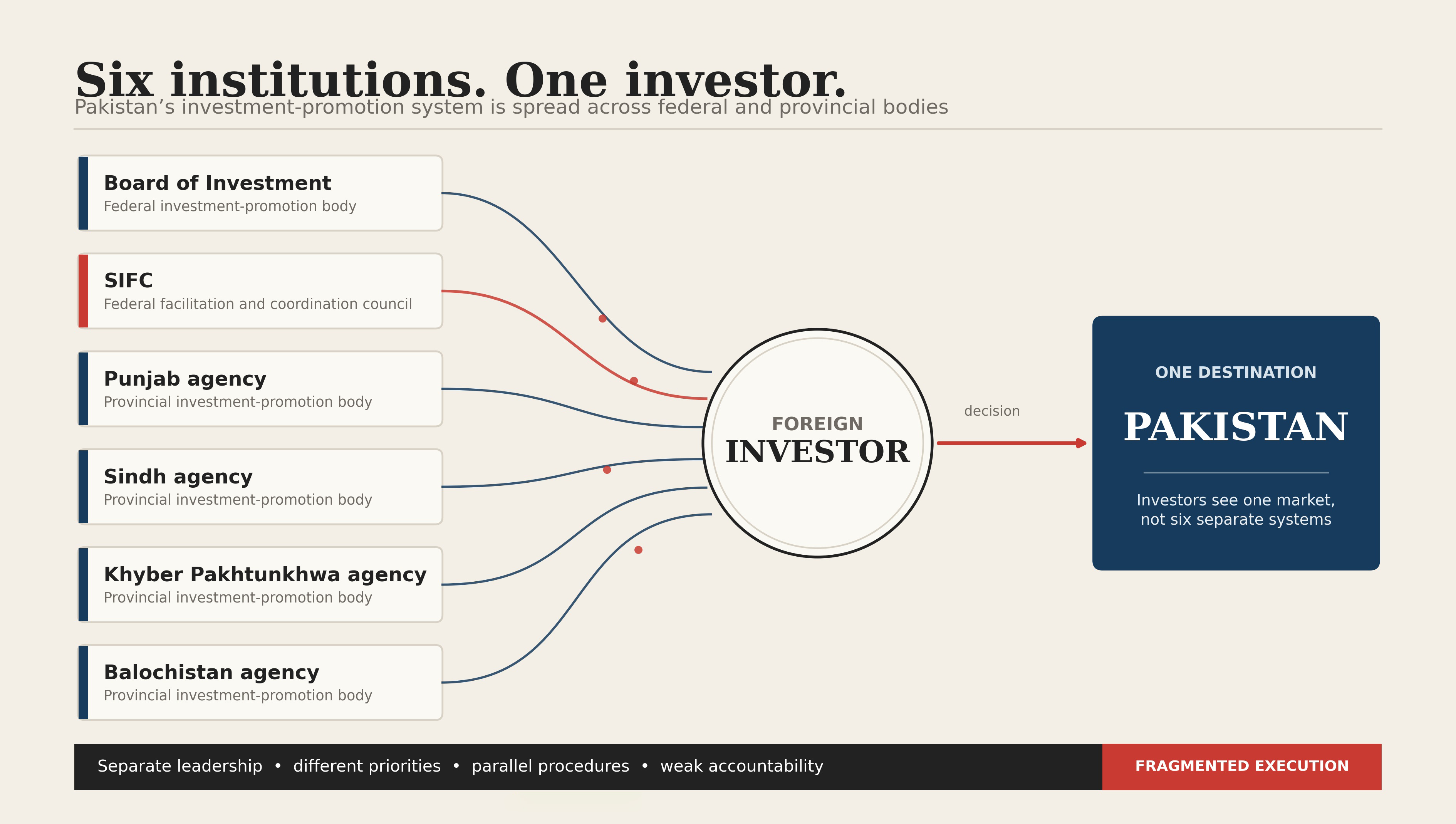
Today, investment promotion in Pakistan is spread across six different institutions: the Board of Investment (BOI), the Special Investment Facilitation Council (SIFC), and the four Provincial Investment Promotion Agencies of Punjab, Sindh, Khyber Pakhtunkhwa, and Balochistan. Each operates with its own leadership, priorities, procedures, and institutional culture. Rather than functioning as one coordinated national investment system, they largely operate in parallel.
Investors, however, do not distinguish between federal and provincial jurisdictions, nor do they differentiate between one investment agency and another. They evaluate one country, one investment destination, and one overall business environment. When institutions pursue different priorities without a unified national strategy, the inevitable outcome is duplication, policy inconsistency, delayed decision-making, weak accountability, and declining investor confidence.
Every public institution must ultimately be evaluated against the objectives for which it was created. In every serious organization, institutional performance is measured against clearly defined outcomes rather than intentions. Investment institutions should be no different. Their effectiveness cannot be judged by meetings, announcements, facilitation claims, or promotional activity. It must be judged by one measurable outcome: investment.
What the SIFC can do
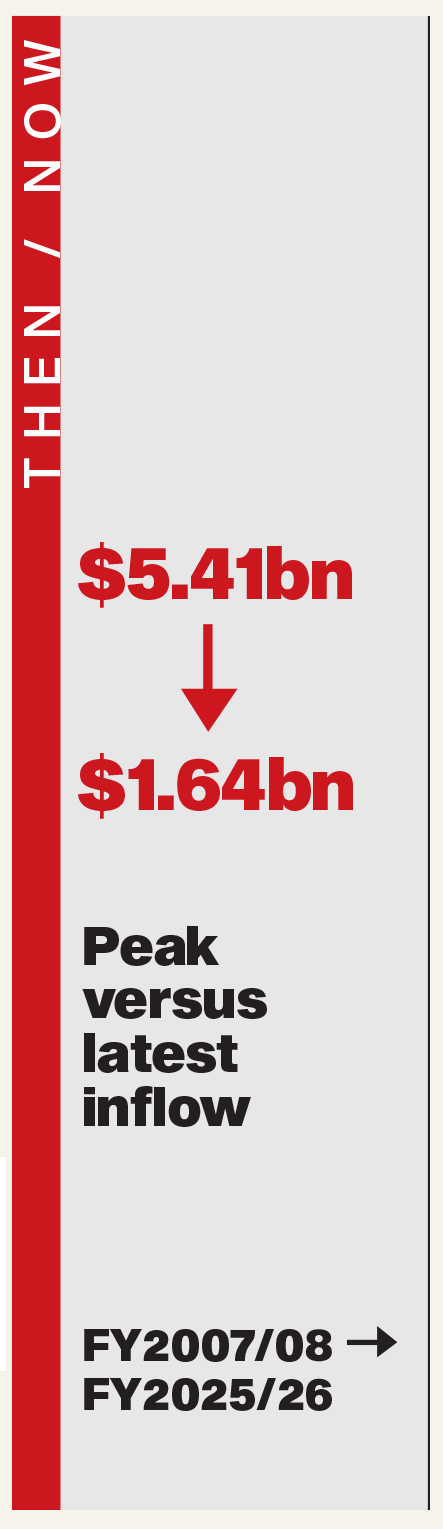
The SIFC was established with the stated objective of transforming Pakistan's investment landscape and substantially increasing investment inflows. Three years later, the evidence is clear – net FDI inflows remained around USD 2 billion during its first two years and declined further to approximately USD 1.64 billion in the third year, marking one of Pakistan's weakest investment performances in the past twenty-five years. If investment outcomes are the primary measure of institutional success, these figures warrant an honest institutional evaluation rather than celebratory narratives.
The broader lesson extends well beyond one institution. Sustainable investment governance is ultimately judged by implementation credibility rather than institutional architecture. Investors are largely indifferent to how many agencies exist or how responsibilities are distributed. What matters to them is whether approvals are delivered efficiently, policies remain predictable, commitments are honored consistently, and institutions function professionally. Governance structures create confidence only when they produce measurable outcomes. Where implementation remains weak, institutional redesign alone cannot restore investor trust.
Against this backdrop, the recent decision to place the administrative control of the BOI under the SIFC raises important policy questions. Rather than initiating an objective institutional review based on measurable performance, Pakistan has chosen to expand the administrative footprint of an arrangement whose principal objective remains unfulfilled. More importantly, the decision does not resolve the underlying structural weakness because both organizations continue to exist separately, each with its own mandate, management structure, and operational framework. The reporting line may have changed, but the fragmentation remains.
Good governance demands that institutions demonstrating strong performance should be strengthened, while those falling short of their stated objectives should first undergo rigorous evaluation and reform. Expanding responsibilities without first evaluating outcomes risks institutionalizing underperformance rather than correcting it.
Accountability should never be selective. Investment institutions should be judged by investment outcomes, not by the number of meetings held, initiatives announced, roadshows organized, or narratives promoted. If institutions created specifically to attract investment fail to improve investment performance over several years, serious institutional review becomes not an option but an obligation.
The broader concern is even more fundamental. Major institutional decisions should always be guided by objective evidence, transparent analysis, and measurable performance indicators. When institutional restructuring appears disconnected from actual outcomes, it inevitably raises questions about the quality of policy advice reaching the country's highest decision-making forums. National leadership deserves objective assessments, professional analysis, and evidence-based recommendations. Long-term institutional reform cannot succeed if difficult realities are softened by optimistic narratives or if institutional performance is judged by perception rather than measurable results.
This challenge is not unique to the present arrangement. No government over the past few decades has undertaken genuine course correction for Pakistan's investment climate, nor has any demonstrated the political resolve to fix the foundations. This is not the failure of one administration alone. It is the cumulative consequence of successive governments preferring short-term administrative adjustments over long-term structural reform.
As I have argued repeatedly over the years, Pakistan has unfortunately developed a habit of creating new organizations instead of undertaking genuine restructuring and transformation of the institutions it already possesses. Too often, we choose to build a "ڈھیر اینٹ کی مسجد" rather than strengthening the foundations of existing institutions. Institutional multiplication has gradually become a substitute for institutional reform.
There is, however, a far better alternative.
Pakistan must move beyond fragmented investment governance by consolidating the country's entire investment architecture into a single, empowered national institution. We have consistently advocated restructuring and strengthening the BOI by integrating into it the SIFC together with the four Provincial Investment Promotion Agencies. This unified institution would become Pakistan's single national investment authority, operating under one long-term investment strategy, one institutional leadership, one investor interface, one digital platform, and one transparent system of accountability.
Such a reform would eliminate duplication, improve policy coordination, streamline investor facilitation, strengthen accountability, and create a seamless investment ecosystem capable of attracting and retaining both domestic and foreign investment. It would also ensure that every ministry, regulator, and provincial institution works toward one national investment roadmap rather than multiple disconnected priorities.
There are real world examples
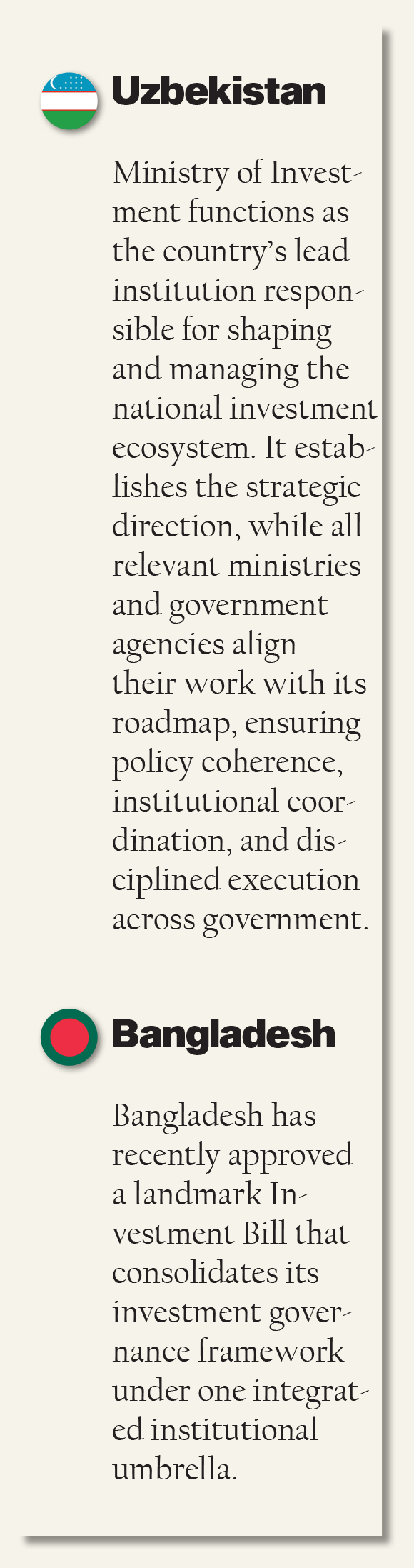
Successful economies have already recognized this reality. Bangladesh has recently approved a landmark Investment Bill that consolidates its investment governance framework under one integrated institutional umbrella. Uzbekistan provides another compelling example, where the Ministry of Investment functions as the country's lead institution responsible for shaping and managing the national investment ecosystem. It establishes the strategic direction, while all relevant ministries and government agencies align their work with its roadmap, ensuring policy coherence, institutional coordination, and disciplined execution across government.
Pakistan should study these examples with objectivity rather than complacency. The twenty-first century will not belong to countries that simply establish more institutions. It will belong to countries that build better institutions, institutions with clarity of purpose, professional leadership, technical competence, measurable accountability, and the authority to coordinate the country's entire investment ecosystem.
Investment governance is therefore not about multiplying organizations. It is about integrating leadership, strategy, execution, and accountability under one coherent national vision.
The real challenge confronting Pakistan today is not the absence of ideas, opportunities, or potential. The country possesses a strategic geographic location, a market of more than 250 million people, abundant natural resources, and one of the world's youngest populations. The challenge is that we have repeatedly failed to convert these strengths into investor confidence because we remain reluctant to confront uncomfortable truths.
Every year we celebrate announcements, launch new initiatives, establish new institutions, and project optimism about the future. Yet every year, objective indicators quietly remind us that global investors remain unconvinced.
The latest FDI figures therefore compel us to ask a simple but uncomfortable question; If the outcomes remain consistently weak, why are we still satisfied with the process?
One defining characteristic of successful nations is their willingness to evaluate institutions against measurable outcomes. Performance is reviewed objectively, successes are rewarded, shortcomings are acknowledged, and timely course correction follows. Institutions exist to deliver results, not explanations.
Pakistan has too often chosen a different path.
Missed targets are explained rather than examined. Weak outcomes are rationalized as temporary setbacks. Structural weaknesses are treated as cyclical challenges. Increasingly, narratives substitute for evidence, while perception is allowed to overshadow performance.
This pattern extends well beyond investment policy. The Federal Board of Revenue (FBR), for example, missed its original annual tax collection target by more than Rs. 1 trillion, collecting approximately Rs. 13 trillion against the budget-assigned target of Rs. 14.131 trillion. Yet despite missing its revenue target for the third consecutive year, its performance was publicly appreciated. Recognizing sincere effort is commendable, but sustainable governance requires institutions to be evaluated primarily against measurable outcomes rather than optimistic narratives.
Accountability is not about assigning blame. It is about creating incentives for continuous institutional improvement. When missed targets become occasions for celebration rather than introspection, the culture of performance gradually gives way to a culture of narrative management.
Without accountability, meaningful reform becomes optional.
Supporting the State where it performs well is our collective responsibility. Equally, speaking honestly about policy shortcomings is also our collective responsibility. Constructive criticism should never be mistaken for opposition. Mature states strengthen themselves by encouraging evidence-based debate rather than avoiding uncomfortable conversations.
How long will we continue relying on cosmetic measures while postponing genuine structural reform? How long will we continue managing temporary situations instead of addressing permanent weaknesses? Sustainable economic progress requires acknowledging reality and confronting the underlying structural issues rather than celebrating missed targets or confusing short-term stabilization with long-term transformation.
The latest FDI figures should therefore not be interpreted as the failure of one institution or one government alone. They represent the cumulative consequences of decades of institutional neglect, fragmented governance, policy inconsistency, political instability, repeated breaches of contractual commitments, regulatory uncertainty, an unpredictable tax regime, excessive administrative discretion, weak implementation capacity, and the absence of both a coherent national investment strategy and a comprehensive export strategy. They reflect a governance culture that has consistently prioritized managing crises over preventing them.
Ultimately, Pakistan's investment challenge is not simply about attracting additional foreign capital; it is about rebuilding credibility.
Credibility cannot be legislated; it cannot be announced; it cannot be marketed. It must be earned through institutions that function professionally, policies that remain consistent, governments that honor commitments, regulators that facilitate enterprises instead of obstructing them, and leaders who are prepared to confront reality rather than merely talk about it, or worse, ignore it.
The difficult truth is that nations rarely fail because they lack resources. They fail because they refuse to confront the structural weaknesses that prevent those resources from being transformed into sustainable prosperity. Pakistan has reached a stage where incremental adjustments are no longer sufficient. What is required is not another initiative, another committee, or another narrative, but the courage to undertake genuine structural reform.
Until we are prepared to speak the truth, we will continue managing the symptoms instead of curing the disease. And until we fix the foundations, every annual FDI report will continue telling us the same story, regardless of how optimistic the accompanying narrative may be.
Every major economic transformation begins with institutional honesty. Countries rarely reform because circumstances become comfortable; they reform because evidence makes complacency impossible. Pakistan's latest FDI report card provides precisely that evidence. The challenge now is not whether the diagnosis is clear, but whether the political will exists to act upon it.
Pakistan does not need another temporary solution. It needs a genuine “Investment Reset.”
That “Reset” must begin by recognizing that sustainable investment is not created through incentives, promotional campaigns, or institutional proliferation. It is created through credibility. Credibility emerges from strong institutions, predictable policies, professional governance, political stability, respect for legal contracts, regulatory certainty, policy continuity, disciplined execution, and the confidence that today's commitments will survive tomorrow's political transitions.
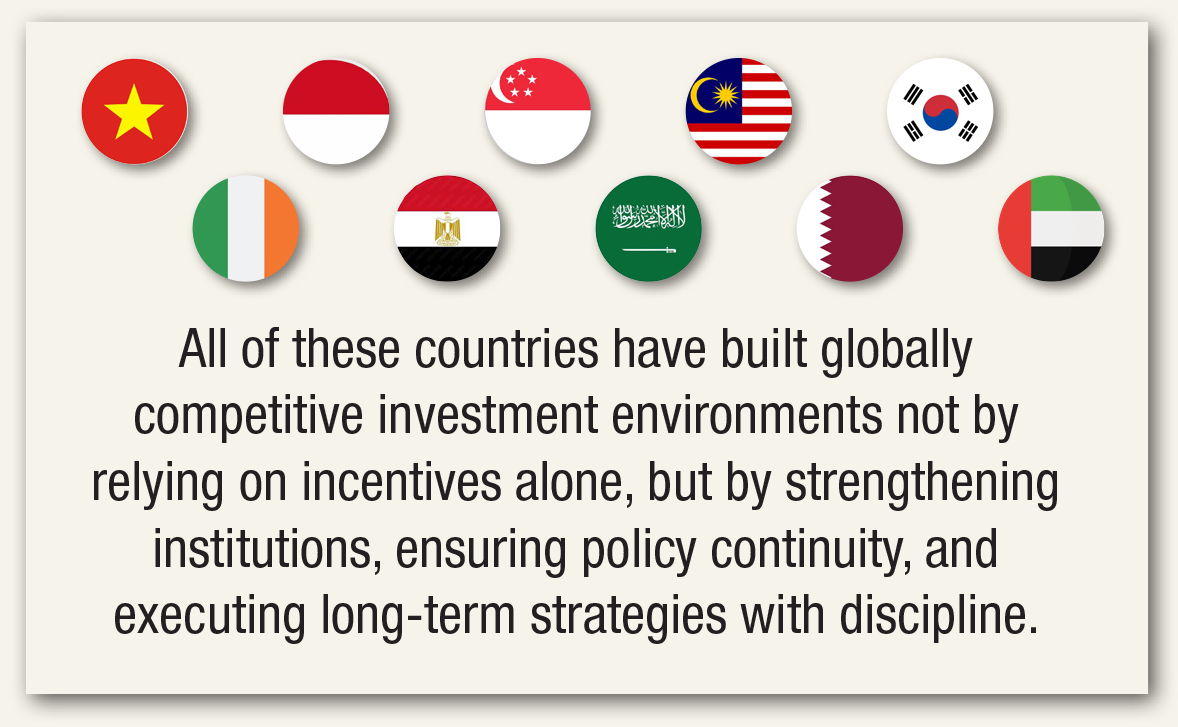
The world has already demonstrated what works. Bangladesh has begun restructuring its investment governance. Uzbekistan has shown how a single lead institution can coordinate an entire national investment ecosystem. Vietnam, Indonesia, Singapore, Malaysia, South Korea, Ireland, Egypt, Saudi Arabia, Qatar, and the United Arab Emirates have each built globally competitive investment environments not by relying on incentives alone, but by strengthening institutions, ensuring policy continuity, and executing long-term strategies with discipline. Pakistan can do the same.
But only if we are prepared to abandon the culture of adhocism, move beyond perpetual firefighting, and replace episodic policymaking with strategic governance. A country of more than 250 million people cannot be managed through improvisation. It requires institutions that outlast individuals, policies that outlast governments, and a national vision that survives political cycles.
Our collective failure and shared responsibility
No government has undertaken genuine course correction for Pakistan's investment climate over the past few decades, nor has any demonstrated the resolve to fix the foundations. This is not the failure of one administration alone. It is a collective failure and a shared responsibility of successive governments, institutions, policymakers, and political leaders.
Pakistan's latest FDI figures should therefore be viewed not simply as another disappointing economic statistic but as a national wake-up call. They remind us that investors evaluate countries not by what they promise but by what they consistently deliver. The sooner we recognize that distinction, the sooner meaningful reform can begin.
History will not judge Pakistan by the number of institutions it created, councils it established, policy announcements it made, or narratives it celebrated. It will judge Pakistan by whether it built institutions capable of earning investor confidence, strengthening productive capacity, expanding exports, creating quality employment, and placing the country on a sustainable path of economic transformation.
FDI does not measure the confidence governments claim to have created; it measures the confidence investors are actually willing to risk their capital on. Investment is the only vote of confidence that comes with a financial commitment. Likewise, countries do not compete for capital through incentives; they compete through credibility.
Capital follows confidence; confidence follows credibility; credibility follows institutions. Those institutions, in turn, are built through leadership, accountability, professional competence, policy continuity, disciplined execution, and, above all, the courage to confront reality instead of avoiding it.
Until Pakistan fixes those foundations, every annual FDI report will continue telling the same story, regardless of how optimistic the accompanying narrative may be. Investment institutions exist to produce investment outcomes, not investment narratives.
That is the lesson Pakistan can no longer afford to ignore.
The FDI report card has now been published. The real question is not whether we can explain these numbers. The real question is whether we finally have the courage, the leadership, and the institutional maturity to improve them.
The next report card will not be written by policymakers, economists, or commentators. It will be written by investors. And investors never grade on intentions; they grade on execution.
This guest story charts Pakistan’s foreign investment woes, tracing the latest FDI trends, structural weaknesses, international comparisons and the reforms needed to restore investor confidence and competitiveness. It has been published in tandem with an accompanying op-ed that looks at another facet of foreign investment in Pakistan: our over-reliance on just five countries for 90% of our FDI.
For suggestions on what can be done to diversify global investment partnerships, read on.
Read more: A Strategic Wake-Up Call

Muhammad Azfar Ahsan is a public policy advocate, business strategist, and former Pakistan’s Minister for Investment and Chairman of the Board of Investment. He is a strategic advisor to leading corporate entities, focusing on business policy, investment facilitation, and leadership branding. He writes frequently on the economy, governance, and society.
View all articles →Comments
No comments yet. Be the first to join the discussion!