Pakistan to save $3.2 billion through conversion of Jamshoro power plant from imported coal to Thar lignite
Dornier Group and EY Parthenon study says shifting 660MW Jamshoro Unit-01 to 100% Thar lignite could cut fuel import dependence and generate major savings

ISLAMABAD: Pakistan is set to save more than $3.239 billion over the next 26 years through the conversion of the Jamshoro Unit-01 power plant from imported coal to indigenous Thar lignite, as a bankable feasibility study has confirmed the project's technical viability, economic benefits, and manageable environmental impact.
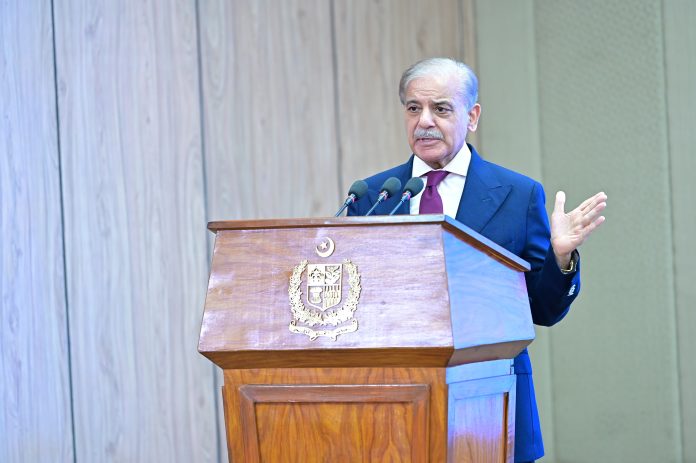
The Bankable Feasibility Study (BFS), prepared by international consultants Dornier Group and EY Parthenon, was presented to Federal Minister for Power Sardar Awais Ahmed Khan Leghari on Monday.
The study concluded that converting the 660MW Jamshoro Unit-01 from imported coal to 100 percent Thar lignite would generate substantial savings for the country while reducing dependence on imported fuel.
According to the Power Division, the project will generate total net benefits of $3.239 billion over its 26-year life, including $1.720 billion in net benefits for the power sector and $1.519 billion in government savings through reduced interest costs on foreign borrowings.
The study further estimates foreign exchange savings of $2.113 billion, which officials said would strengthen Pakistan's balance of payments and reduce exposure to fluctuations in international coal prices and currency exchange rates.
The conversion project requires an estimated capital expenditure of $86.2 million, while the total project cost has been estimated at $116.6 million. The BFS calculated a cost-benefit ratio of 1.8 times, which remains positive under all sensitivity scenarios examined during the assessment.
The Power Division said the project aligns with the Prime Minister's Power Sector Reform Plan and forms part of the government's broader strategy to promote fuel indigenisation and reduce reliance on imported energy resources.
Officials said the successful completion of the feasibility study was made possible through close coordination among key stakeholders, including K-Electric, Jamshoro Power Company Limited (JPCL), and the Private Power and Infrastructure Board (PPIB).
To oversee the initiative, the federal minister constituted a high-level steering committee that held 38 meetings during the preparation of the feasibility study. Of these, 15 meetings were chaired personally by the minister.
The ministry stated that the conversion would enable Pakistan's only ultra-supercritical coal-fired power plant to operate entirely on indigenous Thar coal through targeted engineering modifications rather than a major boiler replacement, allowing the existing asset to be retained and utilised efficiently.
The study noted that the project has been designed as a brownfield modification and does not involve the addition of new coal-fired generation capacity.
Beyond direct financial gains, the conversion is expected to stimulate expansion of coal mining operations in Tharparkar, create employment opportunities, support infrastructure development and strengthen Pakistan's domestic energy supply chain.
The ministry said replacing imported coal with locally available Thar lignite would shield the power sector from international commodity price volatility, foreign exchange risks and potential supply disruptions while advancing the country's energy security objectives.
Following the completion of the feasibility study, the Power Division will move to the implementation readiness stage. Planned activities include securing final policy approvals, obtaining lender consents, preparing regulatory and contractual approvals, conducting detailed engineering verification and developing procurement and contracting strategies.
The government said it remains committed to the timely implementation of the project, describing the Jamshoro coal conversion initiative as a key component of Pakistan's transition towards indigenous energy resources, fiscal sustainability and long-term energy security.

The author is an investigative journalist. He can be reached at [email protected].
View all articles →1 Comment
No comments yet. Be the first to join the discussion!