After Strait of Hormuz, Iran signals Red Sea pressure as Bab el-Mandeb emerges as new flashpoint
Analysts warn Tehran could use Houthi allies to threaten another key global shipping route after disrupting traffic through the Strait of Hormuz.


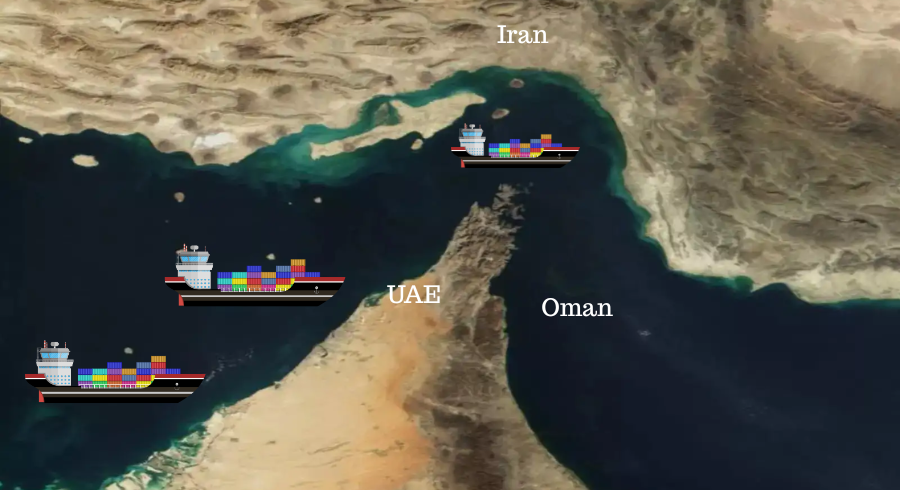
BEIRUT: Iran is signalling that it could expand pressure on global trade by using its Houthi allies in Yemen to threaten the Bab el-Mandeb Strait, a strategic shipping route linking the Red Sea to the Gulf of Aden, according to analysts.
The move comes after Tehran disrupted shipping through the Strait of Hormuz, raising concerns that the conflict could spread beyond the Gulf and affect another vital global energy corridor.
Analysts say the strategy would allow Iran to increase pressure on Washington by extending the conflict's economic impact through disruptions to international trade and oil supplies.
A senior Yemeni official said on Monday that the country's armed forces were prepared to close the Bab el-Mandeb Strait if Saudi Arabia continued military operations in Yemen.
According to Iran's Press TV, the official warned that such a move could push oil prices to $200 per barrel.
Mohammed al-Farah, a member of the political bureau of Yemen's Ansarullah movement, said the United States was encouraging Saudi Arabia to escalate attacks on Yemen. He warned that if tensions continued to rise, the Bab el-Mandeb and the Strait of Hormuz could both be closed simultaneously.
Middle East scholar Fawaz Gerges said Iran appeared to be demonstrating its ability to threaten both strategic waterways at the same time, expanding the conflict beyond direct military confrontation into global trade and energy markets.
Analysts cautioned that the greater risk lies in a gradual escalation, with both sides steadily increasing pressure rather than returning immediately to full-scale war.
Former US Middle East peace negotiator Dennis Ross said Washington's objective remains to convince Iran to return to negotiations and reach an agreement acceptable to both sides.
The Iran-backed Houthis have previously demonstrated their ability to disrupt shipping through the Bab el-Mandeb. Following the outbreak of the Gaza conflict in October 2023, the group launched attacks on commercial vessels in the Red Sea, prompting major shipping companies to reroute cargo around southern Africa and leading to US and British military strikes, as well as multinational naval operations to protect maritime traffic.
Andreas Krieg, a senior lecturer at King's College London's School of Security Studies, described the threat to Bab el-Mandeb as another strategic option for Iran after Hormuz. He said Tehran could activate that option if the conflict escalates further or if the United States intensifies attacks on Iranian infrastructure.
Abdulaziz Sager, chairman of the Gulf Research Center, said Gulf states increasingly believe diplomacy with Iran has reached its limits. While he acknowledged that the Houthis retain the capability to disrupt shipping through Bab el-Mandeb, he said any major escalation would likely require direct approval from Tehran and could trigger a broader military response from the United States and its allies.
The conflict, which began in late February following US and Israeli strikes on Iran, has expanded across the region, with Iran targeting US military bases in multiple countries. Thousands of people, primarily in Iran and Lebanon, have been killed since the fighting began.
Comments
No comments yet. Be the first to join the discussion!