March 17, 2026
Pakistan’s auto industry is going through a green patch. Structural problems mean it won’t last.
A report by the Competition Commission of Pakistan (CCP) sheds light on the continued problem the industry faces despite many more players entering the market, and they go deep.

March 17, 2026
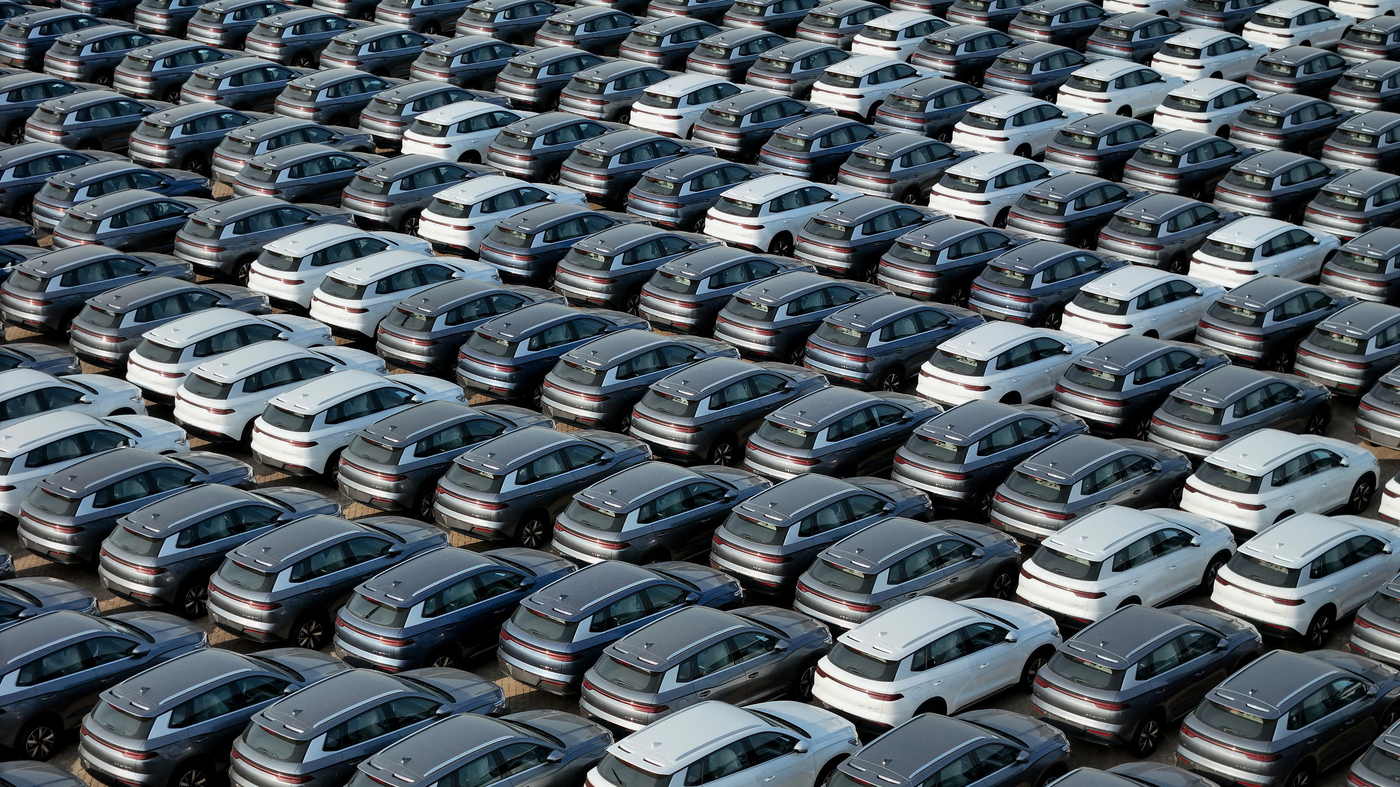
The automotive industry in Pakistan is a curious case. While the local industry has grown to 17 OEMs, the industry is still working much below its installed capacity, and cars remain out of reach for an overwhelming majority of the population. And although the number of cars being bought is rising (especially after a major slump in 2023), they are still nowhere close to what the installed local manufacturing capacity is.
Contributing just under 3 percent to the national GDP, the automotive industry supports over 2 million direct and indirect jobs. The industry has gradually developed since the time of the partition from consisting almost totally of assembly operations to now have some measure of localisation. Yet, this localisation still has ways to go, especially with the new entrants into the market in recent years, which have until now relied overwhelmingly upon the import of CKD and CBU units to produce and distribute cars.
At the same time, the industry has suffered from an inconsistent vision. Now, during the growth phase, depending on the stage, it is not unreasonable to have different policies for different stages. But for these to be effective, the driving vision has to be there consistently. Yet, this has often not been the case, with ad hoc SROs often invoked to break continuity and to institute a continuity that is broken by yet another ad hoc measure. Similarly, the policy towards imports has also been warped and little-thought-out, so that we are stuck in the debate between whether imports should be banned outright to protect local industry, or whether they should be liberalised to increase consumer choice.
This is compounded by the fact that variation in Pakistan’s car consumption levels roughly correlates with variations in local macroeconomic stability. With low per capita incomes, however much the industry grows (if the current situation persists), local car production levels might not see as big of an uptick for the economies of scale to really kick in, especially for the new entrants. At the same time, while the emphasis on exports has been recently pressed, the industry is still far from achieving the technological deft and the industrial heft necessary for such initiatives.
Before exploring these problems in more detail, let us examine what this industry looks like.
The Local Cars Industry – A Brief History
Manufacturing, generally, is an industry which touches on many aspects of the economy. Car manufacturing, it follows, relies upon a host of other factors, metal, leather, electronics, glass, plastic, drivetrain components, nuts, bolts, braking systems, etc, each of which is manufactured in its own space. Car manufacturing is therefore the coming together of diverse ecosystems into one, and by that virtue it touches and sustains the lives of many. According to a CCP report, the auto sector supports 330,000 jobs directly and 1.83 million jobs indirectly. In doing so, the industry contributes 2.8 percent to the national GDP.
The industry has, since its inception, tended towards more localisation, but even that process hasn’t been smooth, and does not represent a final state (we’ll come back later to this).
The local car industry started essentially in 1949, when General Motors and Sales Co established Pakistan’s first assembly plant. This was soon followed by Ford (1955), Chrysler (1956), and American Motors (1962). At this stage, however, these plants relied totally on the import of SKD kits, which were then assembled into cars and trucks within plants. Gradually, through rising demands there came a push for more localisation, yet it did not reach significant levels, and the industry continued to suffer from high prices, limited models, and import dependence.
In 1972, however, the auto industry – like many others – was nationalised. The focus shifted from ensuring the industry had a broad local manufacturing base to running the plants profitably. Yet, in the 1980s, the understanding that competition was required to actually push the industry to the next level took hold. Private partnership emerged again as a mainstay of this effort, and this and the following decade saw the formation of multiple partnerships between local players and Japanese brands. Awami Autos partnered with Suzuki to form Pak-Suzuki Motor Company. Atlas Group and Honda partnered to form Honda Atlas Motors, while Indus Motors entered into a joint venture with Toyota to progressively manufacture Toyota vehicles locally. Consumers now had more choice with better options, and there was competition among these three pushing them to attract consumers by newer means even as they aimed to capitalise on a rising demand market for cars.
This ushered in a new phase, where each of these partnerships led to the formation of a local support ecosystem of vendors, laying groundwork for greater localisation to take place. A Deletion Policy was introduced in 1987, whereby local car manufacturers were mandated to progressively ensure that the part of locally sourced components grew in their produced cars. CBU imports were taxed heavily. This Policy was phased out and replaced with a Tariff-Based System in 2006, as part of compliance with WTO’s trade measures. It kept higher import duties on parts that were being locally manufactured, but reduced these duties for the import of non-localised parts.
At the same time, the government started to introduce dedicated policies to promote and expand the auto industry. The Auto Industry Development Program (AIDP) was introduced in 2007 in order to improve efficiency, enhance productivity and quality standards, and to strengthen local vendor capacity. Although it laid a comprehensive plan for long-term industrial growth, the AIDP suffered from a lack of consistent policy support, as well the government’s inability to fund and carry out key initiatives laid out.
After the AIDP ran out its course, and after a 4-year delay, an Automotive Development Policy (ADP) was introduced in 2016. The ADP aimed to promote competition by encouraging new entrants, to increase localisation, and to facilitate the local industry to become competitive and affordable, eventually leading to exports. Through the ‘New Investment Policy,’ customs, tax, and duty incentives were granted to both Greenfield and Brownfield investors. Imports of vehicles were allowed under the gift, personal baggage, and transfer of residence schemes. Although the installed production capacity increased, some crucial capacity-building and quality and testing framework standards failed to be met.
In 2021, another auto industry policy framework was announced. The Auto Industry Development and Export Policy (AIDEP) aimed to ensure affordability, enhance local manufacturing capacity, and encourage exports. Perhaps the key part of this policy was the incorporation of a framework to promote EVs and Hybrid adoption. Tax incentives were granted to improve affordability, and to encourage new entrants into this category. Ambitious localisation targets – such as 60 percent for passenger cars – were set, and although there has been some progress in this regard, the real breakthrough of local production of higher-value parts remains out of reach.
Another thing that must be mentioned is the category of used car imports, since it has increasingly come to dominate the local market. The proportion of imported used vehicles in the total number of ‘new’ vehicle units in the market has risen to 20 percent in 2025 from 7.5 percent in 2020-23. The imports of these cars usually take through one of three schemes allowed to import cars for foreign residents: gift, transfer of residence, and personal baggage. The government, through an SRO abolished the personal baggage scheme in January 2025, and tightened restrictions on the other two schemes to discourage imports of used cars.
However, the government already allowed in 2025 the commercial import of cars, as old as 5 years, with a regulatory duty of 40 percent in the first year. Through its IMF deal, it aims to liberalise tariffs, progressively reducing them on the import of used cars by 10 percent each year, until they reach parity by 2030. For the import of CBUs, the tariffs over the next 5 years are envisioned to be reduced from 20 percent to 15 percent. Although the terms for this allowance are not clear, it sets the scene for increasing imports of cars in the near future.
Now, to the problems
One of the major problems that’s facing the auto industry in Pakistan is that of underutilisation. The recognised capacity is to produce around 418,000 cars per year. Yet, according to latest numbers, the total number of cars sold during FY25 were 148,023. According to Mashood Ali Khan, the former Chairman of Pakistan Association of Automotive Parts & Accessories Manufacturers (PAAPAM), 200,000 cars per year remains the target. Even that is not likely to be achieved this year. Even if we take the aimed-for 200,000 units as the real figure, more than half of the capacity would still be unutilised.
In such an environment, the total number of cars being produced is not much higher than what was the case when much fewer OEMs were there. Underutilisation in this case means that these newer players still continue to struggle to achieve economies of scale which might have been possible if the utilisation rates were higher. It also means that even though the number of cars is rising (after the massive fall in 2023), the share available to these newer cars is rising comparatively slowly.
This is linked to broader economic factors. In fact, variations in Pakistan’s auto sales numbers correlate roughly to variation in economic stability, with stable times with lower inflation and higher GDP growth rates seeing bigger amounts of cars being purchased. Cars, in general, continue to be out of reach of the overwhelming majority of Pakistanis. Only 11 in 1000 residents own a car, the lowest in the region. Per capita income is around USD 1700, much lower than the USD 30,000 required for any meaningful increase in the car market. The slew of taxes on cars, sometimes even reaching as high as 58 percent, ensures that people stay off the four wheels.
If macroeconomic indicators continue to stay similar or worse, it might be quite some time before Pakistan’s automobile industry is able to register real growth in its production numbers. Unless that happens, an increasing number of auto manufacturers might be forced to fight for scraps over half the pie, the other half just never having even been there. The benefits of meaningful economies of scale might recede out of the grasp for many a new entrant, and what appears to be a great advance (more OEMs) might sadly fizzle out in the future.
If the local population continues overwhelmingly to be unable to buy cars, that is, if the demand continues to be low, the other option for utilising the installed capacity is to increase imports. Yet, even there, we are still quite far from achieving that. But even export competitiveness requires efficiencies that come from scale, which as we argued above is still out of reach for many. There is little support for exports anyway: there are no government backed export rebates or export-financing schemes, or mutual recognition agreements. Yet, the question still remains, why would you rush to export when there is a massive market at home? Who is to supply this market? If not our cars, then whose?
Then, there are the ever-present issues of the lack of policy continuity and policy changes. For instance, we didn’t have an auto policy after the AIDP expired in 2012 and before the ADP was introduced in 2016. Key measures under the AIDP such as the Productive Asset Investment Incentive, the Technology Acquisition Support Scheme, and the Auto Cluster Development fell prey to insufficient budget allocations, and never took off. And, then there is the constant tinkering with the processes through SROs, which often lead to confusion and erode investor trust.
Even when the government allowed the commercial import of cars in 2025, it failed to specify key criteria to open Letter of Credits for such imports or the processes by which pre-inspection certificates were to be obtained. And often measures that the government takes don’t stay for too long. The banning in January 2026 of the import of used cars through the personal baggage scheme, according to some analysts, even this might not stay for long. The government relies on taxes on imports – and in case of the import of used cars, people from outside the country are paying for the cars (so there’s no money going out), while the government is still able to charge duties on the imports. It’s essentially free money for them, and such schemes have often been instituted and then reversed in the past.
While we are on the matter of imports, local manufacturers protest the allowance of imports – even with higher customs duties – on the grounds that it erodes real localisation of manufacturing. The consumer can buy better cars at similar prices, so local manufacturers cannot compete. There is truth to it, but there is the flip side as well. There might be few people who would give up the chance to buy a better, albeit used, Japanese vehicle for the same price as a locally produced one, only on the grounds that it would serve national interest. And it would be unfair to expect the consumer to do so. It is not their fault that they have to make this choice.
While the localisation by parts percentage for some local Toyota, Suzuki, and Honda might reach 50 to 70 percent, even they are dependent on imports for higher-value parts such as engines, transmissions, and hybrid systems to be used during the manufacturing process. In this context, the government’s push to liberalise imports over the next 5 years without adequately building local capacity and providing necessary financing mechanisms to compete with these imported units might make things worse for the local industry.
It won’t be anything new, however. Unless real investments are made towards the indigenisation of technology to make the industry competitive, advances are likely to remain in the perpetual future. Similarly, macroeconomic growth leading to affordability for the population would be necessary if meaningful leaps are to be made. Considering that a great part of these prices consists of government taxes, the situation doesn’t appear to be ameliorating any time soon, especially since the tax net continues to be deepened rather than broadened. Exports, too, would remain a dream, unless local industry is able to utilise more of its capacity, and government-led initiatives are taken to advance technological transfer and adoption and to promote local players’ integration into global value chains.
0 Comments
No comments yet. Be the first to join the discussion!