June 24, 2026
Gulf stocks mostly decline as U.S.-Iran deal uncertainty clouds investor outlook
Most Gulf benchmarks ended lower as uncertainty over the U.S.-Iran framework and new claims on nuclear inspections clouded sentiment, alongside renewed expectations for U.S. rate hikes.
June 24, 2026
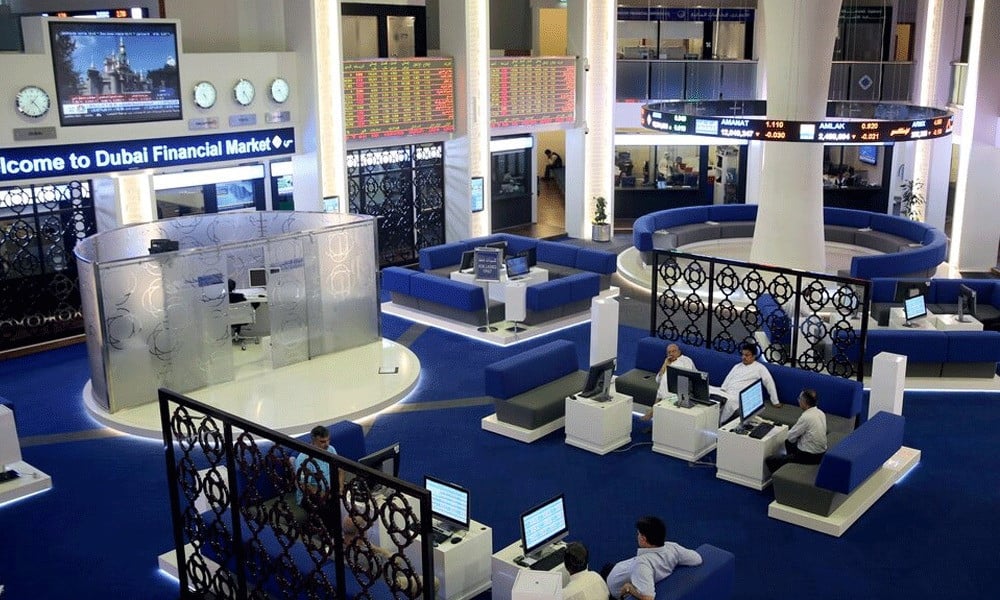
Most major stock markets across the Gulf ended lower on Wednesday as lingering uncertainty over the implementation of the recent U.S.-Iran agreement and shifting expectations for U.S. monetary policy dampened investor sentiment.
Market participants remained cautious after Washington and Tehran offered differing interpretations of key provisions of the framework agreement reached last week to end the conflict. Areas of disagreement reportedly include financial arrangements for Iran, oversight of the Strait of Hormuz and issues linked to Israel's parallel conflict in Lebanon.
Adding to investor unease, U.S. President Donald Trump said on Tuesday that Iran had agreed to allow nuclear inspections indefinitely, a claim Tehran subsequently rejected, raising fresh questions about the durability of the emerging accord.
Saudi Arabia's benchmark Tadawul index fell 0.3% to 11,007 points, weighed down by a 1.4% decline in Al Rajhi Bank. The broader weakness came despite strong gains in selected property-related stocks after the kingdom's real estate authority began accepting applications for foreign ownership of real estate.
Umm Al Qura for Development and Construction Company surged 10%, while Dar Al Arkan Real Estate Development Company advanced 5.8% following the announcement, reflecting investor optimism over potential foreign capital inflows into the sector.
The Qatari index recorded the sharpest decline among major Gulf markets, falling 0.8% to 10,321 points. The drop was led by a 1.8% fall in Qatar National Bank, the region's largest lender.
In Abu Dhabi, the benchmark index slipped 0.3% to 9,993 points, while Dubai outperformed regional peers and edged 0.1% higher to 6,112 points. Gains in Dubai were supported by a 3.5% rise in toll operator Salik Company.
Outside the UAE and Saudi Arabia, Bahrain's benchmark index rose 0.3% to 2,042 points and Oman's market gained 0.6% to 7,358 points. Kuwait's main index eased 0.2% to 9,146 points, while Egypt's blue-chip index slipped 0.1% to 51,711 points.
Analysts said improving regional geopolitics could ultimately support Gulf equities as shipping traffic through the Strait of Hormuz recovers and export activity strengthens. However, concerns that future U.S.-Iran negotiations could encounter obstacles continue to limit risk appetite.
Milad Azar, market analyst at XTB MENA, said improving traffic through the Strait of Hormuz and stronger export flows could support GCC markets despite lower oil prices, though potential tensions during future nuclear negotiations may keep volatility elevated.
Investors were also digesting a sharp shift in expectations for U.S. monetary policy. According to the CME FedWatch Tool, markets are now pricing in three Federal Reserve interest rate hikes this year, compared with expectations for only one increase before last week's policy meeting.
Changes in U.S. interest rates are closely monitored across the Gulf because most regional currencies remain pegged to the U.S. dollar, making local monetary conditions highly sensitive to Federal Reserve policy decisions.
0 Comments
No comments yet. Be the first to join the discussion!