




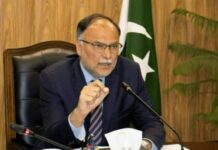











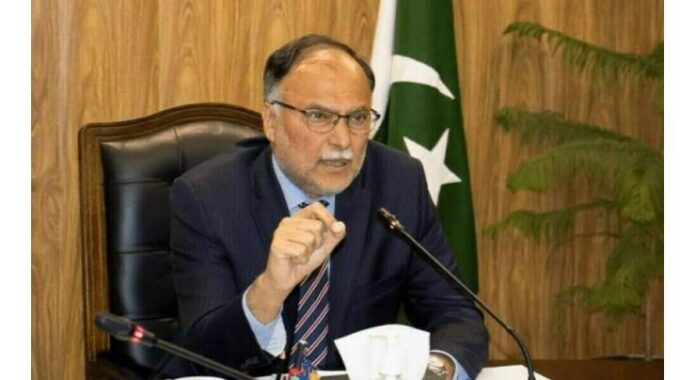
ISLAMABAD: The Minister for Planning, Development, and Special Initiatives, Professor Ahsan Iqbal, chaired the third meeting of the Prime Minister’s Committee on Thursday to address recurring water and power shortages in Gwadar district and review the status of power projects in both Gwadar and Gilgit-Baltistan (GB).
The meeting, attended by Federal Minister for Power Awais Leghari and senior officials from relevant ministries, focused on advancing critical energy projects for these regions.
Iqbal emphasized the government’s commitment to overcoming chronic electricity shortages, stating that reliable power is essential for economic growth and service delivery in both areas.
He noted that the Prime Minister had prioritized energy projects for GB, ensuring they would be executed within specified timelines. “The people of Gilgit-Baltistan must be provided adequate and reliable electricity, and we are taking all necessary steps to ensure this,” Iqbal said.
An action plan for accelerating energy projects in GB was approved, with the aim to add 100 MW to the region’s power generation capacity by June 2026. This includes the ongoing development of a 100 MW Distributed Photovoltaic (DPV) Solar Project, which consists of an 18 MW rooftop solar component and an 82 MW utility-scale component. The project, with an estimated cost of Rs 24 billion, is a major step in enhancing energy access and reducing reliance on unsustainable energy sources.
Iqbal stressed the urgency of completing the solarisation programme, urging departments to secure the necessary budget allocations without delay. He also reviewed the progress of the Rs 1.9 billion Solarisation of Pumping Stations and Desalination Power Plants in Gwadar, which aims to improve water supply infrastructure efficiency and reduce operating costs. The project is expected to pay back its investment in just 2.7 years, making it both economically and operationally viable.
The committee was informed that the study on grid stability in Gwadar has been completed, and the deployment of a ±50 MVAR Static Synchronous Compensator (STATCOM) at Pasni, along with the establishment of a local generation plant in Gwadar, is expected between October and December 2026.
Ahsan Iqbal instructed that the STATCOM be deployed within the planned timeframe and urged for the rapid completion of the solarisation projects to address Gwadar’s water supply challenges sustainably. “Stable and affordable electricity is essential not only for residents but for the success of ongoing and future development projects in Gwadar,” he stated.
The Planning Minister also highlighted the importance of maintaining strong service maintenance at Gwadar Port and effective law enforcement, stressing that these measures would ensure the long-term success of the development initiatives. He called for continued coordination with the Government of Balochistan and the Gwadar Development Authority (GDA) during the planning and execution of all power-related projects.
Reaffirming the government’s commitment to improving the quality of life and fostering sustainable development in both regions, Iqbal directed all relevant entities to adhere to strict timelines and deliverables for these projects.