



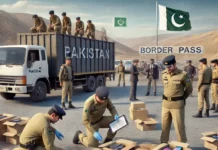











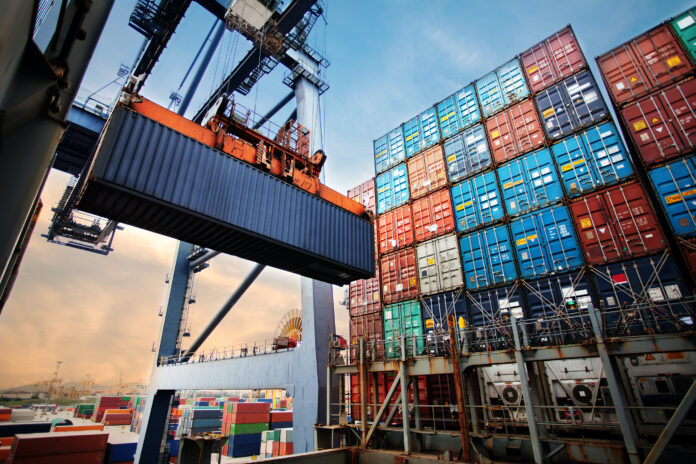
Trade bodies say around 11,000 Afghan transit trade containers remain stuck at Karachi port, while thousands more from both sides, including shipments of perishable commodities, are stranded at Ghulam Khan, Spin Boldak, Kharlachi and Torkham crossings.
Traders involved in Pakistan-Afghanistan bilateral and transit trade say they have incurred billions of rupees in losses as the prolonged closure of the border continues to disrupt the movement of goods. They warned that food items have already begun spoiling, causing severe financial losses for traders.
Trade bodies also reported a sharp decline in bilateral trade volumes, noting that exporters who had already been issued Form-E certificates have been unable to move their consignments as the closure nears two months.
Sarhad Chamber of Commerce and Industry (SCCI) President Junaid Altaf said Pakistan-Afghanistan trade, already limited, has deteriorated further due to the suspension of cross-border movement. He estimated losses of nearly $45 million since the Torkham shutdown began.
He said the continued halt in mutual and transit trade is damaging for both economies and affects the livelihoods of families who depend on cross-border commerce.
SCCI office-bearers urged authorities to separate trade matters from politics and immediately initiate talks to restore the flow of goods between the two countries.
Frequent closures of the Pakistan–Afghanistan border in recent weeks have already brought bilateral pharmaceutical trade to a standstill, putting nearly $200 million in exports at risk. Hundreds of shipments, including antibiotics, insulin, vaccines and cardiovascular drugs, remain stranded at Torkham and Chaman, with temperature-sensitive stocks facing the risk of spoilage.
The Pakistan Pharmaceutical Manufacturers Association (PPMA) has warned that the disruption is not limited to Afghanistan’s medicine supply. Afghanistan serves as Pakistan’s primary land route to Uzbekistan, Tajikistan, Turkmenistan and Kazakhstan, and repeated shutdowns have begun undermining regional connectivity plans, including the Pakistan-Uzbekistan-Afghanistan railway.
Industry representatives report severe commercial losses as containers remain stuck at border crossings, dry ports and warehouses. Several firms are facing financial damage running into hundreds of millions of rupees; one company alone has Rs850 million worth of medicines trapped at the border.
Stakeholders have urged authorities to urgently restore cross-border movement, warning that prolonged closures pose a threat to both pharmaceutical exports and Pakistan’s wider economic engagement with the region.