


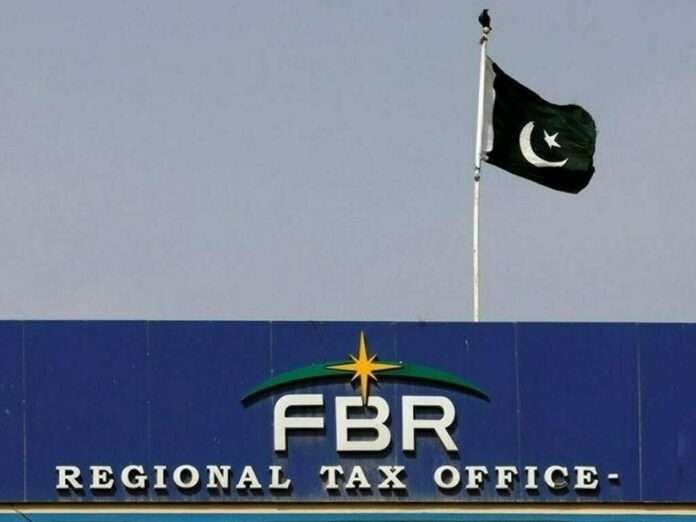
During a meeting of the National Assembly Standing Committee on Commerce on Wednesday, Shaista Pervaiz Malik, member of the National Assembly from the ruling PML-N, criticised the Federal Board of Revenue (FBR) for ‘creating a hostile environment’ for businesses, which has contributed to the exit of multinational companies and local businesses from Pakistan, according to a news report.
The committee, chaired by Jawed Hanif Khan, discussed recent trends of multinational firms scaling back or shutting down operations in Pakistan.
Malik expressed strong disapproval of the FBR’s actions, accusing the tax authority of “harassment” and highlighting the difficulties faced by foreign companies in repatriating their profits.
“FBR has made the business community hostile. As a result, not only are multinational companies shutting down their operations and leaving the country, but local businessmen are also being forced out,” she said.
During the meeting, a representative from the Board of Investment (BoI) briefed the committee on Pakistan’s open investment policy, stating that foreign investors do not need pre-screening or prior approval, unless restricted for national security or public safety reasons. Restricted sectors include arms, explosives, and media, among others, with foreign direct investment not permitted in the media sector.
The BoI representative also acknowledged that the recent scaling back or exit of some MNCs should be viewed in the context of broader global trends, including global inflation, high interest rates, and supply-chain adjustments. He noted that many multinational firms are adjusting their operations globally, with some shifting to asset-light models or consolidating operations due to external pressures such as inflation and shareholder demands.
However, he also acknowledged that domestic structural constraints, such as macroeconomic volatility, regulatory complexity, delays in profit repatriation, and high business costs due to energy prices and taxation, have played a role in influencing investment decisions.