Arif Habib to pump in additional Rs750 million into Naya Nazimabad
Construction to continue apace even as existing residents faced flooding damage owing to poor urban planning and design

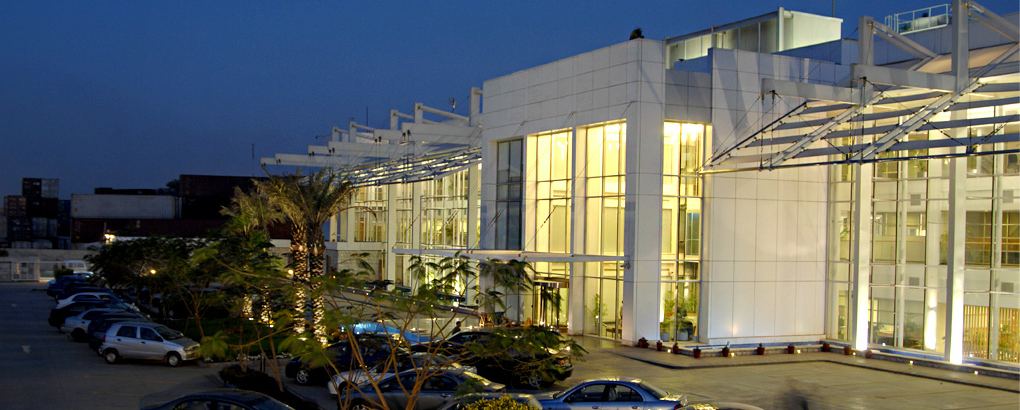
The original Nazimabad, named after the first Governor General Khawaja Nazimuddin, was a middle class suburban neighbourhood in Karachi, established in 1952. North Nazimabad, was designed for federal employees. As they housed mostly refugees and immigrants from India, these neighbourhoods came to embody the promise of ‘Pakistan’ - prosperity for the middle class. To this day, they command some of the highest per-square-foot prices in Pakistani real estate.
‘Naya Nazimabad’, the Arif Habib Group project, has been trying to galvanise a similar sentiment for the new middle class of Karachi, which may have been somewhat dampened (pardon the pun) by the recent flooding that took place in Naya Nazimabad following the torrential downpour in the city. Mahim Maher, a journalist with considerable expertise on Karachi, reported that part of the reason for the flooding was the poor urban planning on the part of the contractors hired by the Arif Habib Group.
Nonetheless, despite that setback – and despite its refusal to compensate current homeowners in Naya Nazimabad for their flood damage – Arif Habib is moving ahead with its plans for the development. In a notice sent by the Arif Habib Ltd to the Pakistan Stock Exchange (PSX) on August 28, at the next annual general meeting to be held on September 16, the company is looking to approve some serious investment for other companies within the Arif Habib Group. In particular, Javedan Corporation, which owns Naya Nazimabad, is asking for fresh investment of Rs250 million in equity, and Rs500 million as a loan.
So, what is Naya Nazimabad going to do with Rs750 million?
It helps to back track a bit. First, let us look at the Arif Habib Group. The group started in 1970 with the brokerage firm Arif Habib Securities. This evolved over the years to the conglomerate of today, and its flagship company is Arif Habib Corporation. However, the investment banking and brokerage arms have been managed by Arif Habib Ltd since 2005.
Now, Arif Habib group also owns majority shares in Javedan Corporation, which was incorporated in 1961 and started off as a cement factory. Javedan owns around 1,300 acres of land at Manghopir, near SITE in Karachi. The area used to house Javedan’s cement plant, dilapidated by years of neglect, which in the last decade has now been converted to a housing project. The project is connected to the city via Rashid Minhas Road and is close to Nazimabad, North Nazimabad and North Karachi.
As a project, Naya Nazimabad was conceived to “accommodate the housing demand of the middle income group and to provide a quality lifestyle for the progressive middle class,” according to its website. The land is divided up into eight blocks (A, B, C, D, K, L, M, N), with each block designed to have its own commercial area, mosque, and park. The houses are divided up into 120, 160, 240 and 400 square yards residential plots. Once fully made, the project will have up to 30,000 homes, accommodating a population of over 100,000 people.
So, where does Naya Nazimabad stand as of now? According to Javedan’s annual report of 2019, the company delivered around 4,000 units of developed plots and bungalows. The infrastructure development work for blocks A, B, C and D have been completed, while development in block M is still ongoing. Portions of block K and L were also open for sale. More than 400 families were settled in Naya Nazimabad in 2019, while the total number of residents reached around 500. The company also negotiated agreements with utility providers K-Electric and Sui Southern Gas Company.
During the financial year, the company recorded a sale of Rs1,899.02 million, which was lower than 2018’s Rs2,479.16 million. Meanwhile, the company’s profit after tax was recorded at Rs579.8 million, compared to Rs703.71 million. Historically speaking, these numbers are quite good: the company recorded a consistent loss between 2009 to 2012, the last few years it was still a cement factory, before recording a profit every year since then (after having converted to a real estate developer), hovering around the Rs800 million mark. In 2017, it recorded its highest profit, at Rs990 million.
The timing of this equity injection could not come at a better time. Naya Nazimabad has several construction projects up its sleeve. These range from a giant flyover to connect Naya Nazimbad with Karachi, which bypasses the Nusrat Bhutto colony to the Naya Nazimabad Gymkhana.
But the company also wants to start constructing apartment blocks in the project, and a commercial arcade. “The development and sale of apartments shall be a driving force for the Company in the short to medium term,” noted the director’s report. In the financial report from March 2020, the company noted that the “planning for the launch is almost complete. However, the timing of launch will need to be tactfully assessed due to the prevailing overall economic environment.” It did note, positively, that there was increased habitation at the scheme, which was appreciating the value of the houses.
The company is helped by the recent government boost to the construction sector. Ever since the federal government announced an incentive package for the real estate and construction industry in April 2020, it has become incredibly lucrative to enter the real estate market, especially the affordable housing segment. The industry will also have a fixed tax regime – more akin to a sales tax – instead of taxes on profits. Additionally, the central bank has asked commercial banks to allocate 5% of their total lending to the construction sector. This will hopefully improve lending in general: as is, banks’ current exposure to the sector is only at 1% of overall loans.
Javedan was cautiously optimistic about the construction package, noting in March that “the construction package by the Federal Government will need to be backed up by necessary changes required at Provincial level in respect of approval mechanism and provincial level taxes, duties and related matters.”
Still, Arif Habib Ltd has certainly noticed. It is why along with the Rs750 million for Javedan, the company is also proposing fresh investment of Rs200 million in Aisha Steel Mills, Rs200 million for Power Cement Ltd., and requested a renewal of Rs406 million for Safemix Concrete Products. Expect more buildings from Arif Habib in the future.
Just do not ask about the flooding the next time it rains.
44 Comments
No comments yet. Be the first to join the discussion!