Textile mills in Pakistan are exporting their used machinery in the midst of an industry crisis. How did they get here?
The machinery is reportedly being exported to Afghanistan, Indonesia, and to South America.
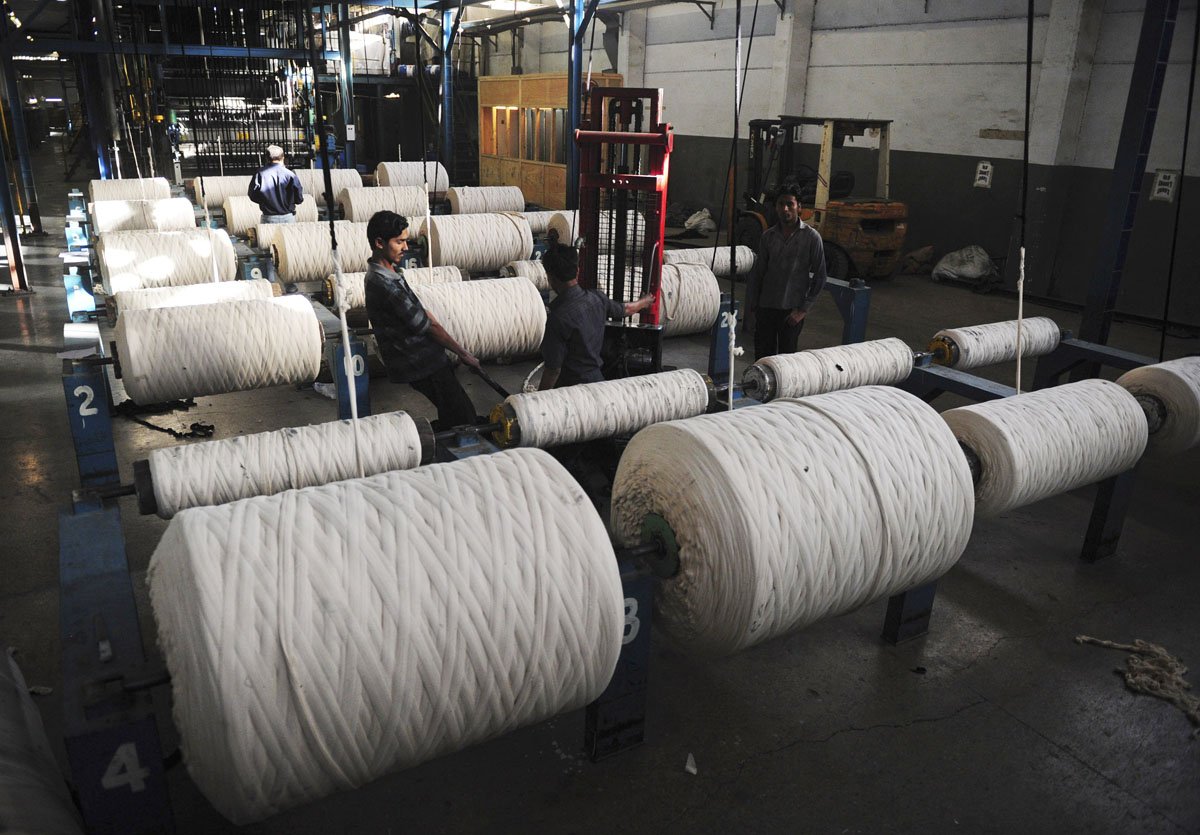
LAHORE: It has come to this. In the midst of a growing crisis for the country’s once thriving textile industry, Pakistani mills are exporting their used machinery to countries such as Afghanistan, Indonesia, and others in the South American continent.
The textile industry has come to a point where millers are selling their machines to other countries because their manufacturing capacity is very high and the demand for their product is in the dumps.
There seems to be some disagreement within the industry regarding where these machines are being exported to. Reliable market reports have indicated that a large chunk is being sent to Afghanistan, which has initiated operations with 30,000-40,000 spindles based on the used spindles exported from Pakistan. However, other players have claimed the share sent to Afghanistan is not the most significant. Iftikhar Mohiuddin of Hussnain International, a company dealing in the global trade of textile machinery, contests the notion that a significant portion of used machines is being exported to Afghanistan.
What it does boil down to, and what Mr Mohiuddin acknowledges, is that used textile machines are being exported to Afghanistan. Not only this but Pakistan's used textile machinery is also being exported in significant numbers to South and North America and Indonesia.
“For instance, if we talk about the Saif Group from Khyber Pakhtunkhwa, which is a major textile group, they are not exporting their used machines to Afghanistan. Instead, their sold machines are coming to Faisalabad, where some local textile mills are using them. Although, geographically, Afghanistan is closer to Saif Group than Faisalabad,” he said.
What brought us here
Iftikhar also attributes the rapid shutdown of Pakistan's spinning mills to high electricity costs, unresolved issues among textile company owners, flawed government policies, and the lack of incentives. He informed Profit that most textile industry machines in Pakistan are being scrapped, with about seventy percent of used machines ending up as scrap.
This is because over the past two decades Pakistan's textile sector has seen a shocking downfall.
Subscribe to Continue Reading
The rest of this article is available exclusively to subscribers.

The writer is a member of the staff and can be reached on [email protected]
View all articles →7 Comments
No comments yet. Be the first to join the discussion!