Small textile mill closures accelerating in Faisalabad
Industry on edge and panicked after Sitara Textile closed its mill for relocation
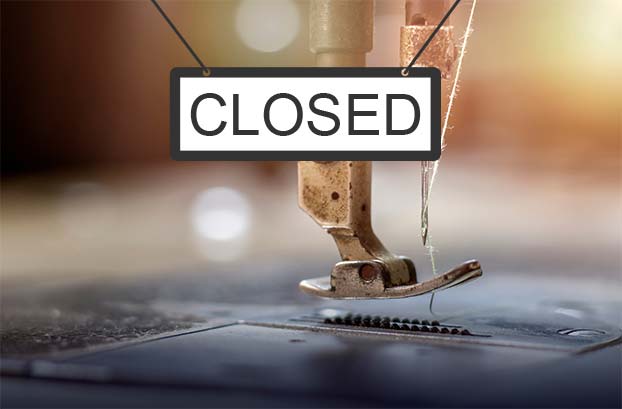
It is one of Pakistan’s biggest crybaby lobbies, constantly asking for free goodies, which means that there is generally very little sympathy amongst the public for the textile industry. But while the larger players tend to be rich and have the capacity to withstand much tougher economic conditions, smaller textile mills have always had a harder time, and in recent years, many have been struggling to keep their doors open.
The industry has a penchant for hyperbole, so Chaudhry Salamat, a key voice in the Pakistan Hosiery Manufacturers and Exporters Association, issuing a warning that the entire industry in Faisalabad could shut down should be taken with a bucket full of salt. Such fears are nearly always just scare tactics from an industry used to public largesse and throwing a fit when it gets anything less than everything it asked for.
But this time, the rumours were lent slightly more credence by the news that Sitara Textile, one of Pakistan’s largest and most storied mills, was shutting down. The company’s CEO, Muhammad Idris, quickly dispelled these claims, though he confirmed that operations had indeed been halted—not as a final closure, but as part of a strategic relocation.
Idris explained that the mill’s closure was a response to the unsustainable cost of doing business in its current setup. The plan, he said, is to move operations to the Faisalabad Industrial Estate Development and Management Company (FIEDMC) where the company has already secured land. This move, he argued, is about modernising the business, slashing costs, and integrating new technologies—not giving up.
In particular, many of Faisalabad’s older mills have been relocating owing to a shift in Faisalabad’s urban geography: many of the mills were on land that is increasingly more valuable as middle class housing rather than industrial plants, and hence many mills have found themselves able to finance a move – and pocket a considerable amount of capital – by selling their land to real estate developers (or developing it themselves), and buying cheaper land on what are now the outskirts of Faisalabad.
Far from being a sign of bad times, this may reflect a rising prosperity in Faisalabad, and creating the opportunity to unlock value from fully depreciated assets on corporate balance sheets.
But many in the industry are less optimistic. Conversations with industry insiders reveal deep-seated frustration with what they see as the government’s neglect of a sector that is vital to the nation’s economy. While larger players might have the financial muscle to weather these storms, smaller mills are hanging by a thread.
Subscribe to Continue Reading
The rest of this article is available exclusively to subscribers.

The writer is a member of the staff and can be reached on [email protected]
View all articles →Comments
No comments yet. Be the first to join the discussion!