


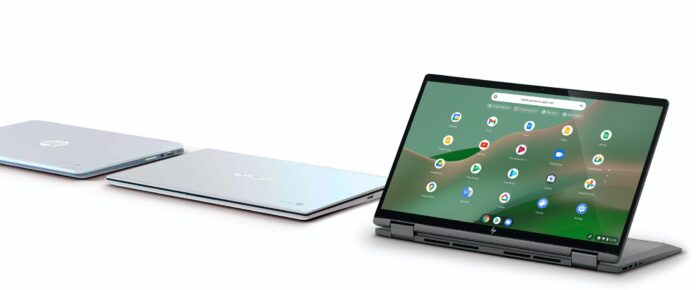
When the Government of Pakistan announced that Google would finally register a company in Pakistan and partner on a local Chromebook assembly plant, the headlines were pumped with news about the tech giant entering Pakistan, marking a step towards a digital revolution, creation of jobs and unlocking of export potential. All of this is true but it needs to be taken with a grain of salt. The PR around Google coming into Pakistan is great but the underlying economics might not necessarily be.
Beneath the patriotic excitement lies a complicated and uncomfortable truth. If Pakistan doesn’t tread carefully, this initiative could undermine its local businesses, distort incentives, drain public money, and recreate the same dependency traps that have crippled other industrialisation attempts in the past.
This is not an anti-technology argument. It’s an anti-mistake argument. And Pakistan has made this particular mistake many, many times. Below is the side of the story not appearing in official press releases why the Chromebook assembly plant may be far less of a breakthrough, and far more of a strategic misstep.
Assembly is not manufacturing
Pakistan is not joining an exclusive club of tech-producing nations. In reality, Chromebook manufacturing and assembly is already spread across multiple countries, many of which have far more mature electronics ecosystems and deeper integration into Google’s hardware supply chain.
Google generally doesn’t own these factories directly; instead, it certifies manufacturers in different regions to build ChromeOS devices according to its specs. Pakistan’s new line is only one of many and not among the most advanced, which means that the range of Google Chromebook’s assembled in Pakistan could be limited. The more advanced ones might be manufactured or assembled outside of Pakistan.
Across the broader world, Chromebook assembly or manufacturing plants are located in Vietnam, China, India, Brazil and Australia. India is one of Google’s largest Chromebook production hubs. In 2023, HP and Google began manufacturing Chromebooks at the Flex Ltd. facility near Chennai. These devices serve the Indian education market and are part of the country’s much larger electronics manufacturing ecosystem. This was India’s move to deepen local value-addition.

In Taiwan, the world’s hardware producing powerhouse, companies like Quanta, Compal, and Wistron have been manufacturing Chromebooks for years. A Forbes report even described Taiwan as Google’s “Chromebook hardware hub”. In 2025, Google doubled down by opening its largest AI hardware engineering centre outside the U.S. in Taipei, further strengthening Taiwan’s role in its hardware ecosystem.
The original Google Chromebook Pixel was assembled in China, and many Chromebooks, especially older and mid-range models have long been built there through various contract manufacturers.
Multiple Chromebook lines, particularly Samsung’s and some Acer/Lenovo models, carry “Made in Vietnam” labels. The country has become a preferred site for laptop assembly as companies diversify away from China. Similarly Australia and Brazil have fully localised Chromebook production facilities.
Pakistan joins the list now. A late addition and only at assembly level. Pakistan’s new line at National Radio Telecommunication Corporation (NRTC) in Haripur in partnership with Tech Valley and Google for Education, is an assembly plant, not a manufacturing hub. Chromebook assembly would mean parts like motherboard kits, screens, chips, and other required components would be imported as completely knocked down (CKD) or semi-knocked down (SKD) kids and then screwing them together at the facility in Haripur.
This places Pakistan at the lowest value-addition tier compared to other countries. Pakistan’s electronics ecosystem does not become part of the component manufacturing process, no designing input and no scope for advanced R&D like in other countries. Assembly is far from production in an industrial sense. It is packaging at best.
But as Dr Syed Ali Abbas, a Pakistani economist at Cardiff Institute of Management argues, you have to start somewhere. When asked why the government might have asked Google to set up an assembly plant in Pakistan, he said that a move such as setting up an assembly plant by Google is a great step forward exactly because of the lack of an existing advanced hardware ecosystem and knowledge base to produce advanced machinery. “Even an assembly plant will lead to knowledge and technology transfer that would be helpful for the ecosystem. The local economy would absorb this knowledge and a few years down the line develop their own capabilities to manufacture components locally. That is when a full production plant for Pakistan would make sense.”
Dr Ali Abbas makes a fair point because even a basic Chromebook assembly plant brings certain advantages. It creates entry-level technical jobs, builds familiarity with global hardware standards, and exposes local technicians to international workflows such as quality control, supply-chain management, and large-scale device testing.

These skills are transferable and can, over time, contribute to the broader electronics ecosystem. Local assembly also shortens delivery times for large orders and can reduce foreign-exchange pressure slightly by importing components rather than fully assembled units. Politically, such plants become symbols of industrialisation and may help attract future investors who want to see some form of physical hardware activity already happening in the country.
The benefits however come with clear limitations that must be acknowledged honestly. Assembly is the lowest rung of the manufacturing pyramid and adds minimal value. The bulk of the economic benefit still leaves the country in the form of imported components, royalties, licensing fees, and payments to foreign partners. Without a pathway to progress from assembly to actual manufacturing, the plant risks becoming a permanent screwdriver operation rather than a stepping stone to real industrial capability.
Additionally, assembly plants often create dependency instead of independence. Because all critical parts are imported, the local operation is highly vulnerable to supply disruptions, currency devaluation, or shifts in Google’s global strategy.
An assembly plant is good for a starting point but only if it is paired with a serious, long-term industrial strategy. Without that, it becomes yet another well-publicised but hollow initiative that flatters the government, benefits foreign corporations, and leaves Pakistan in the same place it started: participating at the edges of global supply chains rather than shaping them.
Who is the buyer?
Regardless of a full manufacturing facility or an assembly plant, the full spectrum of problems with Google coming into Pakistan is multi dimensional. For that dear reader, you need to understand who the buyer of a Chromebook is. To understand that, we’ll start with what a Chromebook actually is.
A Chromebook is a lightweight computer that runs on Google’s Chrome Operating System, which is a cloud-first operating system designed primarily for web use. Unlike traditional Windows or macOS laptops, Chromebooks rely heavily on online applications, cloud storage, and Google’s own services, which allows them to boot quickly, stay secure through automatic updates, and operate smoothly even with minimal hardware.
Think that a Chromebook does not have a hard drive but a laptop does. According to Google’s official Chromebook overview, they are built around simplicity and speed, allowing users to work through the Chrome browser and Android apps. Because ChromeOS is less hardware-intensive, they tend to be more affordable, more portable, and easier to maintain than full-featured laptops, making them attractive to users who value ease of use and reliability over raw processing power.
Chromebooks are best suited for tasks that revolve around the internet and productivity. Google’s documentation highlights their strengths in word processing, spreadsheets, presentations, email and note-taking. They are also ideal for online research, video conferencing, streaming, and general web browsing. However, because they are built around the browser and cloud apps, they are not intended for heavy workloads like high-end gaming, video editing, or advanced programming environments. Their power lies in efficiency and simplicity, not high-performance computing.
The strongest demand for Chromebooks comes from students, schools, and educational institutions. Google for Education reports that Chromebooks dominate the K-12 market in many countries because they are low-cost, easy to deploy, simple to manage across large groups, and secure out of the box. Schools prefer them because IT administrators can manage hundreds or thousands of devices centrally, with minimal setup.
Beyond education, budget-minded home users often choose Chromebooks for basic tasks like browsing, emails, and streaming, while some businesses and remote workers use them for light productivity and cloud-based workflows. For organizations with large device fleets, Chromebooks offer a cost-effective, low-maintenance alternative to traditional laptops. Ultimately, Chromebooks appeal to anyone who prioritizes affordability, portability, and cloud-based work over heavy computing power.
In Pakistan, as our understanding after communicating with the Ministry of IT is, Google’s main customer is going to be the education sector but through the government. According to publicised plans, the facility can churn out 600,000 Chromebook units each year. This is the maximum number that can be assembled.
According to the Ministry of IT, “50,000 [units] is the production [essentially assembling] capacity of the assembly line but our target is that by 2026 we will assemble at least 5 lac books.”
The caveat here is that the government, as confirmed by the spokesperson for the IT Ministry in a conversation with Profit, is going to buy the majority of these Chromebooks to distribute among students. That is what is confirmed. They might even buy more for digitising operations of the governments at national and provincial levels, establishing the government as the major buyer of Chromebooks from this partnership.
Subsidising Google for tens (possibly hundreds) of millions of dollars
That translates into tens of millions to possibly hundreds of millions of dollars worth of Chromebook units the government has confirmed that it will buy. The market prices of Chromebooks available online show it ranges anywhere from $200 to $750 depending on how advanced the machine is. If the government buys the majority, say even half, which would be 250,000 units in a year priced at $200, that’s a $50 million bill for the government in a year. If the government buys most of these units, say 90% of Chromebooks which would be 450,000 units produced by the Haripur facility, the government’s bill would be $90 million in the year. For more high end Chromebooks, the government pays even more. Say all Chromebooks are the most advanced ones priced at $750. For 250,000 units, the government pays $187 million.
For 450,000 units, this bill would go up to $337 million. The range we have here is of $50 million minimum to $337 million the government is going to spend on buying Chromebooks to distribute among students This could possibly be a successor to their earlier laptop scheme. They may distribute some among ministry officials.
This money is essentially a subsidy from the GoP to Google, giving them a risk free entry into the Pakistani market. Google has not come into Pakistan based on a strong commercial demand from the Pakistani market, it’s here on the back of this confirmed contract that can potentially go up to a couple of hundred millions dollars. In exchange, Pakistan gets to create jobs and receives some technology and hardware knowledge.
The project seems to be based on political motives rather than on commercial viability. Pakistan’s known laptop imports bills (which include Chromebooks) are anywhere between $100 million to $200 million. The expenditure by the government on Chromebooks shows that a strong commercial demand for Chromebooks might not actually exist. That is to say if the government wouldn’t have committed to buy Chromebooks and Google had come into Pakistan, their Chromebooks wouldn’t sell and they would generate losses.
“Whenever a country promises to buy a product in order to secure a substantial investment, they become the company’s essential customer in that country. There may be upsides for both parties, but like most marriages of convenience, either party can quite easily get caught up in the many strings that are inevitably attached to such arrangements,” warns Professor John Paul Rollert, adjunct associate professor of behavioral science at the University of Chicago Booth School of Business
Because the government is the primary buyer, the plant may remain viable only as long as the state keeps purchasing devices to sustain it. This turns the plant into a politically dependent project, rather than a commercially competitive one. Because it is not based on commercial motivation and just bilateral understandings, the arrangement would likely have many ifs and buts too. The more the ifs and buts, the more chances that they can be violated risking the project faltering.
Is the education sector even ready for Chromebooks?
What we know is that the government is going to buy these Chromebooks for schools. There are problems here too regarding the availability of infrastructure to use Chromebooks, at least in public schools.
Chromebooks can simplify digital learning for sure. Omer Salamat, founder of SICAS schools system testifies to the ability of Chromebooks that helps with learning but he argues that the required infrastructure is missing to make the implementation of Chromebooks in schools worthwhile. “Availability and reliability is very important and it is vastly missing, for instance,” he says.
Because Chromebooks are designed around cloud-based applications, the most essential requirement is reliable internet connectivity. For students to work using Google Classroom, Docs, Sheets, and schools must have stable, high-speed Wi-Fi that reaches every classroom. Inadequate bandwidth results in slow performance, disrupted lessons, and frustrated teachers. This would need a super fast and reliable internet that can support learning on hundreds of devices simultaneously. At homes too, students should have reliable and fast internet to be able to use Chromebooks. Without this backbone, Chromebooks cannot deliver their intended benefits.
Internet access in Pakistan has grown substantially over the last two decades. According to a recent report, as of early 2025 there are approximately 116 million internet users in the country, roughly 46 per cent of the population. Mobile broadband (4G/5G) accounts for the vast majority of connections, showing that much of Pakistan’s internet usage is via smartphones.
But even if infrastructure was in place, Omer Salamat still questions the sensibility of this move. Why? Because in his experience running SICAS needs are already being fulfilled at the stage we are at in educating our children. That is to say that technology currently can not add a lot of value to learning in Pakistan. That the marginal value of implementing technology is low.
Founder of Edtech Knowledge Platform, Mahboob Mahmood echoes a similar sentiment. He supports that the lack of internet infrastructure would not reap the desired benefits of implementing Chromebooks in school systems. In his experience running an edtech, implementing technology in classrooms is a very challenging task and will take decades to implement.
That is to say that the adoption does not simply take up by handing Chromebooks. Training students and teachers and making them realize the benefits of technology is going to take a long time.
Shutting out private sector
Another troubling aspect of the Chromebook assembly initiative is how little room it leaves for Pakistan’s own private sector. Rather than opening the opportunity to a competitive process where local hardware companies, IT assemblers, or tech startups could participate, the government opted for a state-controlled partnership centered on a public-sector entity, the NRTC. Even if the government were to become the major customer of Chromebooks, letting a private enterprise partner with Google to assemble Chromebooks would have been more beneficial for the market than the government doing itself.
Airlink CEO Muzaffar Peracha, whose company could have a potential partner for the Chromebook assembly plant, goes on to even say that the government is confused. Because on the one hand, the words vividly exhibit frustration with the government’s policies. On the one hand, he says, the government is trying to privatise state owned enterprises and on the other hand, they are strengthening some. He labels the government anti-business and anti-growth. Because the excluding private sector concentrates benefits within a narrow ecosystem, effectively sidelining the private businesses that could have brought agility, innovation, and genuine industrial growth.
Think of a scenario where Airlink or any other company secures a contract to assemble Macbooks or android tablets in Pakistan in partnership with foreign tech giants, they would have a difficult run competing with Google Chromebook because they are state backed. The competition would be inorganic and uneven and maybe even scare other companies from entering into Pakistan through private partnerships. This is not just an unhealthy precedent, it’s a dangerous one.