
What makes Nimir Industrial Chemicals enter the FMCG business
Manufacturer wants to vertically integrate and begin competing in some spaces in which its major clientele operates, such as soaps, detergents, and household cleaning products

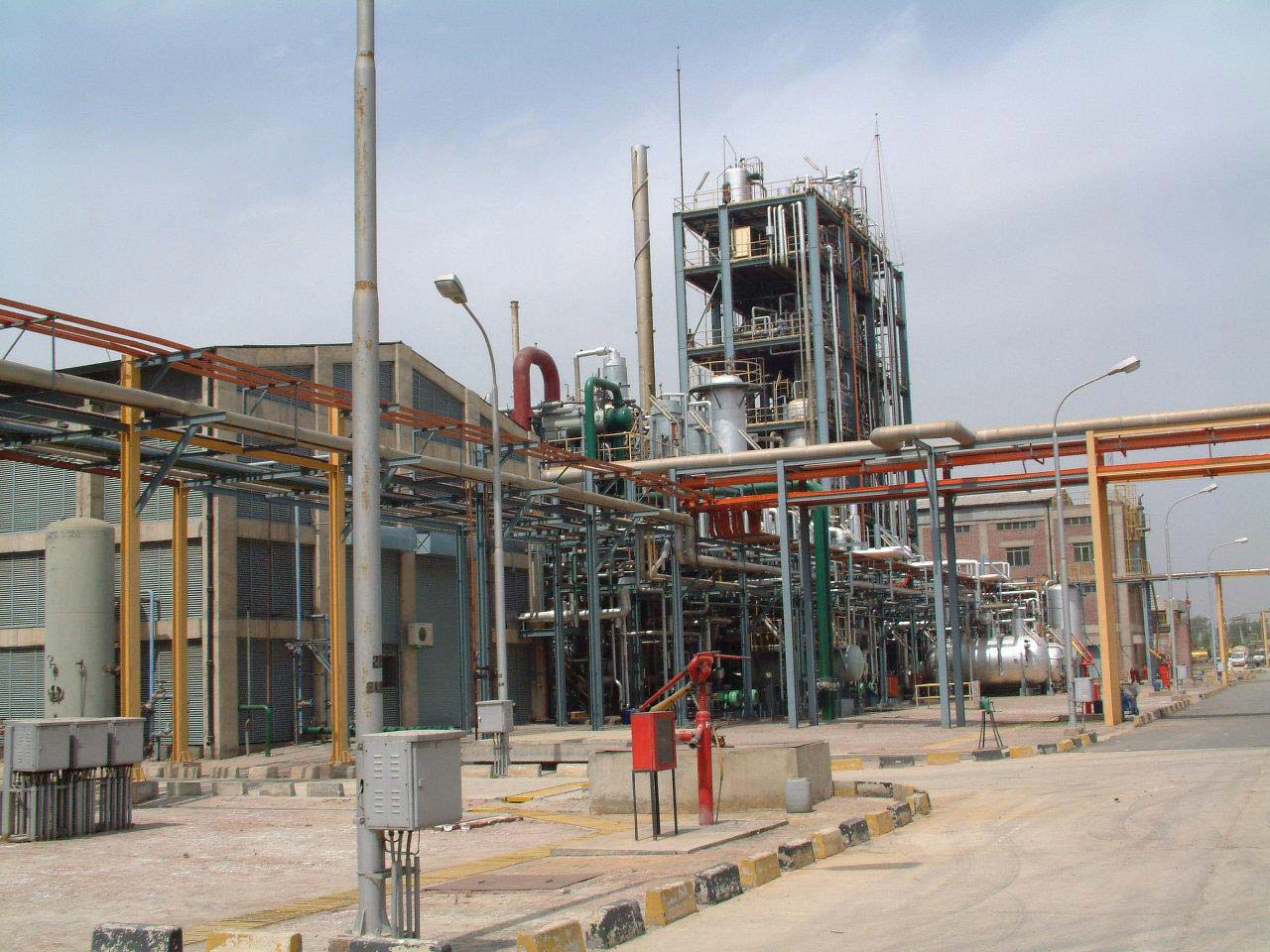
The saying usually goes: “if you can’t beat them, join them”. Nimir Industrial Chemicals flipped this mantra: tired of simply supplying chemical products to other industries who make the final product, it has decided to make its own final products. In business school parlance, it has decided to ‘move up the value chain’.
In a notice issued to the Pakistan Stock Exchange on August 28, Nimir Industrial Chemicals announced it was going to invest Rs750 million to set up production facilities for home and personal care products.
One does not exactly think of personal care products when one says ‘Nimir Industrial Chemicals’ – or really the name of any industrial chemicals manufacturer – but a look at the company’s core businesses will reveal a lot.
Nimir Industrial Chemicals is part of the Nimir Group, which includes Nemir Resins – which manufactures surface coating resins, polyesters, optical brightener and textile auxiliaries – Nimir Holding, and Nimir Management. Nimir Holding has voluntarily winded up, and its assets are now part of Nimir Chemicals; Nimir Management is designed for investment in Nimir Resins.
Nimir Chemicals was incorporated in Pakistan in February 1994, but started its commercial operation in January 2000. The company was initially involved in the manufacturing of oleo chemicals but is now also involved in making chlor-alkali. Its plant is located in Sheikhupura, Punjab.
Oleo chemicals actually refers to vegetable oil and animal fats. This includes soap noodles (used in the manufacturing of soaps), stearic acid, glycerine and distilled fatty acids. These components are then used in finished products like toilet soap, tyres, rubber, textile softener, metal polishing, cosmetics, candles, pharmaceuticals and tobacco.
Chlor-alkali refers to the industrial process of electrolysis of sodium chloride. Nimir’s products include caustic soda, sodium hypochlorite and hydrochloric acid. These are then used in cleaning, bleaching, textiles, water treatment and steel.
Finally, on a contractual basis, it makes toilet soap bars and toilet soap finishing and packing for different companies. It also provides certain solvent and palm oil products.
In other words, Nimir produces the precursor products to many of the home and personal care products – such as soaps, laundry detergents, bleaches, and household cleaners – that Pakistanis use in their daily lives. The thinking behind the management’s decision is likely: “how hard can it be to make the next phase of the value chain in which we are a vital component?”
This kind of vertical integration is not a new concept, and certainly many companies have tried it in the past. Indeed, one of Pakistan’s biggest conglomerates – Engro Corporation – is the result of just such as vertical integration attempt.
Engro used to be known as Exxon Chemicals Pakistan, a subsidiary of the US-based Exxon Corporation, the global oil and gas exploration and production company. Exxon entered the fertiliser business for the same reason Nimir wants to enter the home and personal care industry: it used to supply the biggest raw material (natural gas) to the fertiliser industry.
Ultimately, however, Exxon decided to exit the fertiliser industry worldwide, discovering that it was not the best owner of fertiliser manufacturing units, a business it would be better off selling to those who wished to specialise in it, and would thus be able to extract the most efficiencies and economic value out of.
Not all vertical integration ends in failure, of course. One big example of a successful vertical integration is Netflix, which started off just as a distributor of entertainment content, but has since become one of the world’s biggest and most successful producers of such content, creating hundreds of billions of dollars of economic value in the process.
Nimir Industrial Chemicals has done well: in the last six years, it has consistently made a bigger profit after tax than the year before. In 2016, it recorded Rs441 million in profit; in 2018, it recorded Rs696 million; and in 2019, it recorded Rs810 million. It is also a far cry from the tumultuous years of the mid-2000s, when there was concern about the operations of the company and its ability to survive as a standalone entity, and the caustic soda plant still had to commence operations.
Net sales in 2019 were recorded at Rs14.8 billion, up from Rs12 billion in 2018. The company managed to do this despite uncertain economic conditions, currency depreciation, and a hike in utility bills. It is also a big jump from net sales of just Rs7 billion in 2017, and Rs3 billion in 2014.
That is why, as far back as in the directors’ report for the year ending June 30, 2019, the company was still optimistic. At the time, it said the “management is continuously striving for diversification and explored the potential of setting up new business of aerosols (body sprays, air fresheners, insect sprays etc.) along with further expansion of soap finishing and BMR project for cost saving and improving efficiencies. The board of directors have approved fresh capital investment of Rs800 million for these projects.”
That is why Nimir Chemicals’ decision to set up production facilities for home and personal goods is no surprise. It is financially sound, and has been for a while. Plus, it made a bet that it would be easy to mimic the finished products that its clients make, such as soaps, candles cleaning supplies, textile softeners, and even textiles themselves. Nimir Homes might not be far off.
Comments
No comments yet. Be the first to join the discussion!


