March 20, 2022
The no-confidence vote inspires little confidence
A narrow segment of elites across institutions are engaged in a cynical, Machiavellian war where there is neither honor nor a greater purpose
March 20, 2022
Repeating the same experiment over and over again is the definition of insanity; experiments have been Pakistan’s greatest tragedy. As this latest bout of political instability unfolds, Pakistan’s ordinary citizens find themselves on their knees, almost down for the count. Meanwhile, a narrow segment of elites across institutions are engaged in a cynical, Machiavellian war where there is neither honor nor a greater purpose. The only motivating factor is the desire to make some immediate gains and chalk up a win, as Pyrrhic as it might be.
It is this protracted, nasty battle for power and influence that has turned Pakistan from a high potential country that awed the global community, especially the post-colonial Muslim world, to a global basket case. Gone is the generation that waged an intellectual and moral battle to win independence from an imperial power. The foresight of that generation was such that it saw the threat of majoritarian rule and right-wing radicalism, sought constitutional protections, and when denied, secured freedom for the lands that are now known as Pakistan and Bangladesh. Their successors failed to build upon the work of their ancestors and for power cynically fueled the very right-wing radical movements that their ancestors sought protection from.
As a result, the dream of a society where the constitution would reign supreme soon turned into a nightmare. Trampling the constitution and making a mockery of the very idea of Pakistan became the norm. Jinnah, one of the greatest constitutional minds of his era, could not have imagined in his wildest dreams that his great achievement would end up as a society ruled by men who represented values that he abhorred the most.
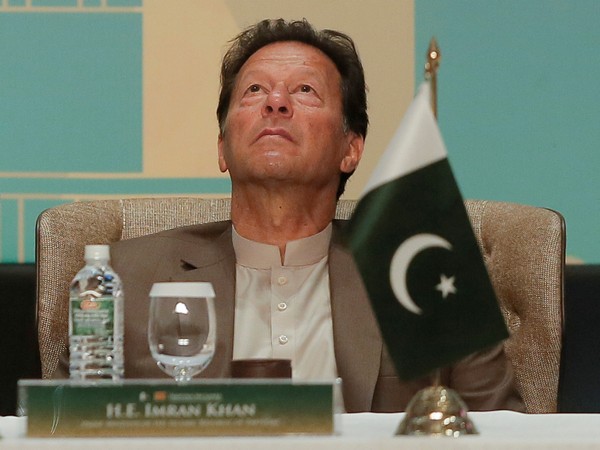
The vote of no confidence in parliament may be constitutional. It may also seem like progress to some: after all, we have gone from outright coups and dismissals of parliament by presidents, to judicial dismissals of prime ministers, to votes of no confidence in parliament. As flawed as this upcoming vote might be, some would argue, it is parliament exercising its constitutional right. They would also argue that this hybrid regime, represented by Imran Khan, is not democratically elected and that the opposition is empowering parliament to remove a man who should not be occupying the prime minister’s office in the first place.
These arguments have merit. But democracies are governed as much by norms as they are by the letter of the law. The vote itself is parliament’s right. Khan was elected in a dubious election, and that is an understatement at best. However, the how and why Khan is facing ouster now has very little to do with an underlying change in the nature and exercise of power, and how its corroding influence has hollowed Pakistan’s political economy. In fact, the ongoing drama is only being played because the theater director permits it; this newly united cast of the same characters is enacting just a newer version of a production that has been playing for seven decades.
Whether Khan or his opponents win, the ultimate loser will be Pakistan and the tens of millions who call it home. Facing one economic crisis after another, they are at their wits end; the permanence and mutation of radicalization in Pakistani society is evidence of that. They are falling behind their peer households in other parts of the world. A new generation is growing up stunted, undereducated, and in an environment where regular access to clean air is a luxury. This generation is tuned into the world and global in its outlook. It is seeing the achievements of its generational peers around the world. They are dreaming but are being held back by the immorality of a fossilized, insular, and short-sighted elite. This generation is getting angrier and is voicing it on social media, on the streets of the country’s urban and semi-urban streets, and in the madressahs and schools across the land.
Pakistan’s elites across institutions and organizations do not have a plan to meet the ambitions and aspirations of this younger generation. They do not even seem to care about the implications of their failures. Perhaps they do not even realize what is bubbling around them, which would be par for the course given their limited intellectual faculties. This ongoing saga will soon be over, but the pain and misery will continue. This pain will only end if and when Pakistan’s political economy reverts to constitutionalism. This requires elites to respect and abide by the letter and spirit of the constitution., as Jinnah envisioned. The journey will be tough and painful, requiring a lot of tolerance, patience, and respect. It is time this drama culminated and Pakistanis created a newer script for themselves, one that inspires the world and represents the very best of us. The first step towards that is possible, but it requires a change in the behavior and influence of the theater director.
Uzair Younus is Director of the Pakistan Initiative at the Atlantic Council, a Washington D.C.-based think tank, and host of the podcast Pakistonomy. He tweets @uzairyounus.
View all articles →3 Comments
No comments yet. Be the first to join the discussion!