March 6, 2024
Will local refineries finally be able to produce high-margin petroleum products?
Refineries initiate feasibility studies as the government charts an upgradation policy

March 6, 2024
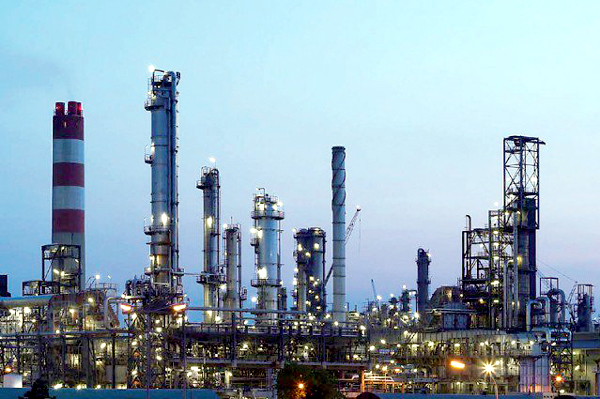
ISLAMABAD: While the country's refineries have so far struggled hard to produce high-margin petroleum products, particularly petrol and high-speed diesel (HSD), growth is anticipated following the signing of upgradation agreements under the Brownfield Refinery Policy.
The government, with the help of the refinery industry, prepared a refinery upgradation policy, and already respective refineries have initiated feasibility studies for independent upgrades to: comply with Euro V specifications, maximize production of MS and diesel, and minimise production of furnace oil (FO).
Pakistan’s total average requirement for the last five years for petroleum products stands at 24mn tons, out of which 11.35mn tons have been produced locally while the rest (12.90mn tons) were imported, said a report of Arif Habib Limited.
According to the report of AHL Research, Pakistan having a total capacity of 20mn tons, cannot fully utilize its capacity due to lower demand for FO in the country, amid shift in the energy mix within the power sector. To note, refineries are unable to significantly change their production slate, hence reducing their throughput.
The government being cognizant of the overall situation, announced a policy on 17thAug’23 for the upgradation of brownfield refineries which was further amended for brownfield refineries in Feb 2024.
Refineries that endorse the policy will receive additional tariff protection or deemed duty incentives, amounting to 10% for Motor Spirit (MS) and 2.5% for diesel for seven years.
The upgradation policy is anticipated to enable refineries to increase total production of MS (+99%) and diesel (+47%). The production of furnace oil is expected to reduce by 78%.
The report said that the refinery sector is the backbone of industrial development and products being used in transportation, industrial use, power generation and other energy products. Major types of refining processes are Hydro Skimming, conversion/cracking and deep conversion.
Presently, in Pakistan, there are five oil refining companies, namely, Pak-Arab Refinery Limited (PARCO), Attock Refinery Limited (ATRL), National Refinery Limited (NRL), Pakistan Refinery Limited (PRL) and Cnergyico Pk Limited (CNERGY).
All refineries in Pakistan are based on Hydro skimming technology, except for PARCO which has a mild conversion refinery.
In FY23 the country’s total refinery capacity was recorded at ~20m tons per annum (~450,000 bpd), but the actual utilization was 10mn tons per annum (Utilization: 50%). Whereas, the total demand in Pakistan was 21mn tons per annum, due to this Pakistan had to import of 11mn tons in FY23.
The production slate of all existing local refineries consists of Naphtha, Motor Gasoline (MS), High-Speed Diesel (HSD), Furnace Oil (FO), Kerosene, Jet fuel (JP-1 & JP-8), High-Octane Blending Component (HOBC), Liquefied Petroleum Gas (LPG) and Light Diesel Oil (LDO).
With the change in the country’s energy mix over the last 3-4 years, furnace oil demand is plummeting amid lower offtakes from power generation companies. Due to this refinery reduced their overall production, which resulted in lower utilisation.
The author is a an investigative journalist at Profit. He can be reached at [email protected].
View all articles →5 Comments
No comments yet. Be the first to join the discussion!