


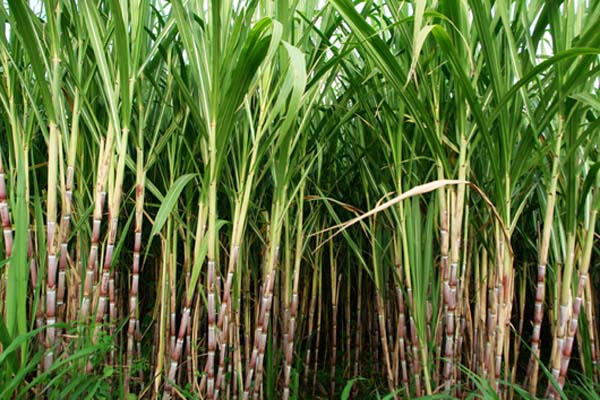
Sugarcane prices in Pakistan are expected to remain between Rs500–550 per maund, the National Assembly was informed on Monday, ensuring farmers’ profitability and fair market practices.
Minister for National Food Security and Research Rana Tanveer Hussain said last year’s cane prices ranged from Rs450 to Rs750 per maund depending on region and quality, while this year’s indicative prices in several districts have already crossed Rs500 per 40kg. He cautioned that procurement closer to Rs400 undermines growers and contradicts deregulation principles, adding that provincial authorities have been approached to guarantee fair and timely payments by mill owners.
Hussain said Pakistan produced 5.8 million tons of sugar last year against a domestic requirement of 6.3 million tons, with climate stress and heat waves contributing to temporary price fluctuations. Despite this, ex-factory sugar currently stands at Rs160, not Rs200 as previously claimed. He added that while deregulation has made price movements largely market-driven, the government continues to intervene to prevent farmer exploitation.
Highlighting a historic milestone, the minister said Pakistan recorded a surplus of 1.3 million tons of sugar last year, generating $400 million in exports without any subsidy.
Hussain also outlined the Prime Minister-approved Agriculture Growth Programme, focusing on mechanisation, technology transfer, awareness, and improved access to finance. He noted that outdated harvesters caused 10–15 maunds per acre losses, while new machines tested at PRC reduced losses to as low as 6 kilograms per acre, potentially boosting national productivity.
The minister said electronic warehouse receipts (EWR) are being introduced to allow farmers to store produce safely and borrow up to 70% of the stored value directly from banks. Cold storage and transport reforms are also underway to cut post-harvest losses, which cost the country $1.7–1.8 billion annually, according to an ADB study.
Hussain stressed that agriculture remains the backbone of Pakistan’s economy, with 65% of the population linked directly or indirectly. He added that the country is self-sufficient in wheat, rice, and maize, expanding export markets, and that global institutions including the World Bank have urged Pakistan to prioritise agriculture, underlining that “food security is national security.” The new policy framework will soon be presented to the Cabinet and may also be taken to Parliament for wider consultation.