



















At the beginning of this month, Pakistan and Canada’s foreign ministers issued a joint statement. In diplomatic circles, such statements are laboured over. Ministry bureaucrats spend days poring over the implications of each word before the two sides come to an agreement.
Joint statements can range everywhere from defence pacts to alliances and smaller cultural agreements. The joint statement issued by Pakistan’a Deputy Prime Minister and Foreign Minister, Ishaq Dar, and Canada’s Foreing Minister, Anita Anand, had to do with something rather interesting: canola.
The ministers announced they had reached an agreement to “facilitate the export of Canadian canola to Pakistan”. It was an effort, they said, to improve bilateral ties.
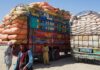
Normally, such agreements are made between commerce ministries in the form of MoUs. The joint statement, however, indicates canola is a serious issue for the Canadian government. Why? Because Canada needs buyers for its Canola seeds. It is one of Canada’s biggest agricultural products, and traditionally their biggest buyer has been China. But even as China has engaged in a fierce trade war with the USA, a lesser known battle had been going on between Beijing and the Great White North.
China has imposed massive tariffs on Canadian agricultural products in retaliation for Canada imposing tariffs on Chinese Electronic Vehicles. In the absence of the Chinese market, Canada is turning to try and find many smaller markets where their farmers can sell their canola. One of these markets is Pakistan.
But Pakistan is not just an emerging market for Canada. In recent times, a very similar story has played out between Pakistan and the United States over American soybeans. Pakistan, it seems, is becoming a buyer for North America as it engages in a prolonged trade war with China. The content in this publication is expensive to produce. But unlike other journalistic outfits, business publications have to cover the very organizations that directly give them advertisements. Hence, this large source of revenue, which is the lifeblood of other media houses, is severely compromised on account of Profit’s no-compromise policy when it comes to our reporting. No wonder, Profit has lost multiple ad deals, worth tens of millions of rupees, due to stories that held big businesses to account. Hence, for our work to continue unfettered, it must be supported by discerning readers who know the value of quality business journalism, not just for the economy but for the society as a whole.To read the full article, subscribe and support independent business journalism in Pakistan