


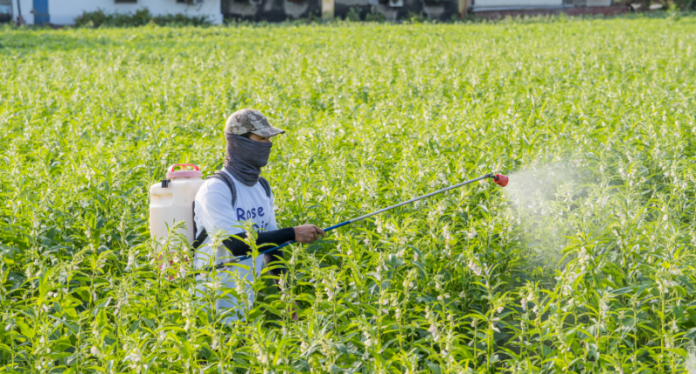
The Competition Commission of Pakistan (CCP) has released a study on the pesticide sector, revealing that counterfeit and adulterated pesticides are prevalent in Punjab and Sindh, causing significant crop damage, financial losses for farmers, and distorting market competition.
The “Competition Assessment Study of the Pesticide Sector in Pakistan” outlines the structural and regulatory challenges facing the industry, emphasizing gaps in enforcement and oversight that undermine fair competition and product quality.
Pakistan’s pesticide market is entirely dependent on imports, as the country lacks local manufacturing. The report highlights that weak enforcement, regulatory deficiencies, and lengthy approval processes hinder the growth of legitimate businesses and expose farmers to poor-quality products.
The study points out that counterfeit pesticides continue to be widespread in Punjab and Sindh, resulting in significant crop damage and financial losses for farmers. High investment costs, strict shelf-life regulations, and long testing procedures discourage domestic production. Additionally, some imported pesticides are unsuitable for Pakistan’s climate, further compounding challenges.
The CCP’s recommendations include revisiting the two-year shelf-life rule, harmonising regulatory frameworks between federal and provincial authorities, and expediting product registration processes.
The Commission also suggests promoting locally tested, climate-appropriate pesticides, improving inspections, and increasing legal actions against counterfeit suppliers. Strengthening provincial laboratories, enhancing technical staffing, and supporting local manufacturing are also key recommendations to reduce Pakistan’s reliance on imports.
Furthermore, the CCP urges the facilitation of licensing for agriculture graduates to act as distributors and aligning pesticide regulations with global sustainability goals related to food security and public health.
The report concludes that effective enforcement, regulatory clarity, and better coordination across sectors will improve competition in the pesticide market, reduce risks for farmers, and support Pakistan’s agricultural and environmental objectives.