Auto industry plunges into deep crisis
- 'An increase in advance customs duty on all raw materials and imposition of up to 7.5pc FED proving deadly for the auto sector'
- 'Industry needs stable, secure and long-term policies so that it can implement its investment plans'
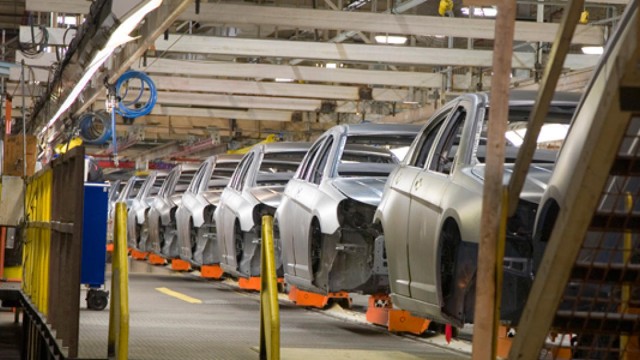
ISLAMABAD: The auto industry of Pakistan has fallen into a deep crisis, as car sales witnessed a decline of around 50pc in July 2019, with expectations of a further decline in figures by the end of August.
The government has recently taken several steps that have not only contradicted with the essence of the Auto Development Policy 2016-21 (ADP) but have also adversely impacted the process of industrialisation in the country.
As per the sources, if the prevalent declining trend continues, the industry's target of producing 550,000 units in line with the Auto Policy 2016-21 would be missed by some distance.
Sources said the government must take prudent measures to facilitate the auto sector, or else it could witness a revenue loss of around Rs225 billion per annum besides a job cut for 1.8 million people.
This would not only reduce the industry's growth but would also hurt the industrial expansion that took place during the past few years, they added.
Sources said the industry needs stable, secure and long-term policies so that it could implement its investment plans, adding that the government must also ensure a business-friendly environment for the business community so that the industry could grow the way it should.
According to the data released by Pakistan Automotive Manufacturers Association (PAMA), the sales of Honda cars declined 66pc in July 2019 as compared the same month last year. Honda sold 4,981 units in July 2018, which came down to 1,694 units in July 2019.
Similarly, the sales of Toyota vehicles witnessed a fall of 56pc, as the company managed to sell only 2,413 units in July 2019 as compared to 5,468 cars in July 2018.
The sales of Suzuki registered a decline of 23pc in Pakistan.
According to sources, the prevalent crisis has made the auto manufacturers revisit their development and expansion plans as the market confidence has been shaken badly.
“An increase in the advance customs duty on all raw materials and an imposition of 2.5pc to 7.5pc federal excise duty announced in the current budget proved deadly for the industry,” an industry insider said. “Besides, huge devaluation of Pakistani currency against the US dollar in recent times has severely affected all future plans of the industry.”
He informed that the local auto industry had invested approximately Rs140 billion during the past few years while around $1.3 billion would be invested further by the new entrants.
It is pertinent to mention that Honda kept its plant closed for 12 days in July while Indus Motor Company reduced its production work to five days a week.
“This situation is very disturbing for the new entrants, as the outcome of their investments would remain lower than expected,” said the source. “The situation is also not profitable for the government as it would face tax collection shortage of around Rs3 billion per month.”
He termed inconsistent policies, massive devaluation of rupee, new taxes and duties, and high energy and interest rates as reasons behind the exorbitant increase in the input cost.
“There is more stability required and the government should not support pro-import policies. In the long run, the government should keep tight control on the exchange rate and it should strictly follow the auto industry development programme 2016-21.”

The writer is a member of the staff at the Islamabad Bureau. He can be reached at [email protected]
View all articles →26 Comments
No comments yet. Be the first to join the discussion!