
The Grand Economic Debate
Profit imagines what a debate between the major political parties would look like to help voters decide which vision of the economy they most closely align with
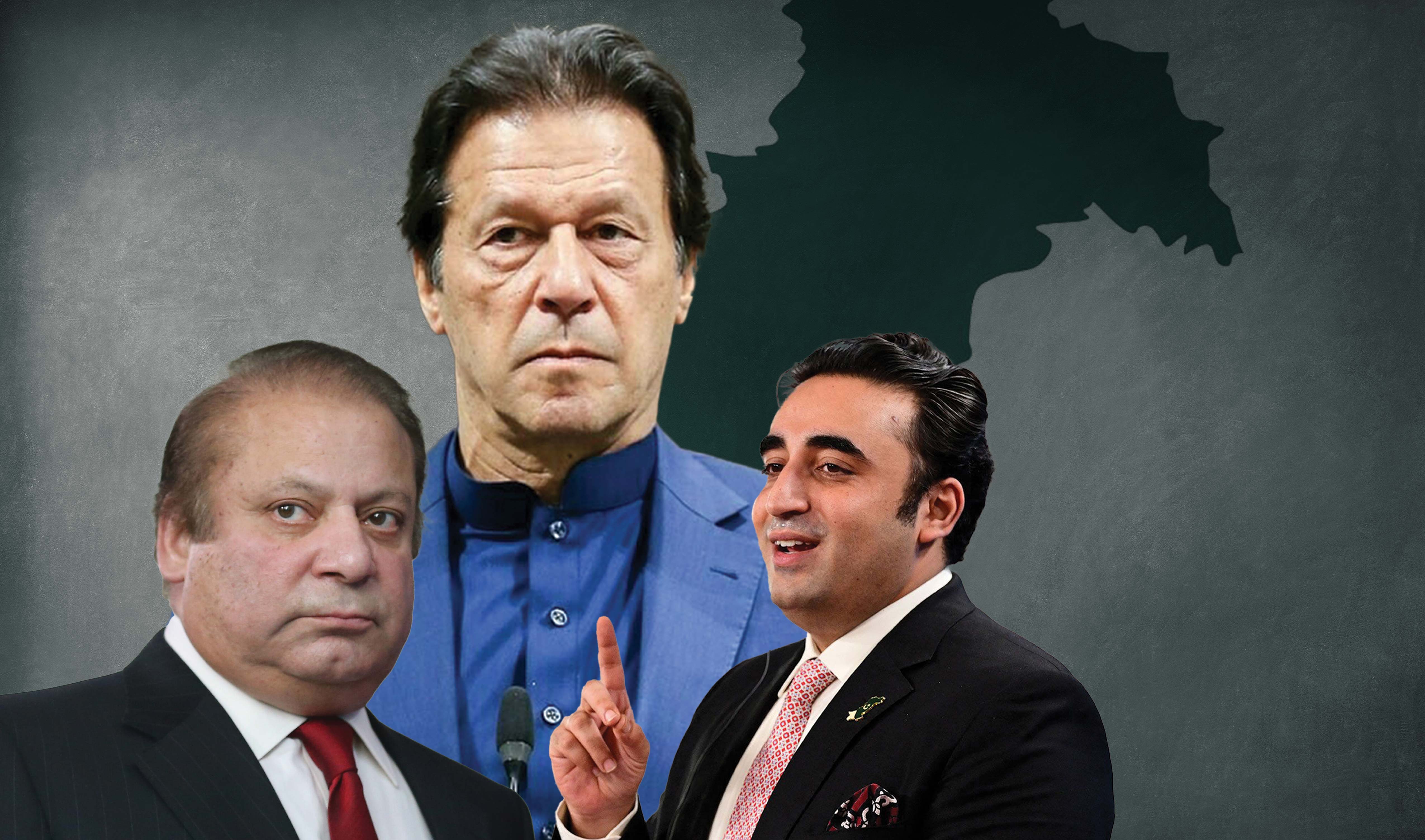
At Profit, we sometimes like to pretend that Pakistan is a more functional country than it actually is. Our once-every-five-years imaginary pre-election debate between the political parties is perhaps our most deluded effort yet: we imagine what a reasoned, well-argued, good faith debate between the major political parties would look like, and present the voters with it.
The truth is, however, that while it is deluded for us to think that the political parties are capable of a reasoned, well-argued, good faith debate, they do have very real differences in policy positions, and those positions are usually not irrational. There is a “best form” of the argument to be made for each party’s political agenda, and the voters deserve to have it presented to them, even if the parties themselves are incapable of making that presentation.
As with our last attempt at this debate, we will seek to present what we believe are the key issues facing Pakistan’s economy, first by laying out what we understand to be the facts about an issue, followed by a debate between the major political parties: the Pakistan Muslim League Nawaz (PML-N), the Pakistan Tehrik-e-Insaf (PTI), the Pakistan Peoples Party (PPP) and the Pakistan Army. (Technically, the army is not a political party, but it clearly has political interests, and no conversation about Pakistan’s economic prospects would be honest or complete without a representation of their positions.)
Each of these parties is represented by a fictional character who will be an amalgam of their stated party positions, mainly as expressed in their manifestos, with the exception of the Pakistan Army, for which we interpret the actions of the Special Investment Facilitation Council (SIFC) as the representation of their position.
We need you to not imagine a real human being saying any of these things because we all know that if you held a gun to the heads of all major party leaders in Pakistan, maybe 2-3 of them would be able to have a coherent conversation about Pakistan’s economy. This, by the way, represents progress by historical standards. If you held the same exercise in the 1990s, you would have had zero people being able to say anything of substance.
Unlike the previous election debate issue, instead of us laying out the facts first and then following it up with the debate, we will let the characters lay out the facts in the course of structuring their arguments. We think it is healthy for a democracy to have participants in a debate lay out objective facts and then argue about interpretations, rather than debating the very basis of reality itself.
Since this is a fictional debate, we have taken a bit of licence and focused the conversation on energy: our premise is that Pakistan’s core economic management problems cannot be solved without the government choosing a sustainable set of policies to govern the energy sector. Only once that is done can fiscal space – and from that the space to spend on other policy priorities – emerge.
One other note: We are an economic and financial publication, and while we recognize that Pakistan faces many non-economic issues on which the political parties have meaningful differences, you can find that commentary in every other publication in the country.
Energy: The heart of the mess
PML-N: Alright, we will start on this one since we initiated the set of policies that have largely solved the problem of too little generation capacity in Pakistan.
PPP: That is an exceptionally generous characterization of what happened. Yes, it is indisputable that Pakistan’s power generation capacity went up substantially during your tenure. I will give you credit: it was a big achievement to increase power generation capacity by 64% in a single term, from 23,825 megawatts (MW) to 38,995 MW [data from the National Electric Power Regulatory Authority (NEPRA)].
But you gave away absurdly generous deals to the independent power producers (IPPs), and we now have the problem of having to pay for way more capacity than we can utilise right now. You did solve the power generation problem, but in the most expensive way imaginable. And we are not a rich country to be able to afford those kinds of boondoggles.
Subscribe to Continue Reading
The rest of this article is available exclusively to subscribers.

Managing Editor, Profit Magazine. He can be reached at [email protected]
View all articles →6 Comments
No comments yet. Be the first to join the discussion!


