Why exactly are cars so expensive in Pakistan?
Yes, it has to do with taxes, but there is more than meets the eye, and local manufacturing may be a bigger deal than you think
After the 2018 elections and the incoming tide of the Pakistan Tehreek-e-Insaaf (PTI) government in the subsequent months, there was a proliferation of what you could call car hysteria. To be fair, there were all kinds of hysterias in this time, and cars were not even the most notable of these hysterias.
But it happened. The Facebook groups sounded the alarm bells, the car forums went up rioting, and the message was clear: buy your cars now because you will not be able to afford them soon enough.
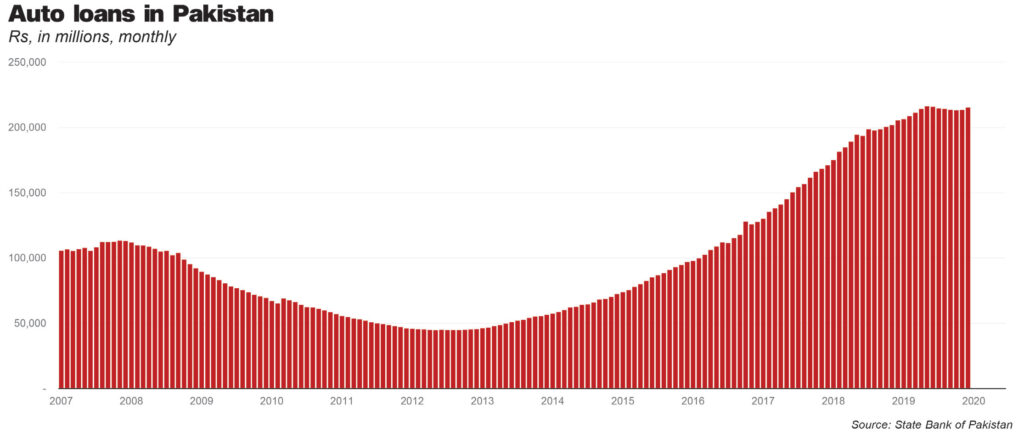
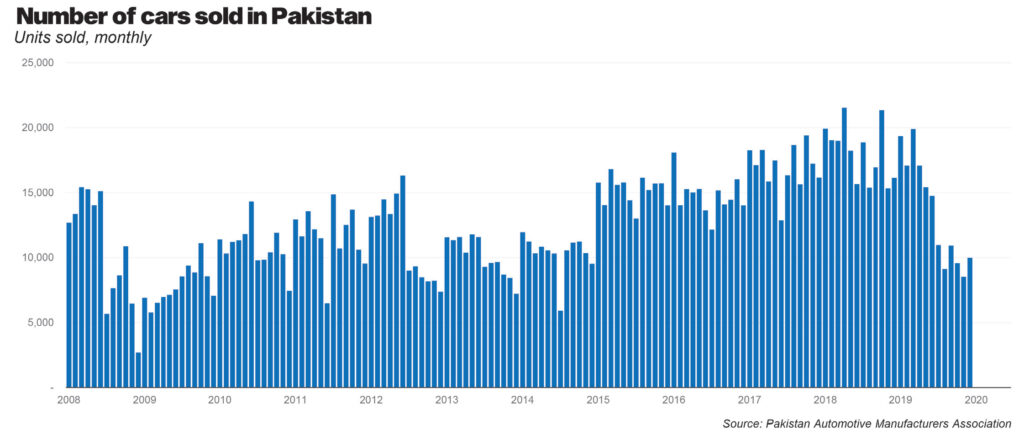
For once, it was not senseless hysteria, and it was not even a case of hysteria induced buying and selling driving prices up and down. Taxes were implemented, the import of used Japanese cars was blocked, Honda Atlas and Toyota Indus had to halt production, prices shot up and sales came to a grinding halt.
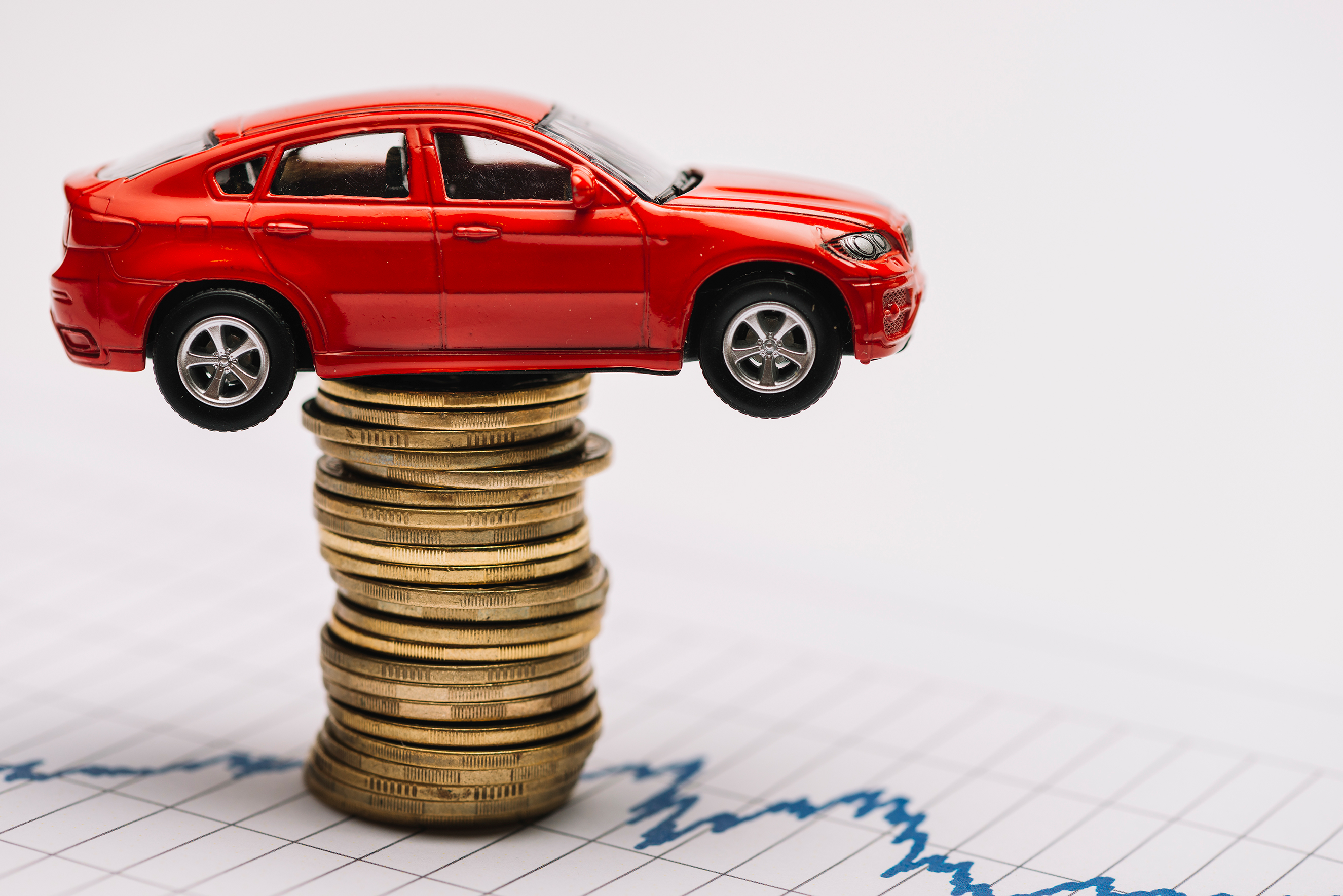
Cars had become expensive. To be fair, cars are an expensive commodity everywhere, but in Pakistan they have always been more expensive than usual compared to other countries like China or India. Most of this, of course, has to do with the barely present infrastructure of car manufacturing in Pakistan and the dependence on imports.
It is a bit of a double-whammy for those in the market for cars. A car is much more than just a vehicle for travel - it is an indicator of social status, wealth, power and a great topic of conversation. [Editor’s note: It is a topic of conversation, yes. Whether it is a great one is highly debatable.] A marker of having ‘made it’ for the middle class is being able to upgrade from your WagonR or Cultus to a Toyota Corolla GLI or a Honda City.
But why exactly are these cars so expensive? And with taxes rising, used Japanese cars no longer arriving, can you really hope to buy a new car any time soon, or will you be forced into the shame of looking on the used local car market? Profit takes a look.
Where to begin ...
If you think this piece is going to be about taxes and how they have risen, you would be absolutely right. The numbers have been neatly laid out in front of you, taxes are high, manufacturers and in disarray and prices have nearly doubled.
A total of 60,862 cars were produced and 59,097 sold in Pakistan during the six months of the current fiscal year ending June 30, 2020. Compare that to last year, when during the same period during fiscal year 2019, 113,494 cars were produced and 104,038 were sold. The numbers are in: the number of cars sold in Pakistan was nearly halved, and the only question is whether the taxes that led us here make sense, and what your options are.
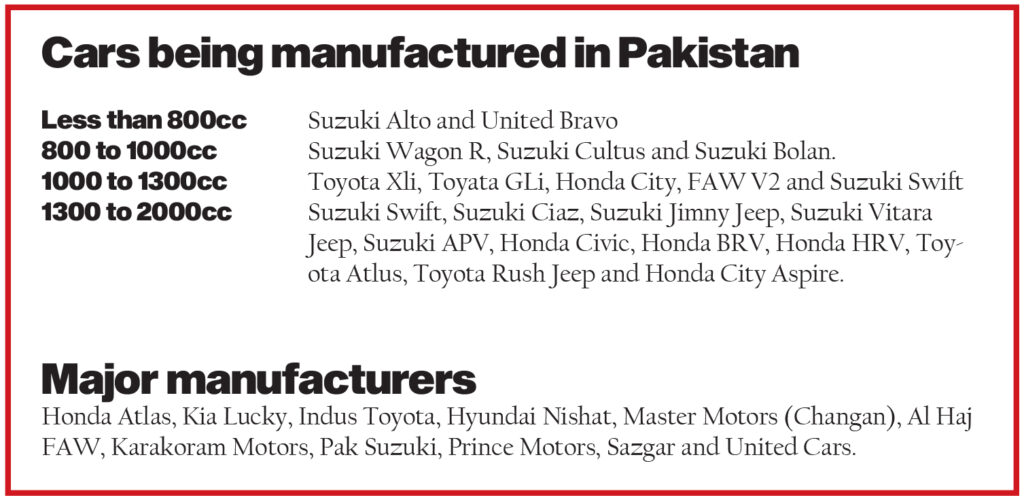
For starters, Pakistan is not manufacturing cars like India or other countries. While cars may be assembled here, most of their parts have to be imported and with the government’s initial anti-import stance, there was little else one could have expected than the situation we have now.
Another reason is what a long process car manufacturing is in Pakistan. As if the Ford revolution and assembly lines had changed nothing, a car passes through so many channels before reaching a dealer in any city of Pakistan that it has had a pretty penny spent on it. With each hand the car passes through, the price continues to rise steadily.
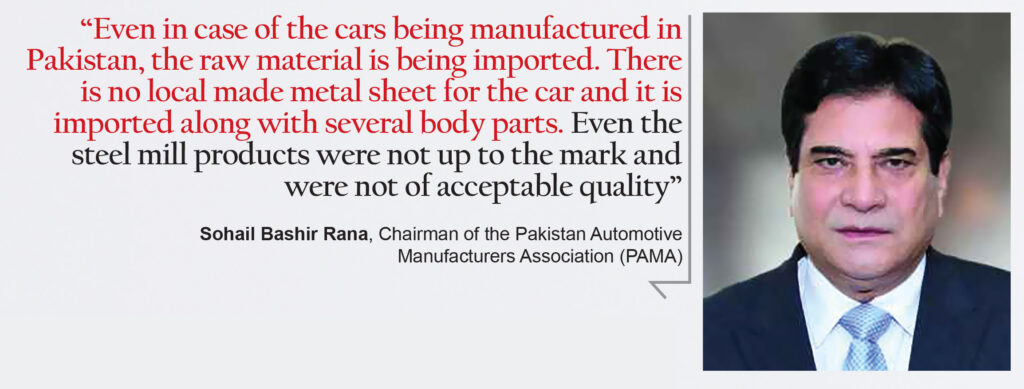
“There are too many taxes in Pakistan,” says Sohail Bashir Rana, the chairman of the Pakistan Automotive Manufacturers Association (PAMA). It is no surprise, the chairman of a business association claiming taxes are too high. But as things stand, there may be a point here somewhere.
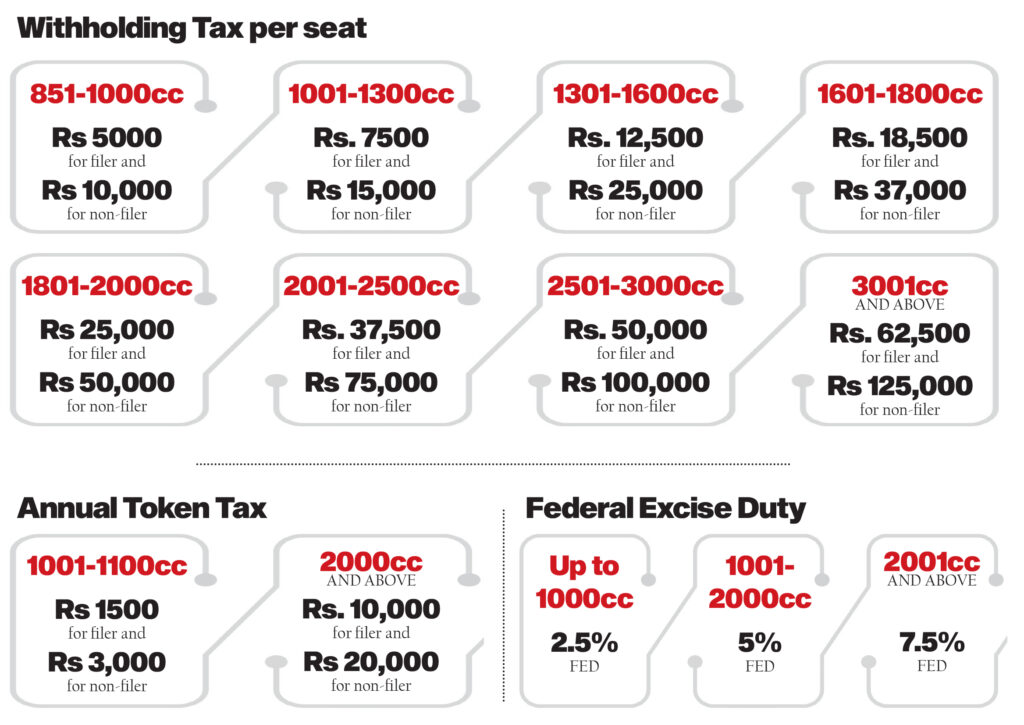
“There are import duties and taxes on raw materials, sure, but there have been so many additional taxes since last year. Then there is the disaster withholding tax in which some are adjustable and some non-adjustable. There is an evaluation on import which increases the cost” he continues. It is hard to imagine someone so passionate about taxes. But when it has to do with business slowing down, there is an activist in every chairman and executive.
“When we come to the local industry, the raw material and parts are expensive due to the dollar rising. Federal excise duty is imposed on the finished products, then that is followed by sales tax which makes the overall price high,” he continues to rant and rave.
The concept he is arguing is simple enough, when all these taxes are added up, the math is scary, and the dealer does not stand to get much out of selling these vehicles, since most of it is going down the final income tax drain.
“Add to this things like workers welfare funds and workers participation fund and God knows what other taxes that are imposed, and the result is higher prices of cars. The end result is people not buying cars, and for the few that do get sold, the net profit is very minimal for the company or manufacturer or seller” ends Rana.
Another reason cars are so pricey are the premiums, those infamous ‘ons’ that anyone who has been in the market for a car knows too well about. As you will know, unlike the movies, there is no big car dealership with suave salesman offering you all kinds of cars of all prices and conditions for sale. For starters, car dealers usually just sell a single brand, and if you do decide to buy one, you will not be driving away in your new ride, but will patiently sit on your paperwork for a few months before you can pick your car up. So if you want a car immediately, you will have to pay significantly more in the form of premiums.
Another leading car agent, Murtaza Qazi, told Profit that one main factor in the price hike of the new cars is that the dealers get premiums over cars being booked by the buyers. “Dealers raise the price by adding premium amount to the cost. The buyers are given an option that if they wish to get the car right away rather than waiting for the booking period, then they can pay an amount over the cost of the car and the dealer would get it for them. This ends up increasing the total cost of the car”, he explains.
Is second hand an option?
Given the bleak situation, one might think that the only option is to buy a used car, to bite that bullet, swallow all the apprehensions that come with a second hand purchase and go for it. What other option is there. If you ask Murtaza Qazi, that still may not be the best idea, since there is no set standard of quoting prices of used cars in Pakistan, and there may be a greater risk of a bad deal being struck.
“One factor is the dealers themselves, who give arbitrary prices and raise the prices of those cars that will give them the most profit. That results in the particular model becoming desirable and expensive on the second hand market” he said.
“The the dealers also have their own commission, which is not just an expense, but a cutthroat business. Then you also have this new trend of selling cars on websites and directly buyer to seller. This makes the price and testing completely random unless someone has a trained eye - which most people do not” he goes on to say. “People put up such high prices of used cars that the buyers get confused between choosing a new or a used car. However, with the proliferation of Uber and Careem, the demand for used cars has increased in the market. People are buying used cars and putting them up on Uber and Careem services.”
But as Sohail Bashir Rana, the chairman of the PAMA explains, there is always a catch, and as with all good catches, it is deceptively simple: if the prices of new cars go up, then those same models will be worth more second hand. Does it just become a po-tay-toe po-ta-toe situation then? “The price of used cars is adjusted according to the price of a new car. “If the price of Honda goes up to 4 million then the used would also be higher in price.”
Can Pakistani cars be cost effective?
The answer to how cars in Pakistan can be cheaper is an easy one to give, but a difficult one to pull off. If you start making parts and metal sheets locally, the prices will fall drastically. But who will produce those things? According to Tajamul Ashfaq, a dealer frustrated with the state of the automobile industry, the government needs to aid and support such endeavours and in fact, actively subsidise them.
“If we follow the Chinese model or even the example of India or any other country, the cars manufactured there are stamped by the country’s name. Whereas in Pakistan, anything that has a made in Pakistan stamp on it is automatically looked at with suspicion” he says. “We need a thriving industry that our consumers can not only trust, but take pride in.”
Unfortunately, attempts at pulling something like this off have not been particularly successful. Tajamul points towards United Bravo, a relatively affordable car that has not done too well on the market because it’s Pakistani manufacturing has people questioning its quality.
“The car is not getting popular firstly because it is locally made, and secondly because it is cheap. The general mindset of buyers here in Pakistan is that these are the two things to stay away from, even though they should be desirable qualities.”
“Obviously there is a marked difference in Pakistan made cars or assembled ones” says Sohail Bashir Rana, the PAMA chairman. “For example, a tractor is manufactured with nearly 90 percent of its parts locally assembled, therefore there is stability in its price. Even when there is any fluctuation in the price, it is affordable. In the case of cars, 40 to 50 percent of a vehicle’s parts are manufactured in Pakistan, with some cars having even lower numbers on this front.”
“Even in case of the cars being manufactured in Pakistan, the raw material is being imported. There is no local made metal sheet for the car and it is imported along with several body parts. Even the steel mill products were not up to the mark and were not of acceptable quality” he went on.
“Body parts are being manufactured in Pakistan by Honda, Suzuki and Toyota. Seats, tyres, bumpers, rims, wind screen, glasses are also being manufactured in Pakistan. Engine and suspension parts, however, are not made here. Suzuki is the only company doing a little better on this front.”
The Japanese question
There is a saying in car dealers, that if you buy a refurbished Japanese car, you will not be able to go back to locally assembled cars. Japanese cars were all the rage in Pakistan, it started with a few Toyota Vitzs on the road and ended up being an automobile revolution. Not only were hybrid cars ushered in to Pakistan, but fully loaded cars with great mileage were suddenly affordable and available to buy in a moment – American showroom style. And then, they were gone just as quickly when the government cut off imports.
“If you compare Suzuki’s new, locally assembled Alto, which has been built on the Japanese model, with the Japanese version of the same car, it is miles ahead. It has airbags, more accessories, better mileage and this is all despite the fact that it has been driven all over Japan before coming to Pakistan,” says one consumer.
However, in the opinion of Sohail Bashir, the key is quality and fittings. “There are a lot of accessories in imported cars like air bags, push start ignition, power windows, central locking system, intermittent wipers and many others at to the value of the imported cars and thus people think they are better in quality and also these features affect the cost of a car” he says.
“There are not many accessories in local cars. These accessories can easily be included in the locally manufactured cars, but once again, that drives up the price. There is a specific category of consumers who wish to have such accessories but otherwise the masses want to have an economical car.”
Because of this, and because it was threatening their business, PAMA holds a strong anti-Japanese imported cars stance. “We do not encourage imported cars. Only the assembling plants cost 200-250 million dollars and a vendor industry is set up simultaneously with it and these are the most important things in setting up a car plant” said their chairman.
“For example, Hyundai and KIA are setting up plants here and have made a huge investment which needs to be protected so others will be encouraged to enter. Also, imported cars are largely second hand cars which have devalued due to depreciation, and when these are brought in Pakistan and given preference over first hand Pakistan assembled cars, it is unfair” he claims. “Even importers ask for subsidies over such cars. With huge investments made by companies in Pakistan, we should encourage them rather than encouraging the import of second hand cars.”
Then what do they suggest?
What does PAMA and its chairman propose be done about it? For starters, their demand is, surprise surprise, a cut in taxes. But just because the demand may be self serving does not mean it is wrong. “The government has this idea that if you can afford a car, you can pay taxes, but that is not how it works. Everyone wants a car because it means a lot more than just a means of transport” he says.
“Cars like Honda, which were going for Rs 2.2 million, are now selling for basically Rs 4 million, and this is all because of the taxes. With such prices, the clientele will continue to shrink. And if the government is thinking that it will increase revenue with taxes, they need to remember that the net income will also fall.”
However, staying true to form, the CEO of United Motors, Zawar Tahir, seemed confident in the future for his company, saying that this situation would give United the edge to produce cars at comparatively much lower prices. “As is evident by newly launched Suzuki Alto 660CC, being smaller in engine size and lesser in options, car strength and there is a price difference of 4 to 4.5 lakhs’ he told Profit. “People who have physically witnessed the difference end up completely satisfied. The current target market of United Motors is the middle class which wants a good quality car at an affordable price.”
He said that the ethos of his company kept the cars at the lowest possible price, and that people need to understand that taxes (both direct and indirect) take up almost 40% of car price. “We are thankful to the new EDB policy of 2016-2021 for promoting the industry and encouraging competition in the market while creating more choices for the customers.”
Are the cars any good?
The problem, at the end of the day, is what car will serve the consumer best. On that front, the Chinese companies vying to take up space in the market have an image problem. The PAMA chairman tells us that they lack credibility compared to Japanese and Korean products.
“China lags behind in R&D (Research and Development), while Japan is way ahead. So the quality aspect becomes questionable as some plants in Pakistan are in joint venture (JV) with Chinese companies. Brand equity is definitely an edge for the already established companies, and competing with them is difficult. Lesser known brands cannot compete with Honda, KIA etc, and preference would surely be given to the bigger brands.”
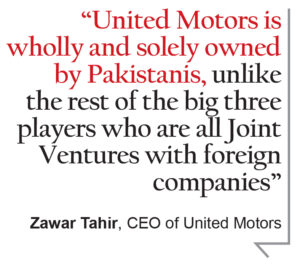
United Motors, on the other hand, who are still not a part of PAMA, are the only ones that seem satisfied with the opportunities that are presenting themselves to them. “United Motors is wholly and solely owned by Pakistanis, unlike the rest of the big three players who are all Joint Ventures with foreign companies” their CEO tells us. “These Joint Ventures mean both Pakistanis and international parties are owners, hence the revenue distribution is divided as per the ownership rights” he explains.
“United Motors, being the 1st local car assembler, retains all revenue within the country. Any new car launched takes its time to address the small issues encountered in first 5 to 6 hundred vehicles until the plant smoothens things out. However, we have gone through this phase in record time.”
According to him, United has managed to get roughly 2500 units on the road within one year, which seemingly is a very high achievement. The watch and hold phase seems to be coming to an end, and apparently without any significant complaints. But whether the consumers take the final leap and trust local manufacturers, or force the government to go back to the drawing board is yet to be seen.

The writer is a member of the staff and can be reached on [email protected]
View all articles →51 Comments
No comments yet. Be the first to join the discussion!