February 22, 2023
A complete guide to the new taxes on airlines tickets and travel destinations

February 22, 2023
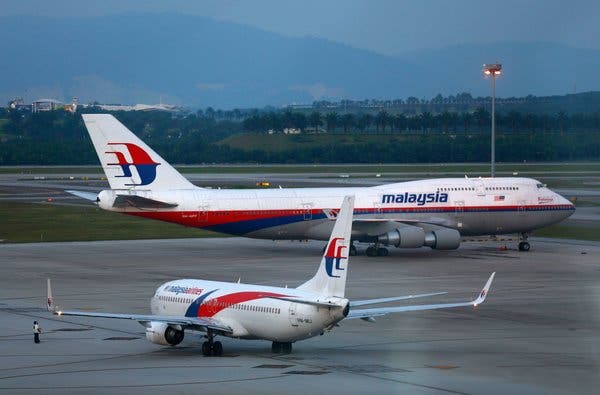
LAHORE: The Government of Pakistan has levied a new round of Federal Excise Duty (FED) on airline tickets. The new duties were approved by the National Assembly on February 20 as part of the amended Finance (Supplementary) Bill 2023 moved by Minister of Finance, Mohammad Ishaq Dar.
The new duties are applicable to customers who purchase club class, business class, and first class tickets. The rate of the duty levied upon passengers will depend on their respective destination. The Government of Pakistan has currently levied four different duty amounts that passengers will have to pay for different destinations. They have utilised the International Air Transport Association’s (IATA) Traffic Conference Areas to delineate between the different duties that are to be paid.
The duties to be paid in accordance with the Government of Pakistan’s utilisation of the IATA Traffic Conference Areas are as follows:
| Traffic Conference Area | Destination | FED |
| 1 | North, Central, South America and Environs | Rs 250,000 |
| 2 | Middle East and Africa | Rs 75,000 |
| Europe | Rs 150,000 | |
| 3 | Far East, Australia, New Zealand and Pacific Islands | Rs 150,000 |
The duties have been levied as part of the Finance (Supplementary) Bill 2023 to enhance the Government’s tax collection, and enable it to raise Rs 170 billion in tax revenue. The purpose of the new fiscal measures is to unlock $1.1 billion from the International Monetary Fund.
Does this affect customers travelling in Economy Class?
Addressing the elephant in the room, the FED in its current iteration is not applicable to customers travelling on economy class fares.
What even is a Federal Excise Duty?
A Federal Excise Duty is a federally administered duty levied on goods and services in Pakistan at varying rates. FED can be rendered on the following:
- Goods produced or manufactured in Pakistan;
- Goods imported into Pakistan
- Goods produced in the non-tariff areas, and then brought into the tariff area for sale
- Services provided or rendered in Pakistan
The scope of the tax on services is limited to the Islamabad Capital Territory. According to the constitution, sales tax on services, which replaces Federal excise duty (FED), must be imposed and collected by the provinces or Islamabad on services provided within their respective territories.
How did the FED on airline tickets come about?
The imposition of a FED on airline tickets is originally part of the original Finance (Supplementary) Bill 2023 approved by the Cabinet on February 15. The Bill ordered that a tax equivalent to 20% of the ticket’s fare or Rs 50,000, whichever was higher, be levied on passengers travelling in business class, first class, and club class.
The measure, however, stirred controversy which was brought to light at the meeting of the Senate Standing Committee on Finance and Revenue on February 16. At the meeting, Senator Saleem Mandviwalla informed the Finance Division that the Aviation Ministry had expressed concerns about the proposed 20% tax on Business and First Class tickets, citing the variability of ticket fares. In response, the Senator suggested that a specific amount be set for each destination instead of imposing the tax.
Furthermore, he suggested that this would serve as an alternative approach to the proposed tax, which the Ministry deemed impractical due to the fluctuating nature of fares.
What is a club class?
One of the standout features is the introduction of the ‘club class’ as part of the fare categories which will have the FED levied upon them. The most basic definition of club class is that it is a fare category between economy class, and first class.
Amer J. Randhawa, a Lahore based travel consultant, explained the category to Profit “It is simply business class. Different airlines have different terminologies. Club is a general term used,”.
Does this affect domestic travellers?
Randhawa explains to Profit that the FED is applicable only on customers travelling outside of Pakistan, and not internal flights.
What about outbound connecting flights?
In the odd situation that customers might want to pull off a jugaar and only have their flight from Pakistan to a connecting destination as economy, and the remaining journey as business or first class, that is not possible. “If the ticket is bought in Pakistan then the entirety of the tax levied on both tickets will be applicable,” Muhammad Nadeem Sharif, Former Chairman Travel Agents Association of Pakistan (TAAP) tells Profit.
Similarly, “You’re always charged on the higher category of fare,” Randhawa tells Profit.
What if you were to depart from Pakistan, and then purchase another ticket from your new departure port to another destination? “The laws of that country will be applied on you since your journey from Pakistan is over,” Sharif explains to Profit.
What are Traffic Conference Areas?
The process of fare construction is contingent upon the regions which the customer intends to travel to, from, and via. To streamline the procedures associated with fare construction rules, routings, and fares, IATA has geographically classified the world into Eastern and Western hemispheres, and further categorised them into Traffic Conference Areas (TC Areas) and sub-areas.
The TC Areas encompass three cardinal regions, namely Traffic Conference Area 1 (TC1) encompassing the Western Hemisphere with sub-areas like North American, Central American, South American, and Caribbean sub-areas, while Traffic Conference Area 2 (TC2) and Traffic Conference Area 3 (TC3) embracing the Eastern Hemisphere encompass sub-areas such as European, African, Middle East, South Asian Subcontinent, South East Asian, and South West Pacific.
However, it should be noted that the sub-area divisions may not always align with the geographical location of countries. For instance, IATA deems certain North African countries, including Algeria, Morocco, and Tunisia, to be part of Europe.
Will the measure yield dividends?
Sharif estimates the total number of passengers that buy first and business class tickets to be 10-15% of the total passenger volume. How much the Government estimates it will earn through this measure, or how many passengers will slip down to the economy to avoid the FED will be made evident in the months to come.
It is entirely also possible that, on the assumption that first and business class passengers have the means which this measure does assume, first and business class passengers might just break up their international journeys. They may only seek to travel the outbound flight from Pakistan on economy, and then later pause their journey at their new destination to obtain a new ticket to avoid paying the higher FED altogether.
What are the impacts on the industry as a result of all of this?
“The sector was already encumbered with a lot of problems, and the Government has gone and added to our problems,” Sharif tells Profit. “This will increase the cost of travelling for the passenger, and naturally this will lead to problems for the sector when there will be fewer passengers choosing to fly,” Sharif continues.
“We will have to just take it. The industry hasn’t fully recovered from the dual rates Emirates and Turkish stopping their local selling of tickets, and now this has been implemented, ” Randhawa tells Profit. “The funny thing is that flights are still full, and you cannot find an empty seat,” Randhawa continues.
The author is a member of the staff, and covers the automobile, energy and advertising insdusties as a sector analyst. He can be reached at [email protected]
View all articles →0 Comments
No comments yet. Be the first to join the discussion!