More

    Attock Refinery: cash-rich, policy-ready and poised for a once-in-a-generation upgrade

    The fortress balance sheet gives the company a distinct advantage in pursuing the kind of capital expenditures that have eluded some of its competitors

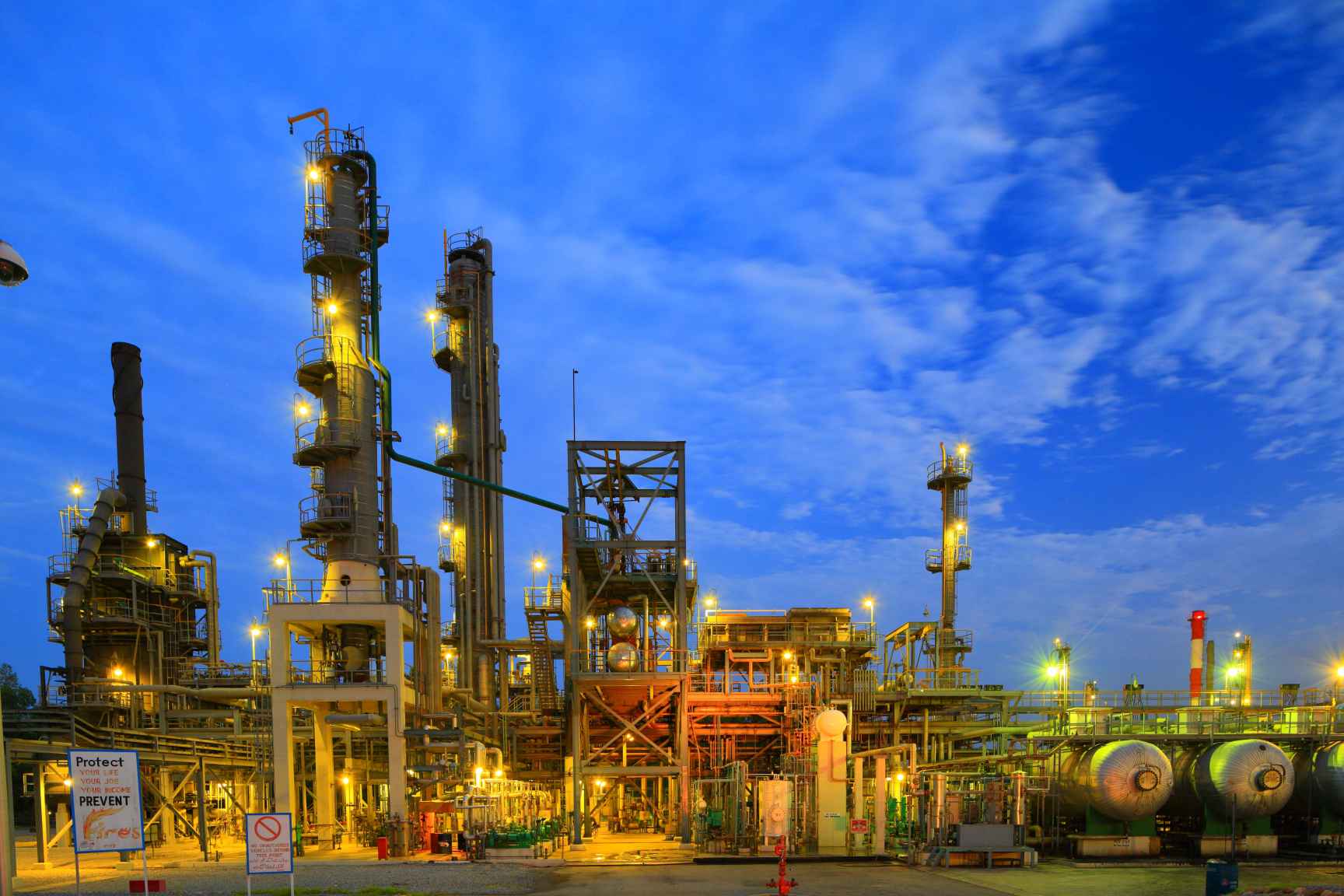
    Arif Habib Ltd (AHL) has initiated coverage of Attock Refinery Ltd (ATRL) with a ringing “BUY” and a Rs1,136 per share June-2026 target price – implying 69% upside to last week’s close and valuing the company at barely 3.9 times FY-26 earnings. The house model projects a 36% four-year EPS CAGR, driven by an upgrade that, in the brokerage’s words, could “shift ATRL’s product slate from penalised furnace oil to premium Euro-V motor fuels” and plug an historic profitability gap with southern peers.

    The foundation of the call is financial muscle. As at March 2025 ATRL was debt-free and sat on Rs77 billion in cash – equivalent to Rs721 per share or more than one-tenth of the refinery’s replacement cost. Book value stands at Rs1,345 and the working-capital cycle is the least demanding in the sector: local-crude suppliers allow two months’ credit versus the one-month norm enjoyed by hydro-skimming peers. The cash hoard alone could finance 40% of management’s Rs180 billion upgrade budget before a single rupee of project debt is drawn. [restrict level=1]

    Behind the headline numbers lies a plan already moving from PowerPoint to project office:

    • Front-End Engineering Design (FEED) and Project Management Consultancy (PMC) have been awarded to STP Studi Technologie Progetti of Italy.
    • The scope will lift gasoline (MS) output by 25%, push diesel into full Euro-V compliance and slash low-value furnace-oil yield to the low-teens.
    • Quality penalties – currently costing c. Rs5 billion a year – will disappear once high-RON petrol and low-sulphur diesel roll off the racks.
    • Under the Refinery Policy 2023, ATRL will retain the entire 10% “deemed duty” on its two main products for six years, channelling an estimated Rs130 billion into an escrow account earmarked for capex.

    Combine those cash streams with existing liquidity and the upgrade becomes internally fundable even under a conservative oil-price deck.

    Geography is destiny in a deregulated world

    ATRL supplies roughly 15% of Pakistan’s refined-product demand from its Morgah complex in Rawalpindi. That northern location is about to become a profit centre in its own right. Today the Inland Freight Equalisation Margin (IFEM) socialises transport costs, meaning the company cross-subsidises rivals hundreds of kilometres closer to Karachi port. Post-deregulation, freight margins will be set (and kept) by individual refineries.

    AHL’s model assigns a conservative Rs8.5 per litre saving on high-speed diesel and Rs7.9 on petrol once the equalisation lid comes off – worth an incremental Rs62.8 per share after tax, or almost a quarter of FY-24 earnings, on existing volumes alone.

    On AHL’s discounted-cash-flow (DCF) the refinery’s equity comes out at Rs121 billion, with the present value of future operating cash flows a modest Rs4.4 billion and the balance made up by surplus cash (Rs77 billion) and a Rs39.7 billion terminal value. Key inputs include:

    • Cost of equity: 21.5% (11.8% risk-free, 1.63 beta, 6% risk premium).
    • Terminal growth: 5%.
    • Capex profile: Rs12–13 billion a year until FY-28, then a Rs144 billion spike when the new conversion units break ground in FY-29.

    The stock therefore trades at 0.5 times FY-26 book, 2.4 times FY-27 earnings and an implied EV/EBITDA of 1.6 times – levels AHL argues are “inconsistent with a cash-rich balance-sheet, regulatory tail-winds and double-digit dollar returns.”

    Macro tail-winds – and a sector in flux

    Pakistan imports roughly 7.8 million tonnes of refined products a year because the five incumbent refineries – ATRL, PARCO, NRL, Cnergyico and PRL – were designed for a fuel-oil economy that no longer exists. Industry utilisation averaged 49% in FY-24; furnace-oil demand has collapsed from 9 million tonnes in 2015 to less than one million in FY-25 as LNG and coal elbowed it out of the power mix.

    Policy-makers have responded with the most generous incentive package in a generation: duty protection, tax holidays and customs exemptions tied to upgrade milestones. While critics question whether government can keep its side of the bargain, AHL notes that “gross margin lifts of even 2–3 US dollars per barrel on a 67% throughput could treble profitability.”

    No research note is complete without caveats and AHL flags several. Islamabad’s delay in gazetting the upgrade agreements has already pushed timelines to the right. Ongoing wrangling with the Federal Board of Revenue over deemed-duty proceeds could crimp free cash flow.

    ATRL relies on northern E&P fields such as Adhi and Naimat; any supply upset squeezes throughput until imported crude logistics are in place. IFEM could be replaced by a yet-to-be-defined freight matrix, blunting some of the geographic windfall.

    How big could the prize be?

    Put the moving parts together and the numbers scale quickly. AHL’s base case shows net profit climbing from Rs11.7 billion in FY-25 to Rs31.7 billion by FY-28 – an average ROE of 15–18% on an equity base that itself rises to Rs218 billion. Gross-refining margins expand from 2.7% to 9.6% as the product slate improves, while cash per share swells to Rs888 even after capex drag.

    For context, every additional US $1 per barrel of margin adds roughly Rs15 to earnings per share, so a bullish crude-product spread could take the June-2026 target price north of Rs1,300.

    Why does a refinery with a double-digit dividend, a war chest equal to 30 months of opex and a regulatory glide-path to higher margins still trade at a 50% discount to book? AHL offers three explanations:

    • Hydro-skimming stigma: investors view the sector as a furnace-oil relic and ignore the optionality of conversion.
    • Policy scepticism: after years of false starts, the market prices in perpetual delay.
    • Low free float: The Attock Oil Company retains 61%; effective float is about Rs28 billion, too small for many international funds.

    Yet for domestic institutions hunting yield, that combination is precisely what makes ATRL attractive: better-than-bank-deposit returns, dollar-linked balance-sheet assets and a built-in catalyst in the policy document’s signature page.

    The bigger picture: a refinery renaissance?

    ATRL is not alone in dusting off blueprints. National Refinery and Pakistan Refinery have both signed upgrade MOUs; PARCO is studying a grass-roots 400,000 bpd “deep conversion” project at Hub; and Cnergyico has re-committed to its second-phase isomerisation unit. Analysts believe that within five years Pakistan could have an additional 100,000 bpd of gasoline and diesel capacity, cutting the import bill by US $2 billion at today’s prices.

    ATRL’s upgrade is the smallest in dollar terms but the first fully funded – and its proximity to the consumption heartland means every litre of Euro-V product has a ready buyer. If the project proceeds on schedule, commissioning should start in FY-29, when AHL’s model assumes motor-spirit’s share of the yield climbs from 34 to 40% and furnace-oil drops below 14%. That alone could more than halve sensitivity to power-sector fuel switching.

    Refineries worldwide face an existential question: upgrade, shut down or be subsidised. Attock Refinery appears set to upgrade – and to do so from a position of balance-sheet strength rare in the emerging-market downstream space.

    If Islamabad locks in the fiscal sweeteners and crude supply holds, ATRL could move from policy supplicant to policy poster-child, just as Pakistan’s energy mix flips decisively towards cleaner fuels. For investors willing to look beyond next quarter’s crack spread, the stock offers deep value, visible catalysts and – thanks to that Rs77 billion cash pile – a hefty margin of safety. In a market still dominated by banks and fertiliser giants, that combination is hard to find. [/restrict]

    LEAVE A REPLY

    Please enter your comment!
    Please enter your name here

    [adinserter name="_av_sidebar_top"]
    [td_block_7 custom_title="Popular Posts" block_template_id="td_block_template_14" header_text_color="#f4f4f4" top_border_color="#f4f4f4" bottom_border_color="#444444" header_color="#000000" m6f_title_font_family="638" f_header_font_weight="500" f_header_font_transform="uppercase" f_header_font_size="14" offset="20" tdc_css="eyJhbGwiOnsibWFyZ2luLXRvcCI6IjEwIiwiZGlzcGxheSI6IiJ9fQ=="]
    [adinserter name="_av_sidebar_bottom"]