Pakistan turns to Saudi Arabia for joint vaccine production after Indian supply disruption
Move targets Expanded Programme on Immunisation self-reliance as foreign funding ends by 2030 and annual vaccine needs rise; a high-level Saudi delegation is expected to visit Pakistan on January 28
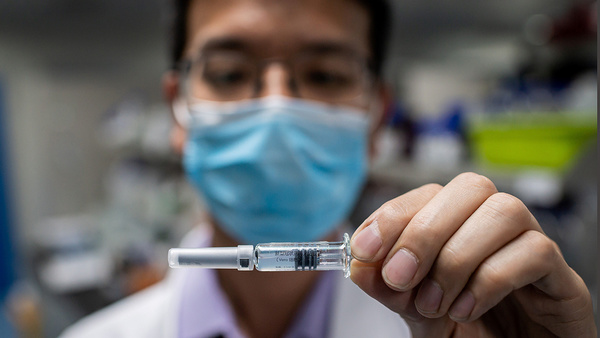
The federal health minister briefed the Senate Standing Committee on National Health Services that Pakistan has decided to pursue joint local production of vaccines under its Expanded Programme on Immunisation (EPI) with Saudi Arabia, after Indian manufacturers declined to supply vaccines through global partners amid recent bilateral tensions.
According to media reports, a high-level Saudi delegation is expected to visit Pakistan on January 28 to advance discussions.
Officials said Pakistan had historically sourced EPI vaccines from Indian manufacturers via international partners rather than direct government purchases. Following recent hostilities, Indian suppliers refused to sell vaccines intended for Pakistan even through third-party channels, disrupting supply chains and underscoring Pakistan’s dependence on imports.
Pakistan currently procures vaccines worth about $350–400 million annually. Around 51% is financed domestically, while the remainder is covered by development partners, including Gavi, the Gates Foundation, UNICEF, the World Health Organisation and Rotary International. This external support is expected to end by 2030, after which Pakistan will need to fully finance its immunisation programme.
Officials told the committee that as international funding phases out, Pakistan’s vaccine bill could rise to an estimated $1.2 billion annually, making continued reliance on imports financially and strategically difficult.
To address this, the government has moved toward local vaccine production. A National Vaccine Policy has been submitted to the prime minister, proposing the creation of a National Vaccine Alliance to develop domestic manufacturing capacity through public-private partnerships.
Pakistan explored potential collaborations with several countries, including China and Indonesia, before opting to work with Saudi Arabia, which has been developing its own vaccine manufacturing capabilities for nearly a decade. Talks are described as advanced, with the upcoming visit expected to focus on timelines, investment structures and regulatory pathways. The proposed approach would begin with packaging and finishing, before moving toward full-scale manufacturing.
Pakistan requires about 140 million EPI doses annually, but officials noted that financial viability typically requires production volumes of around 400 million doses per year, making joint or regional production models necessary.
Members of the Senate committee welcomed the initiative, calling it an important step to protect Pakistan’s immunisation programme from geopolitical disruptions, and assured the ministry of legislative support.
The meeting also reviewed other health-related matters, including proposed legislative amendments, medicine prices, regulation of electronic nicotine delivery systems and administrative issues at the Pakistan Institute of Medical Sciences.

Our monitoring team diligently searches the vast expanse of the web to carefully handpick and distill top-tier business and economic news stories and articles, presenting them to you in a concise and informative manner.
View all articles →2 Comments
No comments yet. Be the first to join the discussion!