
















ISLAMABAD: The National Electric Power Regulatory Authority (NEPRA) has released the draft of the Prosumer Regulations, 2025 for public opinion, seeking feedback on a new framework that would consumers to generate their own electricity.
Trying to revise net-metering regulations for over a year, NEPRA has finally released the draft that has haunted every solar net-metering consumer, and potential prosumer.
As domestic Pakistan showed a nuclear adoption of the solar revolution, the excess capacity generated, and the net-metering balance had become a problem for NEPRA and its incumbent IPPs and DISCOs. This is because the rooftop-solar not only increased the payables of DISCOs, but it also rendered the capacity-payment-denominated contracts of the government with the IPPs, a loss that would keep on giving. This meant that sooner or later, an axe had to fall on the consumers of self-installed solar energy.
The draft, available for review on NEPRA’s official website, proposes significant changes in how distributed generation will be handled, focusing on smart metering, a new billing system, and integration of renewable energy sources. In this draft, the term prosumer, is used for someone who is both consumer and a solar plant owner.
Key Changes and Impact on Prosumers:
-
Smart Metering and Two-Way Energy Flow:
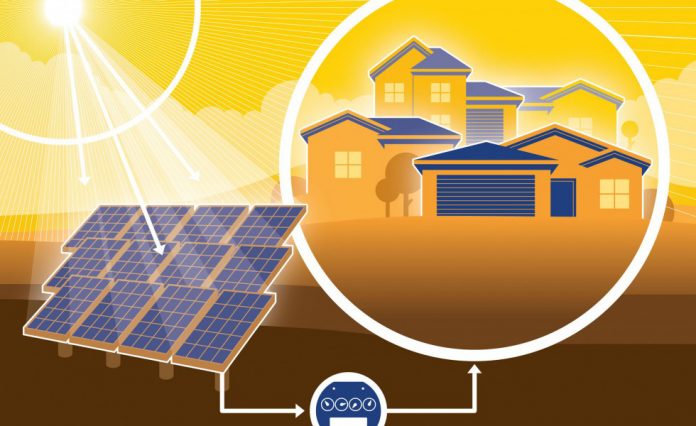
One of the key provisions in the new regulations is the rollout of smart meters for all prosumers, enabling them to measure two-way energy flow. These smart meters will allow consumers to not only consume electricity from the grid but also supply surplus electricity back to the grid. The smart meters will measure and record both the consumption and generation of electricity in real-time, ensuring accurate and transparent billing, replacing the contentious and analog “green meter”, previously issued. -
Net Billing System:
Under the new rules, net metering, or as the new regulation calls it, net billing, will also allow prosumers to receive credits for the electricity they generate and supply back to the grid, like the older system but with a twist. Instead of an older offsetting of consumed units, a net billing regimen has been introduced by NEPRA, different from the old net-metering.According to the draft resolution; ““net billing arrangement” means an arrangement under which electricity generated by distributed generation facility of prosumer is purchased by the licensee and the licensee raises the bill on the prosumer for his consumption at the applicable tariff, after giving credit for electricity supplied by prosumer to the licensee at the national average energy purchase price.” Here’s how the calculation works:
Basically this means that total bills will now be netted, instead of total units consumed for bill calculation. Say, a prosumer generates 1,000 kWh of electricity in a month and consumes 800 kWh from the grid. Under the older net metering, the prosumer used to receive credits for the 200 kWh they supply back to the grid. This meant that their total bill is (-200 x NAPP). If the NAPP is 27, the bill comes out to be -5400. (The negative sign signifies that this bill is a receivable)
Under net billing, however, this changes. If the electricity purchase rate, the NAPP, is Rs. 27 per kWh, the prosumer would receive a credit of (-1000 kWh * Rs. 27), which comes out to be Rs, 27,000. But the bill for his electricity import will be calculated at (800 kWh * Rs 47), which comes out to be Rs 37,600. The amount payable will be the net of these bills, which is Rs 10,600. (A three-phased connection’s consumption of over 600 kWh is billed at ~Rs 47, according to current pricing regulations).
If the consumer produces an extraordinary amount of units such that the net bill is still negative, they would get PKR credits like before, which can then be used to offset future electricity bills or be paid out based on the agreement.
The new regulations specify that the net metering system will apply to both renewable and non-renewable sources. However, the prosumer will only receive credits at the national average purchase rate (NAPP), which is lower than the retail price.
-
Sanctioned Load Calculation:
The capacity of the distributed generation facility in the new Prosumer Regulations, 2025 is now tightly tied to the sanctioned load of the applicant’s premises (Section 3.2). The previous regulations allowed for 1.5x the sanctioned load. The new rules do not include that buffer, instead keeping the generation capacity equal to or below the sanctioned load.
Another significant proposed limitation is a capacity threshold at the transformer level. Distribution companies (Discos) are explicitly prohibited from accepting new applications once the total distributed generation connected to a given distribution transformer reaches 80% of its rated capacity, in order to prevent overloading and maintain stability in the local distribution network.
-
Transition from Previous Regulations:
The draft Prosumer Regulations, 2025 replace the 2015 Distributed Generation and Net Metering Regulations. One of the most significant changes involves the threshold for distributed generation, which has now been set at 1 MW. This change aims to encourage smaller-scale projects and ensure greater participation from local businesses and households in generating renewable energy. Under the earlier system, the cap was lower, which limited participation.The new regulations also expand the scope of net metering by allowing more types of consumers (such as industrial users and large commercial establishments) to participate.
While the 2015 regulations allowed for some degree of net metering, the new policy enforces greater standardisation of the process and ensures compliance with national energy goals by promoting cleaner energy sources.
- Contract Period:
Under the previous Alternative and Renewable Energy Distributed Generation and Net Metering Regulations, 2015, the contract period for net-metered consumers was set at 7 years.However, the draft Prosumer Regulations, 2025, propose a reduction in the contract period to five years. This shift is part of Nepra’s effort to create a more balanced approach between the utility’s sustainability and consumer benefits.
Importantly, the new rules are set to apply only to new consumers or those who enter into fresh agreements under the revised regulations. Existing consumers, who are currently bound by the previous 7-year contract, will not be affected by the new contract period terms until they opt to re-enter the contract under the new framework. This ensures that the changes are applied prospectively, protecting the rights of current prosumers while adjusting future terms in line with the revised policies.
Energy Access for All:
The regulations are also aimed at increasing energy access, especially in underserved regions, by enabling individuals and small businesses to become prosumers. The emphasis is on making clean energy technologies such as solar and wind more accessible to the general population. In this context, the role of smart metering will be pivotal in ensuring equitable distribution and transparent billing.
NEPRA has given stakeholders, including industry experts, prosumers, and the public, 30 days to submit their feedback and suggestions on the draft regulations. The final regulations will be based on this feedback, ensuring that the framework is aligned with the needs and expectations of consumers while maintaining grid reliability.
With these new regulations, NEPRA aims to reduce the size, life, and repayment rates for net-metered solar consumers by nearly half. This move is seen as an effort to protect the traditional power utility business, which has been struggling with inefficiencies and rising costs, from becoming obsolete.
The proposed revisions to the net-metering policy come as NEPRA seeks to strike a balance between the interests of consumers and utilities. The changes aim to ensure that consumers can still benefit from affordable energy alternatives without turning solar power into a profitable business for them. This will involve limiting the capacity of distributed generation facilities to the sanctioned load of the premises, reversing the previous allowance of 1.5x the sanctioned load, effectively disallowing domestic uses to produce high amounts of excess electricity unless they decrease their consumption.
These proposed regulations, which are now open for public comment, will replace the 2015 Alternative and Renewable Energy Distributed Generation and Net Metering Regulations. NEPRA’s focus is on creating a more sustainable system for both consumers and utilities. While the regulations allow prosumers to reduce their reliance on expensive grid power, the revisions intend to keep the practice from undermining the viability of the country’s traditional energy market. The draft regulations will be up for public consultation for 30 days, after which they are expected to be finalised.